
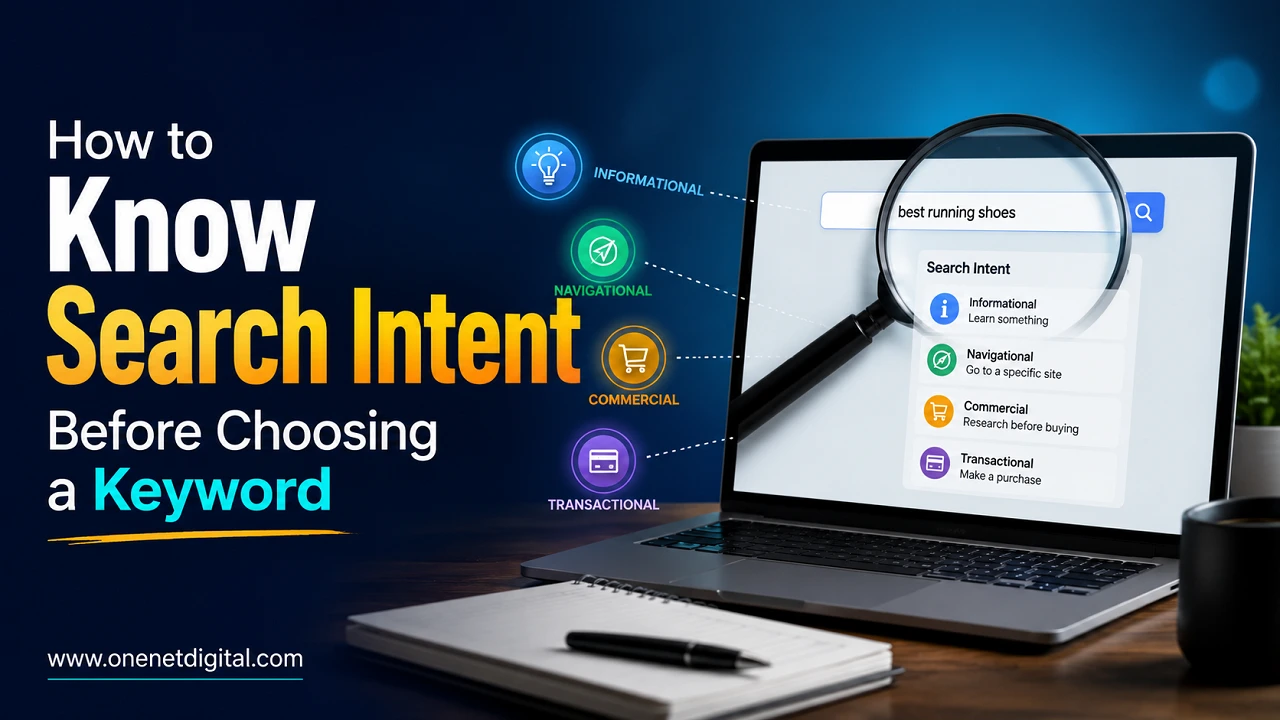
Choosing the right keyword is one of the most important aspects of SEO. But just because a keyword gets a lot of searches, doesn’t mean you should choose it. Before you go after any keyword, you should know why people are searching for it. This is called search intent. It lets you create content that matches what users are actually looking for, rather than just adding keywords to a page.
Search engines have gotten a lot smarter. They don’t rank pages anymore just because they have the right keywords. Instead, they attempt to show content that best answers the user’s question or solves their problem. That’s why you need to understand the search intent before you choose a keyword. When your content fulfils user expectations, it has a better chance of ranking and attracting the right audience.
What Is Search Intent?
Search intent is the reason behind a search query. It tells you what a person is trying to achieve when they type a keyword into Google or another search engine. There are those who want information, and there are those who want to compare products, go to a certain site or buy something.
For instance, someone googling “how to improve website speed” wants tips or a step-by-step guide. Someone looking for “website speed optimisation service” probably means they want to hire a professional. Both keywords are related but the user intent is totally different. Knowing this difference helps you create content that really meets their needs.
The Importance of Search Intent
Search intent is now one of the most important factors in SEO. Google aims to provide the most relevant and useful results to users. If your content doesn’t match what users are looking for, it’s less likely to rank well, even if the keyword has a high search volume.
If your content is consistent with the search intent, visitors are more likely to stay on your site, click through to other pages, and engage with your content. It also enhances user satisfaction, as people are finding the answers they were searching for quickly. Get the right visitors, not more visitors.
The Four Main Search Intent Types
Every content creator should understand the four main types of search intent: Informational, Navigational, Commercial Investigation, and Transactional.
Informational Intent: Users are looking to learn something or find an answer to a question. These searches generally contain words like “how to”, “what is”, or “tips for”. This intention works best for blog posts, tutorials and detailed guides.
Navigational Intent: Users know which website or brand they want to visit. They just use a search engine to get to that specific page faster.
Commercial investigation intent: Users want information about products or services that will help them make a decision. They look for reviews, comparisons, lists of the best options often.
Transactional Intent: People are ready to act, such as purchasing a product, reserving a service, or registering for an account. This intent is usually suited for product pages and service pages.
Also Read: Why Website Familiarity Enhances Usability | One Net Digital
See Google’s Search Results
Analysing the first page of Google results is one of the best ways to understand search intent. Enter your target keyword and carefully examine the pages that are currently ranking at the top.
If most of the results are blog posts or guides, the keyword is likely to have informational intent. When Google overwhelmingly displays product pages or online shops, the user is probably ready to purchase. If comparison articles appear often, users are researching before buying.
Google’s search results are based on what users have found most helpful over time so they are a good source for clues.
Study Titles of Ranking Pages
The titles of top-ranked pages can also give away search intent. They often include the sort of content that users expect to see.
For example, if the title contains words such as “Complete Guide” or “Beginner’s Guide,” it shows informational intent. If you see “Best,” “Review,” or “Comparison” in the title, it means people are comparing options. Words like “Buy”, “Pricing”, or “Discount” are usually indicative of transactional intent.
By looking at these patterns, you are able to decide how to write your own content.
Analyse Google SERP Features
Google has a number of features in their search results to identify user intent. Featured snippets are often featured when users want to get the answer fast. The ‘People Also Ask’ section shows common questions related to the topic, which can offer ideas for your content.
Shopping results indicate that users are probably trying to buy something. If the page is full of video results, that’s a sign that visual content is preferred. Local map results are generally people looking for businesses or services in their vicinity.
These features give you useful insights before you start creating your content.
Be Aware of Keyword Modifiers
Adding small words to a keyword can tell you a lot about the user’s intent. Informational searches often include terms such as “how”, “guide”, “tutorial” and “tips”. Terms like “best,” “top,” “review” and “comparison” often indicate that users are researching before they decide.
Likewise, words like “buy,” “price,” “order,” “deal,” and “discount” are usually transactional since the user is ready to take action.
Knowing how to identify these modifiers makes keyword research much lot easier.
Also Read: Why People Stop Reading Halfway Through a Page
Utilise SEO Tools
SEO tools can help you understand better the keyword opportunities. Use tools like Google Keyword Planner, Ahrefs, Semrush, Moz and Ubersuggest. These tools can provide you with valuable data on search volume, competition levels, related keywords and ranking pages.
These tools are useful, but should always be used in combination with Google’s search results. Both techniques together give you a better understanding of user intent.
Learn From Your Competitors
Another good way to discover what the search intent is, by conducting competitor research. Visit the sites that rank on the first page for your target keyword and see how they are presenting their content.
Note the level of detail they go into, the questions they answer, and the overall structure of their articles. This research helps you understand what the users expect and gives your ideas to create a content that is even better without copying anybody’s work.
Think Like Your Audience
Before you choose a keyword, ask yourself why someone would search for it. Are they trying to fix something, learn a new skill, compare products or buy?
Answering these questions will help you understand the user’s goal better. Think like an audience member. You’ll be able to create content that offers value instead of focusing on keywords.
Don’t Just Focus on Search Volume
Many beginners will pick keywords because they have high monthly searches. Search volume is important, but it should never be the only factor.”
Sometimes, a lower-volume keyword with the right search intent will outperform a higher-volume keyword bringing the wrong people. Relevant traffic will typically result in better engagement and a better SEO performance in the long term.
Also Read: How Visitors Decide Whether to Trust a Website
Match Content to Intention
After you learn what the keyword stands for, you should start writing content that matches it. If people want information, write a lengthy guide. Write an honest comparison article if they are comparing choices. If they are ready to buy, make a clear product or service page with helpful information.
The more your content matches user expectations, the better the chances of better rankings and higher user satisfaction.
Conclusion
The first step of any SEO strategy is to determine the search intent before choosing a keyword. Instead of selecting keywords just based on search volume, understand why people are searching for them. Before writing, research Google search results, review top pages, analyse keyword modifiers, and consider the user’s intent.
Matching your intent makes your content more useful to readers and more valuable to search engines. This simple tactic can bring in the right audiences, boost rankings, and create long-term organic growth.
FAQs
1. What is search intent?
Search intent is the thing that a user is looking for when they type in a search query. It explains what the user wants to know about, compare, find or buy.
2. Why is search intent important before choosing a keyword?
It helps you create content that matches the user’s expectations, which improves rankings, user experience, and organic traffic.
3. How to know a keyword’s intent?
You can find it by looking at the Google search results, the highest-ranking pages, the SERP features, the keyword modifiers, and the SEO tools.
4. Can a single keyword have multiple intents?
Yes, some keywords are a mix of intent but you can usually tell the most common intent by looking at Google’s first page results.
5. Do I need to check search intent for every keyword?
Yes, knowing search intent before you create content increases your chances of ranking well and getting the right audience.