
Introduction
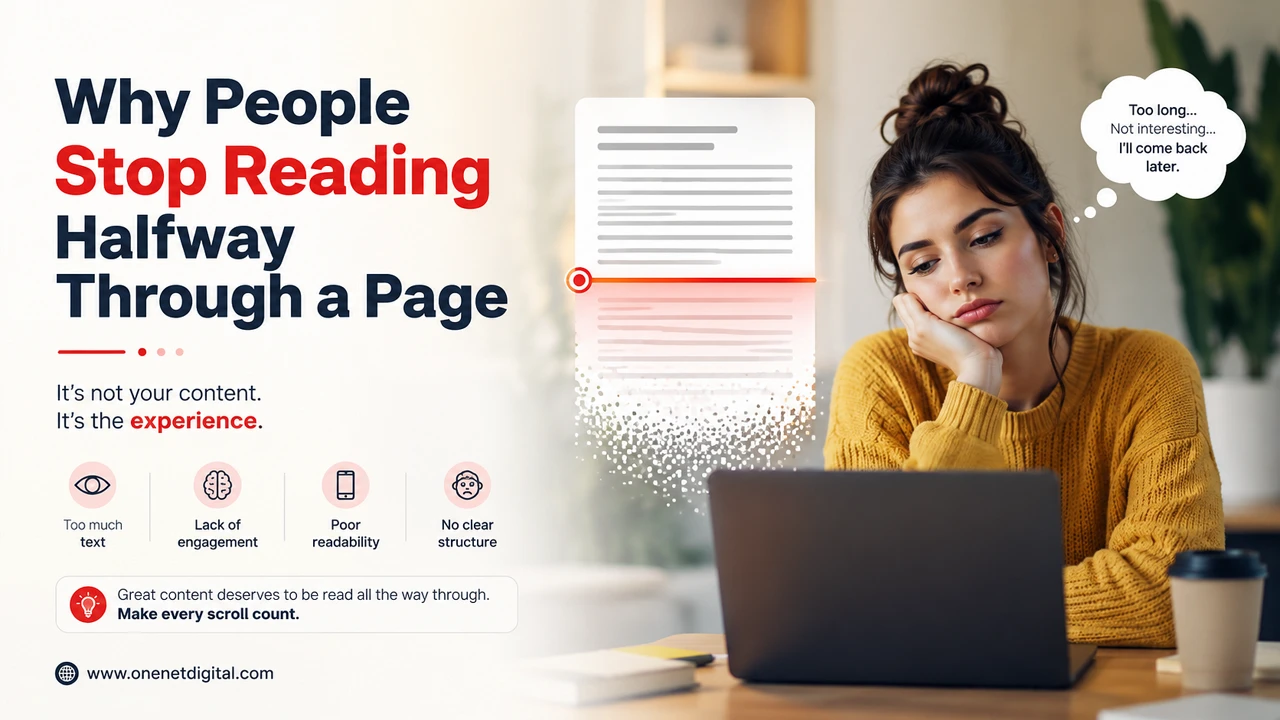
Ever been to a webpage, started reading and left without reading till the end? You are not alone. So many visitors leave articles, blog posts, landing pages and product pages every day without finishing it. Some users just won’t find what they are looking for, but many more leave because the content itself is hard or uninteresting to read.
If you write for the web, you must understand why people stop reading half way down the page. If you have a business website, blog, or an educational resource, it’s important to keep readers engaged to improve user experience and get visitors to explore other pages.
In this article, we’ll go over the most common reasons that readers stop reading and how to make your content compelling enough to keep them reading to the end.
Readers Want Immediate Value
Most people visit a webpage because they are looking for a specific answer or solution. If the intro is long-winded and takes forever to get to the point, lots of readers lose patience and leave before they get to the meat. Users online want to see pages that quickly tell them what they will learn and why it matters to them.
Don’t stuff the opening with a lot of unnecessary background information, get right to the point and answer the reader’s question as soon as possible. Visitors are much more likely to continue reading if they can immediately see that your content is useful.
Large Blocks of Text Feel Overwhelming
Even good writing can be a turn-off for readers if it looks like one long wall of text. Pages that contain large paragraphs with no headings or spacing look hard to read, especially on a smartphone where there isn’t much screen space. Many users will scan a page to see if they want to read it in detail.
The page is much more approachable if you break your content up into shorter paragraphs, add descriptive headings, and use bullet points where they really help clarify things. Good formatting helps readers find information quickly and keeps them engaged for the duration of the article.
Headlines Don’t Match Reader Expectations
A headline sets expectations before you even begin to read. If the content doesn’t deliver on the promises of the title, readers tend to lose trust and bounce off the page. A headline that promises practical tips shouldn’t spend several paragraphs talking about unrelated information before getting to the actual advice.
Every section of the article should be in favor of the main subject introduced in the title. If the headline is accurate and the article remains on point, the reader is more likely to stay engaged all the way through.
Also Read: How Visitors Decide Whether to Trust a Website
Content Is Too Difficult to Understand
Not all visitors will have specialist knowledge of what they are reading about. Articles filled with technical terms, long sentences, or convoluted explanations can quickly overwhelm readers, who will leave the page before finding the information they need.
Good writing, clear and simple, makes the reading experience better without making the content worse. It’s easier to understand information that is written in language that visitors use every day, with concrete instances and brief explanations that motivate visitors to keep reading.
The Page Loads Slowly
Content quality matters as well but it can’t help you if visitors leave before the page is loaded. Slow-loading websites can be a frustrating experience for users, especially for users on mobile devices or users with slower internet connections. Loading pages can be slowed down by large image files, too many scripts and the lack of page optimization.
Visitors will be able to locate information more quickly and have a better browsing experience, which will enhance your website speed. Faster pages also lead to more satisfied users, and more time spent on the site for readers, who will browse more content.
Too Many Interruptions
Readers want to focus on the content they came to read. But constant interruptions can make reading a chore. Like pop-ups, auto-playing videos, big advertisements or subscription requests that keep coming. These distractions break the natural flow of the page, often causing the user to leave.
Calls to action are important but must be carefully placed so they don’t interfere with visitors finding valuable information. Cleaner reading experiences generally lead to better engagement and more time on the page.
The Content Repeats the Same Ideas
One very common cause of reader disinterest is unnecessary repetition. Many articles are filled with repetitive information, but seasoned readers will quickly see that the content offers little novel insight, in an attempt to bump up the word count.
Each part should say something new, answer a different question or develop naturally from previous points. Each paragraph must be meaningful so the reader is interested from the beginning to the end.
Also Read: How to Stop Publishing Content That Adds No Value
Lack of Structure Makes Navigation Difficult
Readers love things that are in a logical order. There are no proper headings or structure, so it’s difficult to see how the different sections relate to one another. The article feels confusing and unorganized.
Typically, a good article begins with an introduction to the topic, then explains the main ideas, discusses the important points in a logical sequence and concludes with a short summary. This makes the content easier to follow and the overall reading experience better.
Mobile Experience Matters
More and more internet users are browsing websites on their smartphones, which means that a site’s mobile readability is more important than ever. Visitors may leave the page before reading much of the content if text is too small, paragraphs are too wide, or buttons are difficult to tap.
Responsive website design ensures articles are comfortable to read on screens of all sizes. Before you go live with your content, be sure to see how it looks on mobile devices. This can make a huge difference in user experience and engagement.
Readers Prefer Helpful Information
People spend more time on pages that actually help them solve a problem or learn something useful. If your content is simply promotional or a rehash of keywords, it doesn’t really give your readers much value and therefore isn’t very engaging.
Helpful articles give clear explanations, relevant examples, practical advice and honest information. Readers are much more likely to continue reading and return to the website in the future if they feel they have gained useful knowledge.
Poor Visual Hierarchy Reduces Engagement
How information is presented is very important for readability. If all the headings look the same, or if important points are buried in long paragraphs, readers may have a hard time picking out the best parts of the article.
Descriptive headings, consistent formatting, proper spacing, and natural emphasis of important information create a clear visual hierarchy. This helps readers to move through the page without difficulty and makes the content much easier to understand.
Lack of Credibility Can Cause Readers to Leave
Readers are more likely to stay on a page when they trust the information. Articles that contain unsupported claims, outdated facts, or obvious inaccuracies can quickly erode trust and cause visitors to look elsewhere.
To build trust means to give correct facts, update the content regularly, write in an unbiased way and make ideas easy to understand. Good, trustworthy content will make your readers want to spend more time on your website.
Also Read: How to Decide When a Topic Deserves Its Own Page
Readers Appreciate a Natural Flow
An article should read like a conversation, not a series of disconnected segments. Jumping from topic to topic can leave the reader feeling disconnected and less interested in continuing on.
Each section should flow naturally from the preceding section, so that the article has a logical progression of ideas throughout. The logical progression assists readers to understand the topic more easily and enables them to be engaged until the end.
Avoid Overusing Keywords
Search engine optimization is needed, but using the same keyword too much can make the content sound unnatural and difficult to read. Search engines will now rank useful content as opposed to content just stuffed with keywords.
Try to use keywords naturally with related terms. It makes reading experience better and still helps with SEO. In general, the best long-term strategy is to write for people first and for search engines second.
Conclusion
It is uncommon for people to stop reading halfway through a page due to just one problem. More often it’s a combination of things, like slow loading speeds, bad formatting, repetitive writing, unclear structure, or content that doesn’t deliver value quickly.
The goal of engaging content isn’t to make articles long, but to make them readable and useful. Clear headings, short paragraphs, logical organization, and helpful information can make a big difference in the reading experience.
Content that is written with the reader in mind will result in more visitors staying on the page, understanding the information, and continuing to browse the rest of the website. Adhering to these principles enhances user satisfaction and guarantees long-term SEO success. When users have a positive experience, they are more likely to interact with your content in a substantial manner rather than bouncing off after a quick visit.
FAQs
1. Why do people stop reading a webpage before reaching the end?
People often stop reading when the content doesn’t quickly answer their questions, contains large blocks of text, loads slowly, or is difficult to understand. Poor formatting and too many distractions can also reduce reader engagement.
2. How can I make visitors stay longer on my webpage?
Focus on providing useful information, use clear headings, write short paragraphs, improve page speed, and ensure your content is easy to read on both desktop and mobile devices. A well-structured page encourages readers to continue.
3. Does content formatting affect user engagement?
Yes. Proper formatting makes content easier to scan and understand. Using descriptive headings, shorter paragraphs, sufficient white space, and occasional bullet points helps readers stay engaged throughout the page.
4. Why are misleading headlines bad for reader retention?
If a headline promises something that the content doesn’t deliver, readers may lose trust and leave the page. Accurate titles help set the right expectations and improve the overall reading experience.
5. Can difficult language reduce the time visitors spend on a page?
Yes. Articles filled with technical jargon or complex sentences can confuse readers. Using simple language and clear explanations makes content more accessible to a wider audience.