
Introduction
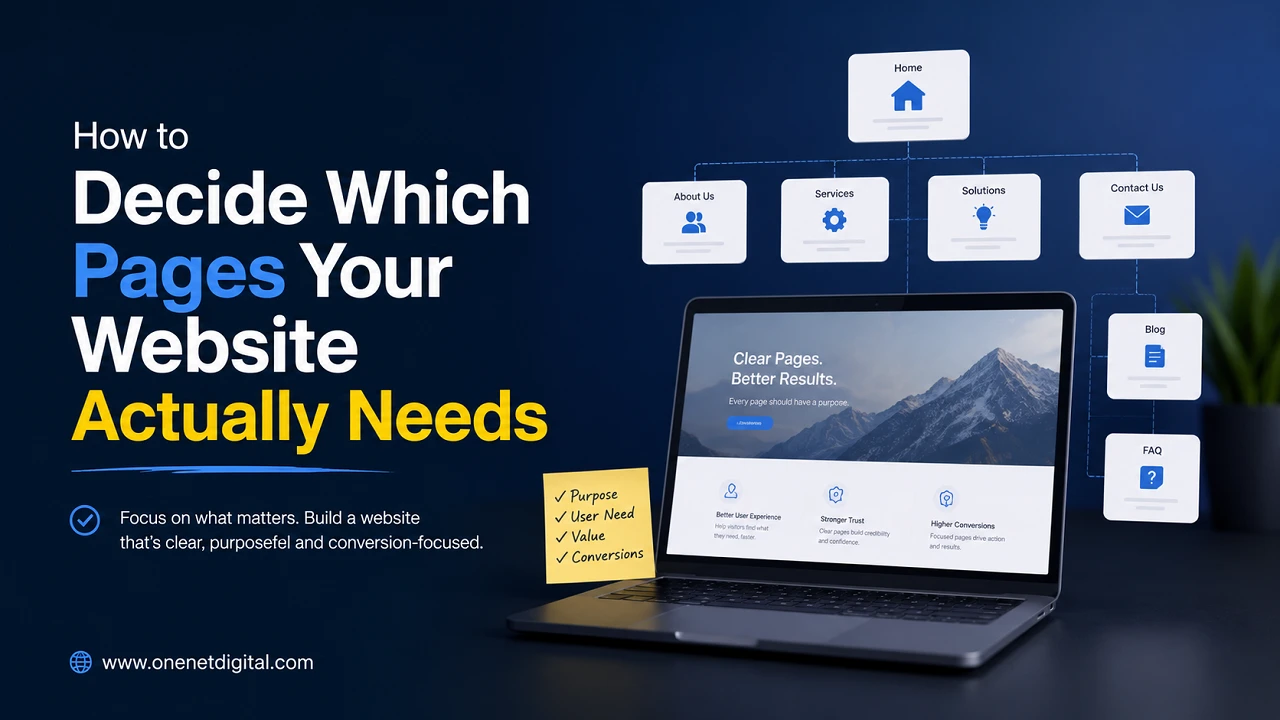
Building a website is more than selecting a design and adding content to it. One of the biggest decisions is deciding what pages your website really needs. Having too many pages that aren’t needed can confuse users as they try to navigate, and too few pages can cause users to search for the information they need.
The correct website structure depends on your business goals, target audience, and the kind of products or services you provide. A well-organized website helps users find information quickly, but it also makes it easier for search engines to understand your content.
In this guide, you’ll learn how to determine what pages matter and how to create a useful, easy-to-navigate, and SEO-friendly website.
Start with Your Website’s Purpose
Before you go creating individual pages, outline the main purpose for your website. Every successful website has a purpose, whether it is to sell products, generate leads, provide useful information, showcase a portfolio, or build a personal brand.
Knowing what your main goal is helps you determine what pages are actually needed, rather than just adding stuff that serves no purpose.
For example, an online store needs dedicated product pages, the ability to add items to a shopping cart and a checkout process. For a service-based business, you might do better to have detailed service pages, an About page, and a contact form. Having all your pages in line with your overall business goal makes your website more organized and effective.
Understand What Your Visitors Want
Your website should be designed around your audience, not just your business. Think about the questions a visitor is likely to ask before they get in touch with you or buy. Perhaps they want to learn about you, what you do, how your services work, what you charge, and why they should choose you over your competitors.
By creating pages that answer these common questions, visitors feel informed and confident. When people can find the information, they’re looking for easily, they’re more likely to stay longer on your site and take the next step.
Also Read: How to Create a Website That Educates Before It Sells
Include the Essential Website Pages
Although different websites will have different needs, there are a few pages that almost all businesses should have. These pages give visitors the basic information they are looking for and give a good base for a user-friendly website. Starting with these key pages you can be sure that your website is clear, professional and easy to navigate.
Home Page
Your homepage is often the first page that visitors see, so it is one of the most important parts of your website. It should immediately tell your audience who you are, what you offer, and how you can help them. A well-designed homepage also directs visitors to key sections of your website, including your services, products or contact details.
But, if you include a brief introduction, compelling calls to action, key benefits and trust signals (e.g. testimonials or certifications), your homepage will be much more effective.
About Page
A lot of visitors want to know more about the people or company behind a website before making a decision. An About page builds trust by sharing your story, experience, mission and values. Don’t waste time with a long company history. Give information that shows your expertise and tells customers why they can trust your business.
A good About page builds a personal connection while also reinforcing your credibility.
Services or Products Page
When your business provides a range of services, it’s common advice to create a separate page for each one. This enables you to describe each service in detail, but also target certain search keywords that can help improve your SEO performance. Visitors can also get a better idea of what you are offering.
Each eCommerce product needs a dedicated page that includes detailed descriptions, pricing, specifications, images, and other relevant information so that customers can make an informed buying decision.
Contact Page
Keep It Simple the Contact page should be as easy as possible to get in touch with you. Include necessary information such as a contact form, email address, phone number, business location (if applicable) and operating hours. The fewer barriers’ people have to reach out to your business, the more likely they will.
A well-defined and easy-to-navigate Contact page adds credibility and assures visitors that your business is authentic.
Also Read: How to Turn Website Visitors into Repeat Visitors (2026 Guide)
Create Pages Based on Your Business
Besides the required pages, many companies find value in creating additional pages that cater to their industry and customer needs. You may also want to include a portfolio, gallery, case studies, testimonials, pricing page, FAQ section, blog, resource center, careers page, events page, or online booking page depending on what you’re offering.
The point is not to make as many pages as possible. Instead try adding pages that are useful and actually help your visitors make better decisions.
Avoid Creating Pages Just for SEO
One common mistake is to create a number of pages for slightly different keywords that are almost identical in content. It may sound like an SEO trick, but it often leads to duplicate content, bad user experience and unnecessary clutter on your website.
Focus on creating pages that can satisfy different user intents instead. Each page should have a specific purpose, provide original information and answer a question your audience may have.
Organize Similar Topics Together
A website that is well-organized is easier for both visitors and search engines to navigate. Don’t just have random pages here and there on your website. Group similar content into categories that make sense. You can create a Resources or Blog section, for example, for educational articles, guides, and FAQs and group all service pages under a Services section.
This structure improves the browsing experience and helps search engines understand the relationship between your content, which can help with SEO overall.
Think About the Customer Journey
When designing your website, think about how a first-time visitor goes from discovering your business to becoming a customer. The typical customer journey is simple: they find your business, they look at your products and services, they develop trust through reading reviews or company information, and then they decide to contact you or buy.
Your website must be able to support each step of this process. Someone might find one of your blog articles on Google, come to your service page to learn more, read your About page and testimonials and then fill out a contact form. This journey is natural and effortless with a well-defined website structure.
Also Read: Why Website Clarity Is More Important Than Creativity
Don’t Forget Legal Pages
Legal pages are not visited often, but are important for building trust and meeting legal requirements. Depending on the nature of your website, you may need to have a Privacy Policy, Terms and Conditions, Cookie Policy, Disclaimer or Refund and Return Policy for eCommerce stores.
These pages explain how your business handles customer information and outline important policies to help visitors feel more confident in using your website.
Review Your Website Regularly
As your business grows, your website should evolve. By keeping your pages current you help make sure your content is accurate, useful and relevant. Get rid of old information, merge appropriate pages together, and revise any content that no longer represents your present services or business objectives.
Regular website audits also help you find pages that are getting little traffic or pages that are no longer useful, making your website easier to maintain.
Keep Navigation Simple
Even if your site is dozens of pages long, your visitors should always be able to quickly find what they are looking for. A clean, structured navigation menu enhances user experience and entices visitors to check out more of your website.
Limit your primary navigation to the most important sections and use drop-down menus only when necessary. Keeping navigation clean and consistent helps reduce confusion and makes your site easier to use.
Focus on Quality Instead of Quantity
Having lots of pages doesn’t automatically improve your search engine rankings. More often than not, a small site with quality informative content will rank higher than a large site with thin or duplicate content pages.
Before publishing a new page, ask yourself whether it answers a real question, solves a problem or helps visitors make a decision. If it doesn’t provide meaningful value, it may not be needed. Quality trumps quantity when it comes to building a more powerful site for users and search engines.
Also Read: How to Measure Content Quality Beyond Google Rankings
Final Thoughts
To decide which pages your website actually needs, you need to know your business goals and your audience expectations. Each page should have a clear purpose – to introduce your business, explain a service, answer common questions or help visitors get in touch.
Instead of adding more pages to your website, concentrate on providing quality, useful, and well-organized content that assists the customer journey. A well-structured website will not only enhance the user experience but will also help search engines to better understand your content and will provide a strong base for your website to grow in the long-term.
Frequently Asked Questions (FAQs)
1. How do I decide which pages my website needs?
Start by identifying your website’s primary purpose and understanding what information your visitors are looking for. Include pages that help users learn about your business, explore your products or services, and contact you easily.
2. What are the essential pages every website should have?
Most websites should include a Home page, About page, Services or Products page, Contact page, and important legal pages such as a Privacy Policy. Additional pages depend on your business type and goals.
3. Should I create a separate page for each service?
Yes. If you offer multiple services, creating individual pages for each service can improve user experience and help target relevant keywords in search engines. It also allows you to provide more detailed information about each service.
4. Can having too many pages hurt my website?
Yes. Publishing unnecessary or low-quality pages can make your website harder to navigate and may create duplicate or thin content issues. It’s better to focus on pages that provide unique value to your visitors.
5. Why is website structure important for SEO?
A well-organized website helps search engines understand the relationship between your pages. It also makes it easier for visitors to find information, which can improve user experience and engagement.