
Introduction
There are a lot of businesses that spend a lot of time on their websites, running ads, and driving traffic from search engines or social media. Many business owners struggle to understand one crucial thing even when they get visitors – what users actually do after arriving on the website.
Visitor behaviour can’t be properly explained by traffic figures alone. A website can have thousands of visitors but businesses still might not know which parts of the website users like, where they lose interest, or why they leave without converting. This is where website heatmaps come in very handy.
Heatmaps allow businesses to see visually how visitors interact with webpages. Instead of relying only on assumptions, businesses can watch how real users behave, such as their clicks, scrolling activity, and areas of engagement.
By 2026, user experience has become one of the most important elements of digital marketing and website optimization. Search engines like Google have also placed great emphasis on engagement-related signals, further underscoring the need to understand visitor behaviour for long-term online growth.
The biggest advantage of heatmaps is that they help businesses make smarter website decisions based on actual user interaction data instead of guessing what visitors want.
What are Websites Heatmaps?
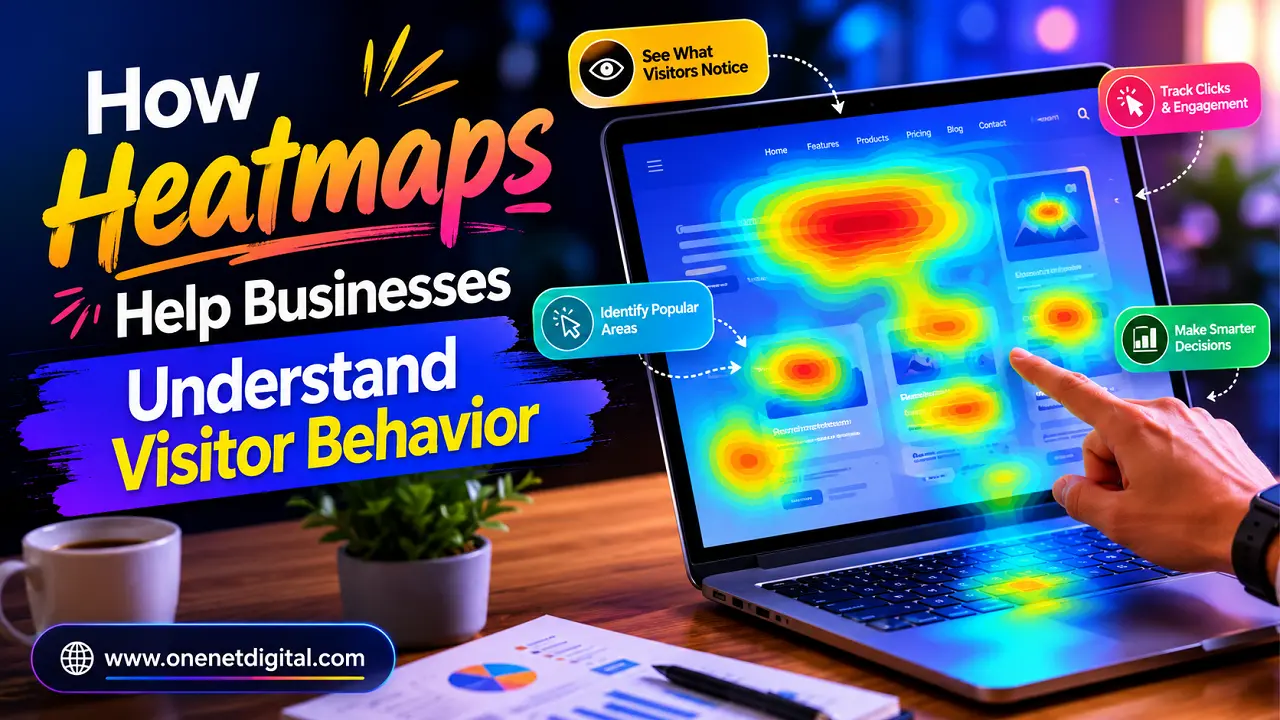
Website heatmaps are visual tracking tools that show how users interact with a website. They use patterns based on colour to show what parts of a page are most looked at and what parts are mostly ignored.
For instance, a warmer colour often means that the area is very active, as more users are interacting with that part of the map. Areas of low interaction tend to be cooler because there are fewer visitors paying attention.
This enables businesses to know things such as:
- Where users click the most
- How far visitors scroll
- Which sections attract attention
- Where engagement starts dropping
Instead of just crunching analytics numbers, businesses can get a visual insight into real browsing behaviour. This makes it a lot easier to identify user experience issues and boost the website’s performance overall.
Heatmaps Help Businesses Understand User Attention
One of the biggest challenges with website optimization is understanding what visitors really pay attention to once they’ve opened a page.
A lot of businesses assume users are reading important content or noticing call-to-action buttons, but heatmaps often show a completely different story. Sometimes users pay more attention to images than to critical service information. In other cases, a visitor may completely ignore buttons or offers that businesses thought would be successful.
Heatmaps make it easy to see where these attention gaps are. Businesses can see which parts organically appeal to users and which don’t create engagement.
This information is extremely valuable as it helps you improve content placement, visual hierarchy and page structure. Placing important information where users naturally look more often results in a significant increase in engagement and conversions.
Also Read: Why Your Landing Page Looks Good, But Doesn’t Convert
Heatmaps Enhance the User Experience
User experience is now one of the most important factors affecting website success. If visitors feel confused, frustrated, or overwhelmed while browsing a website, they usually leave quickly.
Heatmaps help businesses identify user experience problems that may not be obvious during normal testing. For example, businesses may discover that users repeatedly click on non-clickable elements because they expect those areas to work differently. Similarly, some navigation sections may confuse visitors, reducing interaction and engagement.
Understanding these behavioral patterns helps businesses create smoother browsing experiences. Instead of redesigning entire websites blindly, businesses can make targeted improvements based on actual user interaction.
Small user experience improvements often create major differences in:
- Website engagement
- Bounce rates
- Conversion performance
- Visitor retention
Websites that are easier and more comfortable to use tend to perform much better overall.
Scroll Heatmaps Show Where Visitors Lose Interest
In particular, scroll heatmaps are useful for understanding just how far down a page people actually scroll. Many businesses will make very long landing pages or service pages, thinking that visitors read everything carefully. But in reality, users often stop scrolling way earlier than you might think.
Scroll heatmaps show where engagement starts to drop off. Companies can readily see which parts of the site are most popular with users and where they become disinterested or leave the page.
This is a very useful insight as important information is often placed too low on the page. Businesses may realize that users never even reach key offers, pricing sections, testimonials, or contact forms.
Analyzing scroll behaviour can help businesses reorganize content by moving important sections higher on the page. That naturally helps improve both engagement and conversion rates.
How Heatmaps Help to Increase Conversion Rates
Even after bringing in decent traffic to their website, many businesses suffer from low conversion rates. In many cases it’s not the quality of traffic, but poor interaction with the page.
Heatmaps allow businesses to understand why visitors do not convert. They show whether users are seeing important buttons, using forms, or ignoring conversion areas altogether.
Sometimes small issues with the design or layout can dramatically reduce conversions. You might place a call-to-action button in a place your users don’t see too often. Important forms may be too late on the page. Unnecessary visual elements can also be distracting for visitors.
Without behavioral data, businesses make random changes hoping for better results. Heatmaps eliminate this guess work by showing you real user interaction patterns.
This enables businesses to optimize pages more intelligently and improve conversions using real visitor behaviour insights instead of assumptions.
Also Read: How Website Fonts Affect Customer Trust and Readability
Heatmaps are Very Useful for Mobile Optimization
In 2026, most website traffic is from smartphones. This makes the behaviour of mobile users very important for business.
What works well on desktop devices can be very different from what works well on mobile screens. Heatmaps enable businesses to understand how mobile users interact with webpages in real-life situations.
Businesses face problems such as:
- Users struggling with button placement
- Important content appearing too low on mobile screens
- Navigation sections becoming difficult to use
- Mobile visitors leaving pages much faster
Such insights can help companies to improve mobile usability more effectively.
Mobile optimization has a direct effect:
- User engagement
- Scroll depth
- Customer satisfaction
- SEO performance
Businesses that understand how mobile visitors behave tend to build far superior user browsing experiences.
Heatmaps Reveal Hidden Website Problems
Without monitoring user behaviour many problems on websites go unseen. A business owner may think that the website is working fine, but actual users may experience confusion or frustration when browsing. Heatmaps help to reveal hidden problems that traditional analytics often cannot explain clearly.
Say, a business might notice that visitors keep clicking on decorative images, thinking they’re buttons. Furthermore, users may ignore important sections altogether because they are poorly integrated into the page design.
Heatmaps show the natural behaviour of users, not the expected behaviour of businesses. This enables smarter website optimization and prevents businesses from making unnecessary redesign decisions that may not solve the actual problems.
Heatmaps Enable Businesses to Make Smarter Decisions
One of the greatest benefits of heatmaps is that companies are no longer relying only on personal opinions.
Most decisions about a website are made without behavioral data, based instead on assumptions, design preferences, or trends. But what looks good visually doesn’t always work well for actual users.
Heatmaps provide evidence-based insights that help businesses understand actual visitor behavior. This enables more confident decision-making with respect to:
- Layout changes
- Content placement
- Call-to-action positioning
- Navigation improvements
- Landing page optimization
Businesses that use real user data tend to make more effective website improvements over time.
Also Read: Why Your Website Isn’t Getting Scrolled
Heatmaps Help with Better SEO Performance Too
Heatmaps are not directly an SEO ranking factor, but they are excellent at improving user experience, which in turn indirectly impacts SEO.
Search engines like sites where users interact and stay longer. Visitors that leave quickly without scrolling or interacting will send weaker engagement signals over time.
Heatmaps allow businesses to see what draws users in and what pushes them away. Businesses can often improve user experience based on real behaviour patterns:
- Bounce rates
- Session duration
- User interaction
- Website engagement
In this way, these improvements are indirectly improving SEO performance and stronger visibility in the long term.
Conclusion
By 2026, heatmaps have emerged as one of the most valuable tools for understanding website visitor behaviour. Businesses can see real interaction patterns, and improve websites based on actual user behaviour, instead of guessing what users want.
They can help businesses identify engagement issues, improve user experience, optimize landing pages, increase conversions and create more effective website structures.
Many businesses spend time making changes to designs without understanding the real reasons for poor performance. This is where heatmaps come in and provide simple behavioral insights that allow you to make smarter optimization decisions.
Small improvements based on the heatmap analysis often yield much better results than expensive redesigns based solely on assumptions.
Companies that really understand how visitors use their websites tend to create better user experiences, better engagement and more successful long-term digital growth.
FAQs
1. What is a heat map for a website?
A website heatmap is a visual representation of how users interact with your web pages including clicks, scrolling, and areas of engagement.
2. What do heatmaps do for businesses?
Heatmaps help businesses understand visitor behaviour to improve user experience, engagement and conversions.
3. Can heatmaps increase conversions?
Yes, heatmaps can help identify usability and interaction problems that may be reducing conversions.
4. Do heatmaps work for mobile optimization?
Yes, they help businesses understand how mobile users interact with webpages and uncover mobile usability issues.
5. Are heatmaps good for SEO?
Heatmaps help SEO indirectly by improving engagement and overall user experience on websites.