
Introduction
When companies think about making their website better, they usually think about design, colours, images, or SEO. But one important aspect is often totally forgotten – the fonts of the website.
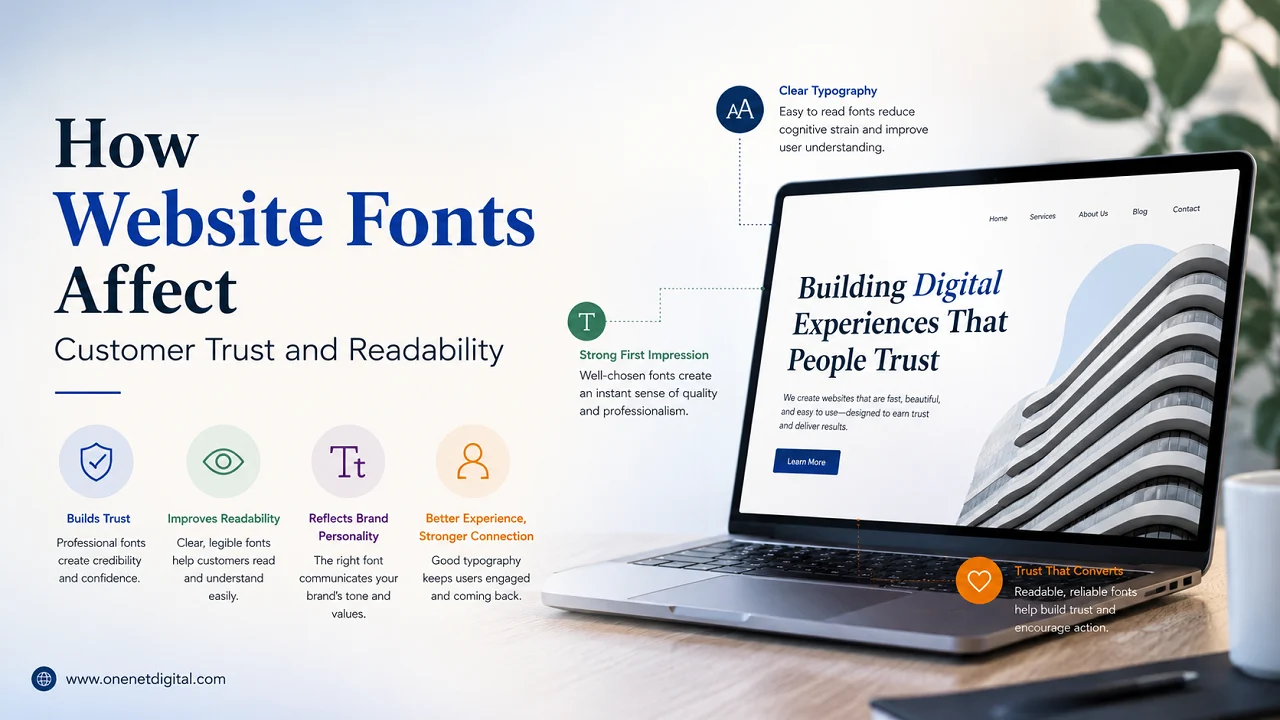
Fonts are a seemingly small design detail, but they have a huge impact on user experience, readability, and customer trust. In 2026, people judge websites in seconds, and typography plays a big part in that first impression.
Poor font choices can make a website appear outdated, confusing, hard to read, and even unprofessional. On the other hand, clean and readable typography makes a website more reliable, modern, and user-friendly.
Visitors generally don’t consciously think about fonts as they browse. But their experience is highly dependent on how comfortable the content is. If the text is messy or difficult to understand, users often leave the website quickly without further engagement.
Search engines like Google are also giving a lot of importance to user experience signals like engagement, readability, and bounce rates. So, typography also indirectly impacts SEO performance.
The good news is, you don’t need to build an entirely new website to improve your website typography. Even small tweaks to the font can go a long way in improving readability, engagement, and customer trust.
Fonts Make the First Impression of Your Website
Users start judging the professionalism of a website as soon as they load it. That first impression is a huge part of typography.
If the font looks old-fashioned, too fancy, or hard to read, visitors might instantly think the business itself is not modern or trustworthy.
Many websites have fonts that are:
- Too small
- Overly fancy
- Poor spacing
- Hard to read on mobile devices
This makes the user uncomfortable even before they start reading the content.
Clean and modern typography helps websites look more professional and organized. Simple fonts build stronger trust because users can comfortably focus on the information rather than struggle to read the text.
Visitors might forget the exact font style, but they will definitely remember the feeling when browsing the website.
Also Read: Why Your Website Isn’t Getting Scrolled
Readability Directly Affects User Engagement
Readability is one of the most important aspects of user experience on a website.
When visitors find any piece of content hard to read comfortably, they tend to bounce fast without checking additional pages. This naturally decreases engagement and boosts bounce rates.
Many businesses unknowingly destroy readability by using:
- Very thin fonts
- Colors with low contrast
- Small font sizes
- Tight line spacing
- Typography too stylish
Even good content doesn’t work well when the reading experience is uncomfortable.
Users love sites where they can smoothly and effortlessly consume content. Clear typography invites people to:
- Stay longer on pages.
- Read more content
- Scroll further
- Interact more with the website.
Good readability ensures a calmer, more professional browsing experience.
Fonts Play a Big Role in Building Customer Trust
Trust is a very important factor for online businesses, as visitors cannot physically interact with the company.
People judge credibility by how the website looks and feels. Typography has a surprisingly large role in this process.
For example, websites with ugly or inconsistent fonts tend to look like:
- Unprofessional
- Outdated
- Low quality
- Untrustworthy
Clean typography, on the other hand, gives a more polished and reliable look to businesses.
This is particularly important for industries such as:
- Healthcare
- Finance
- Digital marketing
- Ecommerce
- Legal services
In these industries, websites are expected by end-users to feel trustworthy and professionally managed.
Small typography tweaks can evoke a stronger sense of confidence without altering the overall website design.
Also Read: How AI Chatbots Are Changing Small Business Customer Support
Mobile Readability Is More Important Than Ever
By 2026, most users will access sites through smartphones. That means the fonts need to work across a range of screen sizes. What looks good in a font on a desktop can be hard to read on smaller mobile screens.
Many websites still have typography issues on mobile, such as:
- Tiny text sizes
- Poor spacing
- Overcrowded paragraphs
- Text links that are difficult to click
These issues quickly decrease engagement as users don’t want to struggle reading content on mobile devices.
Mobile readability impacts directly:
- User experience
- Scroll depth
- Bounce rates
- SEO performance
Companies should also routinely check typography on smartphones to ensure content remains comfortable and readable.
Poor Fonts Make Websites Look Outdated
Website trends change every year, and typography is part of the modern user experience. Even if the services are good, there are still websites that use old-style fonts that make the business look dated.
Visual quality is often equated by users with business quality. If the website looks old visitors might think:
- The business is inactive.
- The company is not up to date.
- Services may not be renewed.
Modern typography provides a cleaner and fresher digital experience. Simple, readable fonts tend to work much better than overly decorative styles.
Typography Affects How People Scan Websites
Most internet users don’t read every word carefully. Instead of reading pages, they look at pages and decide whether to continue reading. Typography impacts how easily users can scan information.
Good typography helps visitors to easily identify:
- Headings
- Important points
- Key sections
- Calls-to-action
Well-structured and readable fonts help users understand the page content faster. Poor typography makes it hard to scan; that’s often why users leave without really interacting with the website.
Also Read: Why Your Service Pages Don’t Rank on Google
Keep Fonts Consistent for Better Branding
Trust in a website is also a matter of consistency. Some businesses use different kinds of fonts randomly on different pages. It leads to a disorganized and confusing experience.
Consistent typography helps websites to feel:
- Professional
- Stable
- Organized
- Easy to navigate
Strong branding is much more than just logos or colours. Typography also plays a huge part in establishing visual identity. If the font style is consistent across the whole website, it will make users more comfortable and familiar with browsing.
Website Fonts Also Impact Accessibility
Accessibility has become a central theme of modern web design.
Some users might have:
- Vision difficulties
- Reading challenges
- Screen size limitations
Many visitors find a website difficult to use if it uses complex fonts.
Accessible typography is about making it easy to read and comfortable for all users. This includes:
- Clear font styles
- Proper spacing
- Good contrast
- Readable sizing
Websites that are easier to read tend to engage more deeply and reach a wider audience.
Fonts Can Indirectly Boost SEO Performance
Typography is not a direct Google ranking factor, but it can have a huge impact on user behaviour signals that do influence SEO. If users stay longer, scroll more, and interact comfortably with content, search engines often see the website as more valuable.
Generally, poorer readability increases:
- Bounce rates
- User frustration
- Exit rates
Good typography helps with the overall user experience, which helps with better SEO results over time. Typography is an important part of the modern website optimization strategy, and for a good reason.
Also Read: How Dark Mode Website Design Affects User Experience
Simplicity Works Better Often
Lots of businesses try to make their websites look unique with fancy typography. But in most cases, simple fonts tend to give better results. When it comes to reading online content, users prioritize comfort over creativity.
Clean fonts enable visitors to focus on the message and not get distracted by the complexity of the design. Modern websites are increasingly choosing minimal, highly readable typography, as it naturally improves engagement and trust.
Conclusion
Website fonts may seem like a small design detail, but they have a big impact on readability, engagement, and customer trust. By 2026, users will expect websites to be simple, modern, and easy to read on all devices. Even if the content is valuable, bad typography can quickly destroy trust and drive visitors away.
Clean typography can make your website more readable, create better first impressions, strengthen your branding, and help users interact with your website more comfortably.
Businesses that focus on user experience with better typography tend to have stronger engagement, better SEO performance, and higher conversions over time. Sometimes, little tweaks to typography can make a much bigger difference than costly redesigns.
FAQs
1. Why fonts matter on websites?
Website fonts affect readability, user experience, engagement, and customer trust.
2. Do fonts impact website SEO?
Fonts indirectly help SEO by improving user experience and engagement signals.
3. What are the best font types for websites?
Modern websites tend to work best with clean, simple, and highly readable fonts.
4. Why is mobile typography important?
Since most users browse on smartphones, readable mobile text improves engagement and usability.
5. Can bad fonts hurt customer trust?
Hard or old typography. Yes, it can make websites look less professional and less trustworthy.