- Introduction
- Traffic vs. Customers
- Wrong Keywords Positioning
- Search Intent is More Important than Ranking
- Trust in Websites is Essential
- Bad User Experience Can Lead to Lost Conversions
- Visitors Need a Reason to Take Action
- Competition Is Just One Click Away
- Some Visitors Aren’t Ready to Buy Just Yet
- Measuring the Wrong Success Metrics
- Why Conversion Optimization Matters
- Summary
- FAQs
Introduction
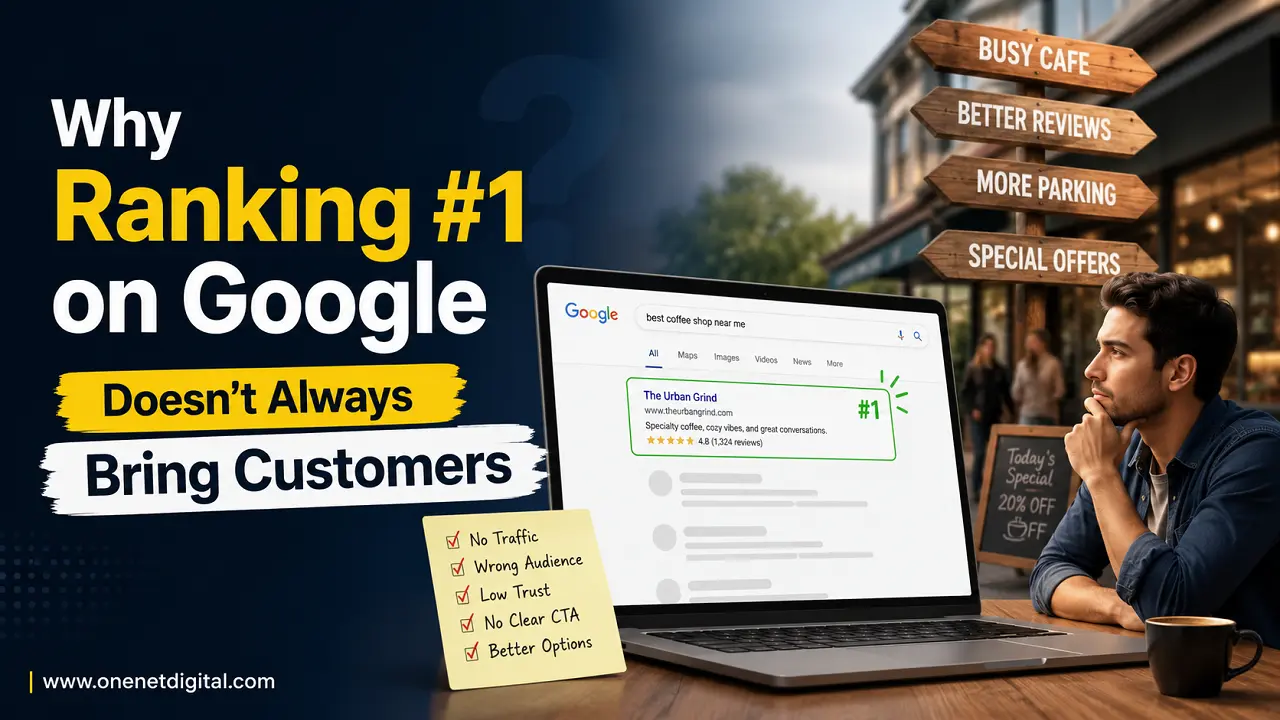
For many businesses, the ultimate goal in digital marketing is to rank on Google. Many business owners think that once their website gets to the first page of search results, it will be found by customers who will contact them to buy products or request services. Higher rankings can certainly help with visibility but don’t always equal business growth.
It’s a mistake that many companies learn after putting a lot of time and effort into SEO. They get traffic to their website, impressions increase, they rank well for targeted keywords on some pages, but enquiries and sales continue to disappoint. This can be frustrating because it feels like the website is winning from an SEO perspective but losing on meaningful business results.
The truth is that rankings are just one piece of the customer acquisition puzzle. A website can rank very well in search but have a hard time converting visitors to customers. Understanding why this occurs can assist businesses in targeting not just more traffic, but the right kind of traffic.
Traffic vs. Customers
One of the biggest myths in digital marketing is that website traffic automatically translates to customers.
A visitor on a website is just a potential customer. Whether they actually become a customer depends on many other factors — their intent, their level of trust, budget, needs and overall experience on the website.
A page may generate thousands of visitors a month, but if those visitors are only looking for information, they might never contact the business. Analytics reports can show impressive traffic numbers but very little revenue.
That is why successful companies focus on traffic quality in addition to traffic growth. It is not about increasing visitors, but to attract people who are truly interested in taking action.
Wrong Keywords Positioning
A lot of websites rank for terms that aren’t really about buying intent.
For example, a web design company may rank well for a generic informational keyword such as “what is website design. This keyword has high traffic potential but many visitors looking for it are looking for educational info rather than professional services.
You get visitors to your web site, but hardly any enquiries.
Keywords with strong commercial intent tend to bring fewer visitors, but better leads. Someone searching for “website design services for small businesses” is usually much closer to a decision than someone searching for general information about web design.
Businesses that focus only on search volume often attract audiences unlikely to convert.
Also Read: Why Too Much Text on Your Website Damages Conversions
Search Intent is More Important than Ranking
Search intent is more and more the focus of modern SEO. This is where a user searches.
Not everyone who uses Google has the same objective. Some users want information, some want comparisons, and some are ready to buy.
A website can be ranked highly for informational searches but still attract visitors who are not ready to be customers. These users may read an article, find their answer and leave without doing anything else.
That does not mean the traffic is useless, but rather that rankings should not be the primary measure of success.
Businesses need to know if the keywords they are targeting are the right ones for the customers they want to reach.
Trust in Websites is Essential
Conversions can be low even if websites are attracting highly relevant traffic if visitors don’t trust the business.
People make up their minds very fast on the web whether they trust something or not. They look at things like the website design, how professional it looks, the quality of the content, any testimonials they can find, contact information, how credible the whole thing seems.
Often, if visitors have any doubts about a business, they just walk away without speaking to anyone.
Lots of sites are very optimized for SEO but they don’t have trust-building elements. They do attract visitors, but they don’t convince the visitors that the business is credible.
Traffic to the website comes from ranking. Trust helps convert those visitors into customers.
Bad User Experience Can Lead to Lost Conversions
Websites that rank well, but have a poor user experience, often find it difficult to deliver.
Visitors want fast, mobile-friendly, easy to navigate and simple to understand websites. People will leave pages that take too long to load, are confusingly laid out, or make it difficult to find information.
This creates a situation where SEO is working, but conversions are not.
Sometimes it takes months for companies to work on rankings, ignoring user experience issues that impact customer behaviour. Even small usability issues can have a huge effect on conversion rates.
It’s important to get visitors, but it’s also important to make sure they have a good experience when they do come.
Also Read: How Micro-Animations Enhance Website User Experience
Visitors Need a Reason to Take Action
Many websites give information but do not encourage visitors to make the next move.
Having what a user is looking for is not enough – if the website doesn’t clearly tell them what to do next, they often leave.
That is a common problem with service-based websites. Businesses spend time optimizing pages for search engines, but pay little attention to directing visitors to contact the company, request a quote, or book a consultation.
A website should not just answer questions but help users move forward in their decision-making process.
Without clear direction, even highly targeted traffic can disappear without converting.
Competition Is Just One Click Away
Just because you’re ranked on Google doesn’t mean a visitor will choose your business.
Search results will typically include a number of options, and users will typically compare a number of sites before deciding. Competitors might still be looked at by visitors, even if your website is the top result.
If the competing websites have better messaging, stronger trust signals, better design or more convincing content, users may choose those instead.
That’s why it’s more important to focus on differentiation than rankings alone. Visibility is important, but differentiating is as critical.
Visitors need a reason to go with one business or another.
Some Visitors Aren’t Ready to Buy Just Yet
Not all visitors to your website are ready to be a customer at this moment.
Many users will spend days, weeks or even months researching before making a decision. They may visit several websites, compare options, read reviews and collect information before they take action.
Therefore, rankings can drive traffic, but not instant conversions.
This doesn’t mean SEO is dying, however. It may simply be the customer journey is taking longer than expected.
The companies that eventually convert their visitors are the ones that provide valuable content, build trust and stay visible throughout the research process.
Also Read: Why Your Website Homepage is Confusing Visitors
Measuring the Wrong Success Metrics
Many companies celebrate rankings and traffic but miss the more important performance indicators.
High rankings can be an illusion of success if not linked to real business outcomes. A website can rank for dozens of keywords and get thousands of visitors, but if leads and sales aren’t moving, those rankings aren’t worth much.
More meaningful metrics generally include:
- Lead generation
- Contact form submissions
- Phone calls
- Consultation requests
- Sales conversions
- Revenue growth
These metrics provide a better view of whether SEO efforts are driving business goals. Ultimately, rankings are a means to an end, not an end in themselves.
Why Conversion Optimization Matters
SEO and conversion optimization should go hand in hand. SEO brings people to the website and conversion optimization turns those visitors into customers. If you neglect any one of these areas, results usually suffer.
Many companies put a lot of stock in rankings but ignore conversion factors such as trust signals, clarity of content, calls-to-action, page structure, and user experience.
A website with lower traffic but higher conversion rates will often achieve better business outcomes than a website with lots of low-quality traffic.
That’s why successful digital strategies are all about visibility and conversion performance.
Summary
Rankings on Google are important, but rankings alone don’t bring customers. Traffic, visibility and search positions only matter if they lead to meaningful business results.
Good ranking doesn’t always mean lead generation. If you’re using the wrong keywords, getting traffic from the wrong visitors, not establishing trust, providing a bad experience, or not leading users toward action, you won’t generate leads.
In 2026, it’s about more than rankings. It’s about the complete customer journey. The goal is not just to show up in search results, but to attract the right audience, build trust, and create an experience that leads to action.
The most successful websites are not always the ones that rank highest. These are the ones that convert visibility into real business opportunities and long-term customer relationships.
FAQs
1. Why am I getting traffic and no customers?
You might be driving the wrong traffic to your website, targeting informational keywords or facing issues with conversions.
2. Does ranking first on Google guarantee sales?
No, rankings help with visibility, but trust, user experience and visitor intent drive conversions.
3. What is the difference between traffic and customers?
Traffic is visitors to your website Customers are visitors that take an action, such as making a purchase, or contacting your business.
4. Why is search intent important for SEO?
By analyzing search intent, you can determine if visitors are seeking information or are ready to become customers.
5. How to increase organic traffic conversion for your business?
This can be done by focusing on relevant keywords, improving user experience, building trust and having clear calls-to-action.