
Introduction
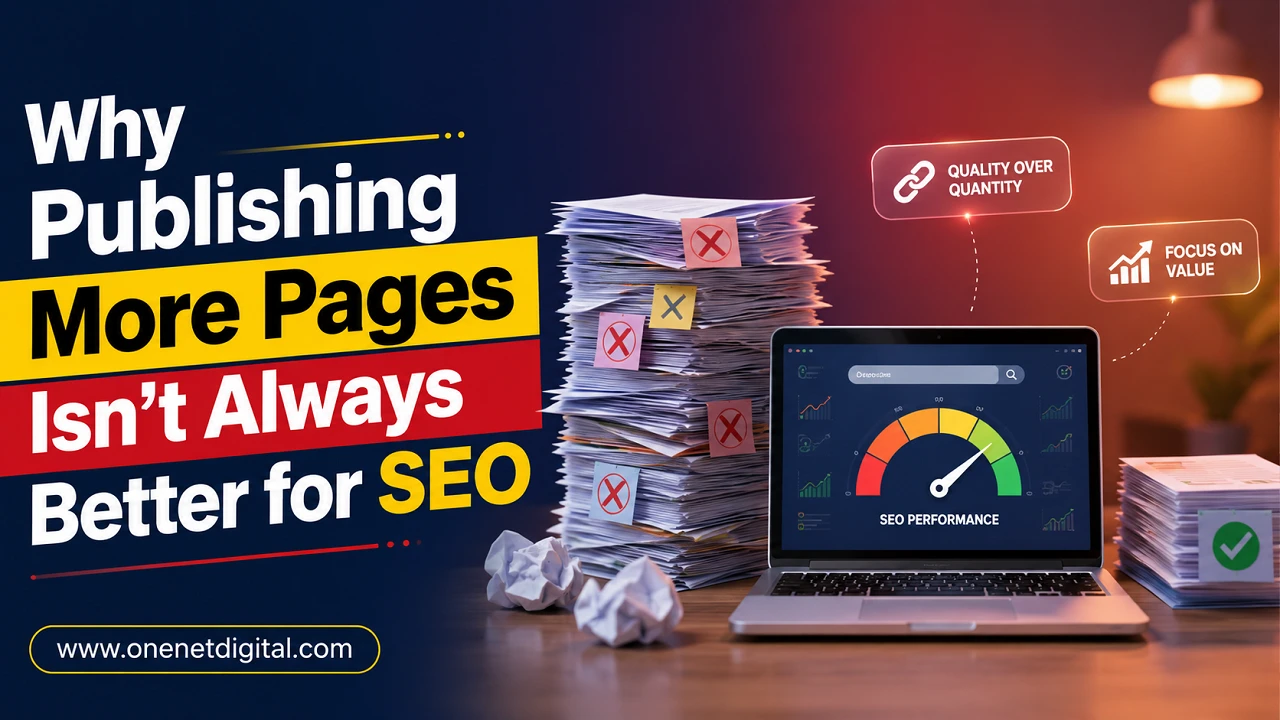
A lot of website owners think that the more pages they publish, the higher they will rank in the search engines. A key feature of SEO is adding new content, but more content doesn’t always mean better results. Search engines are not designed to reward websites with a large number of pages, but rather those that provide useful, relevant and high quality information.
A website with fewer, but higher quality pages, will often outrank one with hundreds of low value articles. Each page should have a clear purpose, answer users’ questions and provide useful information. It is important to know the balance between content quality vs content quantity to build a strong online presence and for sustainable SEO growth.
Quality Before Quantity
Search engines do their best to provide the best results for users. If a site has many pages that offer little value or duplicate existing information, these pages are unlikely to perform well in search results.
Good content is informative, accurate, easy to read, and relevant to the audience. Visitors that find information useful are more likely to stick around, browse other pages and come back later on. Such positive user experiences contribute to better website performance in the long run.
Short Content Can Hurt Website Value
A website can be weakened, not improved, by pages that publish very little useful information. Short content generally lacks depth, originality or practical value, making it less helpful to readers.
If there are too many pages that don’t say much then search engines may consider the website to be a lower quality overall. Writing many short articles on similar topics is often less useful than writing fewer pages that go into more depth, and fully answer common questions that users may have.
Also Read: How to Find Content Opportunities Your Competitors Miss
Duplicate Topics Create Unnecessary Competition
Some websites publish several articles on almost the same subjects, to target different keywords. This method can cause confusion to readers and search engines both.
Multiple pages competing for the same search terms may cannibalise each other’s visibility rather than improving their rankings. Combining related information into a single, comprehensive article often provides a better user experience and helps search engines understand which page is most valuable.
User Experience Impacts SEO Performance
SEO has moved beyond keywords and backlinks. Visitors’ behaviour after arriving on a website from search results also influences search engine rankings.
If users are bouncing away quickly because they can’t find useful information, then regular publication of new pages may not improve rankings. Easy navigation, readability, logical structure, and useful information make visitors spend more time on the website and visit more pages naturally.
Content That Is Updated Regularly Is Often More Effective
Adding new content is often a better long-term strategy than constantly creating new pages. Industries evolve, statistics expire and expectations from users keep changing.
By adding new information, better explanations, recent examples and updated data, you help keep older articles relevant by updating them. Regular updates are a key part of any SEO strategy as search engines love content that is accurate and useful.
Also Read: How to Get More Customers from Google Maps (Complete Local SEO Guide)
Every Page Should Have a Clear Purpose
Every page on a website needs to have a purpose. Every article should add something new to the table, whether it’s answering a common question, explaining a service or providing educational information.
Publishing something for the purpose of increasing the number of indexed pages rarely creates lasting results. Before writing a new article, it is worth asking whether it is really something new, or whether the information might be better placed in an existing page.
Internal Linking Supports a Valuable Content
Proper internal linking helps search engines understand the relationship between different pages on a site. It also guides visitors to additional useful information without making navigation difficult.
If sites focus on fewer, but higher quality pages, internal linking works better because each page covers its topic in enough detail. Good links between related articles improve the user experience as a whole and help better website organisation.
Consistency Is More Important Than Publishing Frequently
Not every website needs to publish new content every day. Often it is better to have a quality-centric consistent schedule than to pump out a lot of articles in a short span of time.
Readers want reliable information, not frequent updates that add little value. Instead of rushing to publish new pages just to stay active, companies should create content at a pace that allows for enough research, editing and accuracy.
Also Read: How to Convert Website Visitors into Customers (Complete Conversion Guide)
Establish Authority with Helpful Information
Search engines reward websites that produce trustworthy and useful content regularly. Authority is built over time with well-researched articles, correct information, and a good understanding of the needs of the users.
Rather than counting published pages, businesses should be focused on solving problems, answering important questions and creating resources that will be useful for months or even years to come. This is helpful for long-term SEO growth and makes visitors more likely to treat the website as a reliable source of information.
Conclusion
More pages published doesn’t necessarily mean better SEO performance. The real measure is how much value each page brings to its readers. A smaller site with good, informative content that’s kept up to date can outperform a much larger site that has a lot of repetition or low-quality articles. By prioritizing user needs, upholding content quality, enhancing existing pages, and generating purpose-driven information, businesses can boost search visibility and develop durable authority. More pages published does not equal more successful SEO. Consistency, quality and relevance will lead to success.
FAQs
1. Why doesn’t adding more pages always help SEO?
Publishing more pages is only a help when they are useful, original and valuable. Low-quality or duplicate pages may not help you improve your search rankings.
2. What is thin content in SEO?
Thin content refers to pages that provide very little useful or original information, making them less valuable for both users and search engines.
3. Should we update old content instead of creating new pages?
Yes, in many instances. Updating existing content helps to keep info accurate, improves users’ experience and can help retain or improve search rankings.
4. What effect does user experience have on SEO?
Visitors want to stay longer, look at more pages, and interact with the site when they have a positive user experience, which is good for overall SEO performance.
5. What is the main goal of an SEO content strategy?
We want to see you create high-quality, relevant, helpful content that answers user questions and provides value in the long term, not just increase the number of pages.