
Introduction
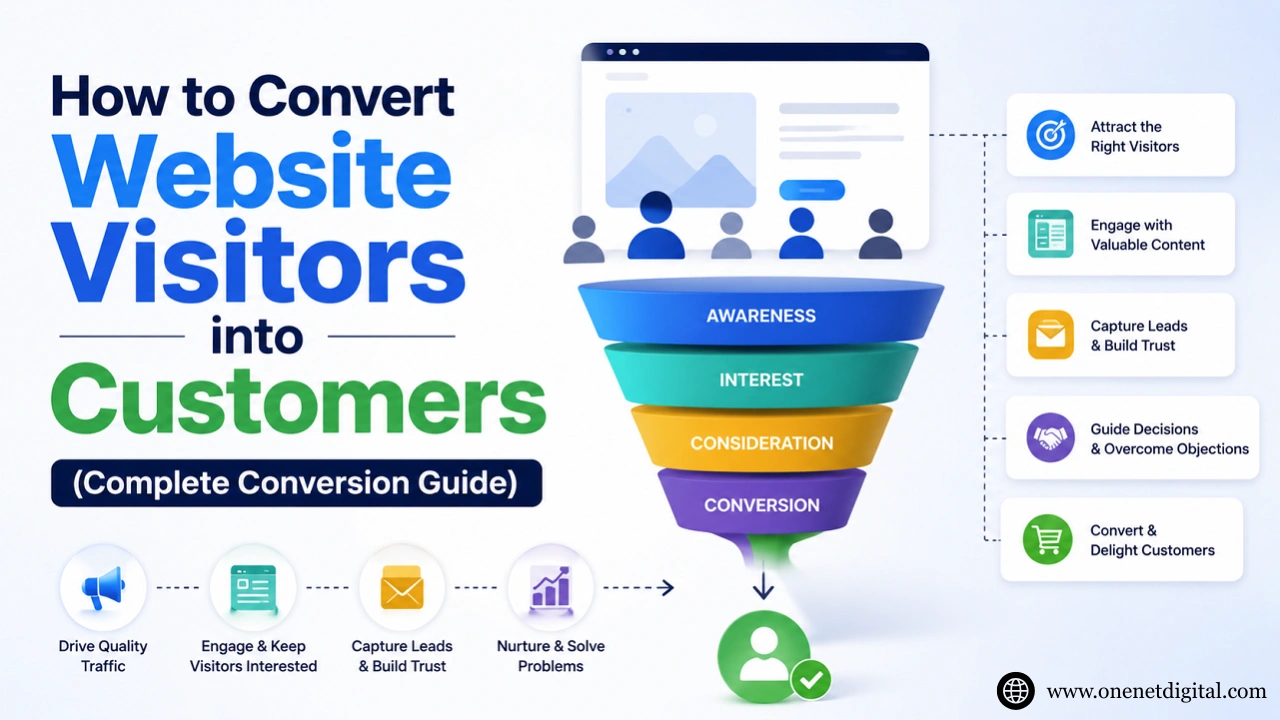
While driving traffic to your website is a vital component of your website marketing strategy, it’s only half of the battle. The true challenge is to convert visitors into customers.
Many businesses receive high traffic and don’t have high conversions. If they come to your site and don’t do anything, then something is missing. Fortunately, there are ways for you to increase your conversion rate and acquire more customers with the same traffic.
In this guide, we will be breaking down some easy and effective strategies to make your website visitors into customers.
Make a Strong First Impression
If your site visitors make the decision to stay or move on within seconds of arriving on your site, you won’t be able to alter their course. The home page needs to be clear in terms of what you do and how you can assist.
Avoid using too many colors or images. Don’t over clutter or complicate designs. Using a good headline and concise description can really help.
If users get the message from your offer quickly, they will be more likely to remain on your site and start exploring it.
Also Read: How to Get More Customers from Google Maps (Complete Local SEO Guide)
Understand Your Audience
In order to turn visitors into customers, you have to know what they are looking for. All visitors bring a problem or need. Your site should directly address that need. Express ideas simply and concentrate on what your service can offer them. If the user senses that your site knows their problem best, then they will probably trust you and act accordingly.
Clear and Strong Call to Actions (CTA)
A call-to-action communicates what to do next to your users. If not, guests can go without taking any action.
Include simple and clear CTAs such as:
- “Get a Free Quote”
- “Contact Us Today”
- “Book a Call”
- “Start Now”
Add these buttons to key locations such as the homepage, service pages, and at the bottom of blog posts. Ensure they are easily accessible.
Improve Website Speed and Performance
Having a slow website could lead to lower conversions. The majority of users won’t wait for a page to load if it’s too slow. Ensure web pages render quickly and effectively across all devices. A fast website makes for an improved experience and user engagement. Search engines like Google also prefer fast-loading websites, which helps in SEO.
Create Trust through Testimonials and Reviews
Conversion is one of the most important factors of trust. Consumers will want to know your service is dependable. Include customer reviews on your website. Provide authentic client feedback. Which are case studies or success stories? Positive experiences by others will strengthen their confidence that they will choose your business.
Keep Your Content Simple and Helpful
Content on your site should be easily read and understood. Don’t use hard words or lots of sentences. Make your services understandable and emphasize benefits rather than features. Explain to users how your service can address their issue. Conversions are more likely to happen, and trust is built through helpful content.
Also Read: How to Get Leads on Your Website (No Paid Ads)
Optimize Your Landing Pages
Landing pages are created to lead visitors to become leads or customers. Having only one goal for each landing page. The idea is to keep the design simple and eliminate distractions. Include a clear headline, short description, and compelling CTA. Testimonials and benefits can also be added to build trust. By optimizing the landing page, they can increase conversions and boost their SEO results.
Use Forms That Are Easy to Fill
Don’t have overly lengthy forms, they might not get completed. Make forms as brief and simple as possible. Only the requested information was needed, such as name, e-mail, and phone number. The more leads you get, the easier it is to fill the form. Also, make sure your form works properly on mobile devices.
Offer Something Valuable
It is easier for people to do something if they receive something in return. Provide a free consultation, guide, or checklist. This will enable you to engage leads and gain their trust simultaneously. When users realize that your offer has value to them, they’re more apt to become customers.
Apply Internal Linking to Help Users
Internal linking aids users in navigating between pages. You can, for instance, create links between your blog posts and your services pages. This will make users stickier and boost the conversion rate. This also enhances your website structure and SEO.
Follow Up with Visitors
Not all visitors will convert to customers right away. There are some that require time to make a decision. Gather emails and send follow-up messages with valuable information or offers. Email marketing is a superb marketing tool for maintaining in touch with customers who are not yet. Follow-up visits can convert interested customer visits into paying customers.
Monitor and Optimize Your Conversion Rate
If you are looking to be more successful, you must monitor your performance. Measure the conversion rate of visitors to leads/customers. Learn how to use tools to analyze end-user behavior. Discover and understand how users are leaving and which pages are successful. From this information, you can continuously improve and boost your conversion rate.
Conclusion
The key to turning website visitors into customers is grasping your target audience and optimizing the user experience. Even little things, such as improved CTA’s, website speed, and content clarity, can make a big difference. It’s not always better to have more traffic.
At times, an increase in conversion rate can yield improved results from a similar amount of traffic. Make it easy for users to take action, build trust, and provide value. Consistency can make your website a powerful source of customers.
FAQs
1. What is the website conversion rate?
It is the ratio of people who do something on your site, such as filling out a form or purchasing, to the total number of visitors to your site.
2. What are the best practices to ensure successful website conversions?
Trust elements such as testimonials, optimize your website’s speed, and utilize compelling CTAs to boost conversions.
3. What is the reason that visitors do not take action?
This may occur because of sluggish site speed, complicated layout, or the absence of information.
4. Are landing pages important for conversions?
Yes, landing pages are supposed to have one thing in mind, and they can make a huge impact on conversions.
5. How soon will there be an improvement?
It will vary based on your changes, but you’ll begin seeing results in a few weeks.