
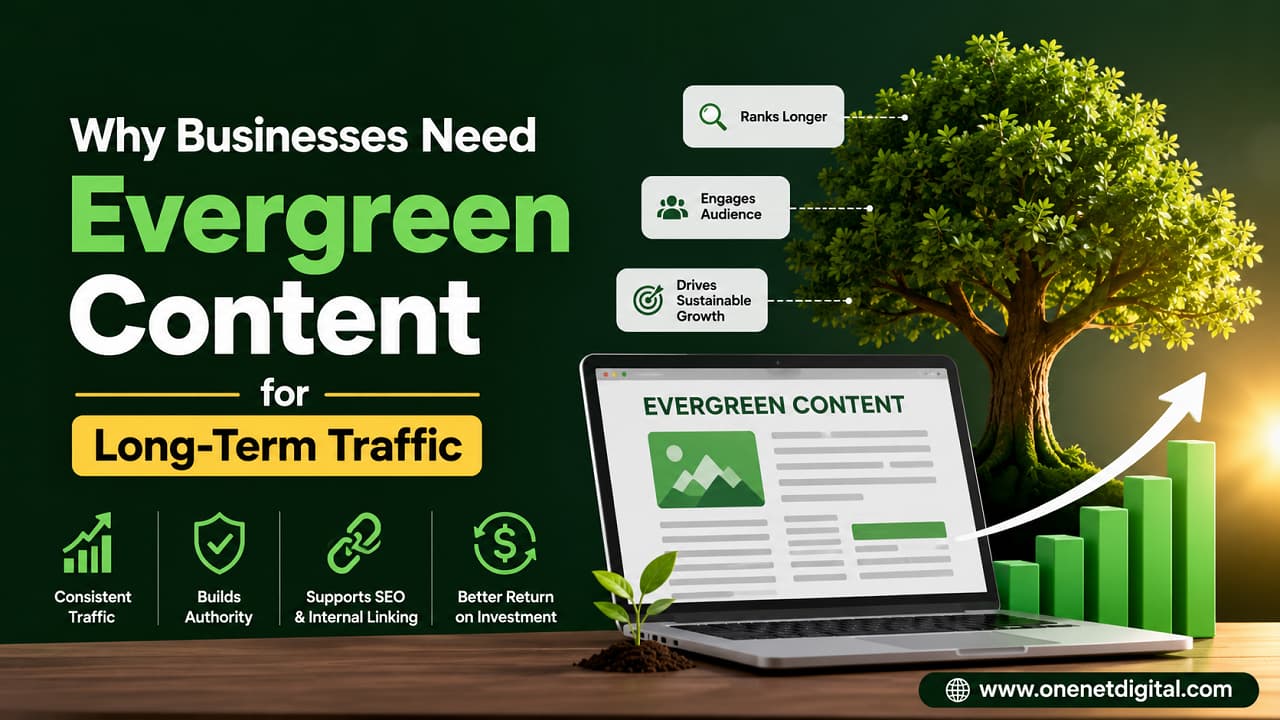
Digital marketing companies often discuss trending topics, seasonal events, or viral conversations and then create content around them. Such content may generate short-term traffic spikes, but it will typically lose relevance quickly. Evergreen content doesn’t work like that. It’s still useful and searchable for a long time, helping websites get constant traffic month after month.
One of the most important factors in long-term SEO performance is evergreen content for businesses looking to grow online sustainably. It helps with organic visibility, increases user engagement, and decreases the need to create time-sensitive articles on a regular basis.
What is Evergreen Content?
Evergreen content is content that remains useful and relevant for a long time. Evergreen topics are more likely to get readers all year round, as opposed to trending or news-based pieces. This sort of thing is about stuff people look for constantly.
Evergreen content examples include how-tos, beginner’s guides, FAQs, educational blogs, and step-by-step articles. For instance, a topic such as “How to Improve Website Speed for Better SEO” can stay relevant for years with the occasional update.
Why Evergreen Content Matters for SEO
Evergreen content helps websites to improve their long-term SEO performance. Search engines like content that consistently answers user questions and provides useful information. This is why evergreen articles rank for the long-term keywords and keep getting steady organic traffic. It also helps businesses build authority in their industry while increasing website engagement and internal linking options.
Consistent Traffic Over Time
One of the best advantages of evergreen content is that it will keep bringing traffic consistently. A well-optimized article can continue to attract visitors for months or even years after it has been published. Evergreen posts continue to be searchable over time, while trending posts lose traffic fast. This allows businesses to have a consistent flow of traffic to their website without having to post new content every day.
Also Read: How to Optimize Website Navigation for Better User Experience
Builds Industry Authority
Evergreen content allows businesses to share useful information and show expertise naturally. Educational topics around SEO, social media, website optimization, or content marketing help users to trust a website over time.
When visitors get useful answers over and over again, they are more likely to come back in the future. This increases the authority and credibility of the brand on the web.
Supports Internal Linking
Evergreen articles are useful for internal linking as they are relevant for a long period of time. Businesses can link newer blog posts to older evergreen pages to enhance website structure and navigation.
Good internal linking also helps search engines crawl websites more effectively and increases user engagement.
Better Return on Investment
Quality content takes time and effort to create, but evergreen content keeps on giving after it’s published. Businesses can also choose to update older articles instead of always writing about trends. This is where evergreen content is a cost-effective way to generate long-term SEO, leads, and website growth.
Helps Match Search Intent
Most evergreen topics are around solving common user problems. People are searching for topics such as SEO tips, content marketing basics, or how to improve their website throughout the year. Matching content to user intent increases engagement and improves chances of ranking higher in search results.
Also Read: Why Businesses Lose Customers Due to Poor Website UX
Useful Across Multiple Marketing Channels
Evergreen content can be repurposed for different marketing platforms, too. Evergreen blogs can often be repurposed into social media posts, newsletters, videos, landing pages, and educational guides. The information is still relevant, helping to maintain the steady flow of digital marketing over the years.
Improves User Experience
Well-written content improves the user experience by giving concise, straightforward, and useful information. Easy-to-read formatting, short paragraphs, and helpful explanations make content more engaging for the readers. The longer users spend on a website, the more positive signals are sent to search engines. This can help improve SEO performance.
Conclusion
Evergreen content is an essential part of long-term SEO and digital marketing strategies. Trending topics may catch the eye for a short while, but evergreen articles are valuable in the long run because they attract organic traffic on a consistent basis over the years.
With informative, user-centric, and search-friendly evergreen content, businesses can invest to incrementally increase their website visibility, build authority, and boost their online presence.
Evergreen content enables you to squeeze more juice out of your short-term marketing efforts as well as establish a sustainable base for long-term digital expansion.
FAQs
1. Why is evergreen content important for SEO?
Evergreen content helps improve long-term SEO by targeting topics people search for regularly. It can generate consistent organic traffic and improve search engine rankings over time.
2. What are examples of evergreen content?
Common examples include how-to guides, beginner tutorials, FAQs, educational blog posts, industry basics, and step-by-step articles.
3. How does evergreen content generate long-term traffic?
Since evergreen topics remain useful for users, search engines continue showing them in results. This allows websites to receive stable traffic over an extended period.
4. Does evergreen content need updates?
Yes, occasional updates are important. Refreshing statistics, improving information, or adding new examples helps maintain accuracy and SEO performance.
5. How is evergreen content different from trending content?
Trending content focuses on current events or temporary topics, while evergreen content remains relevant regardless of time or season.