
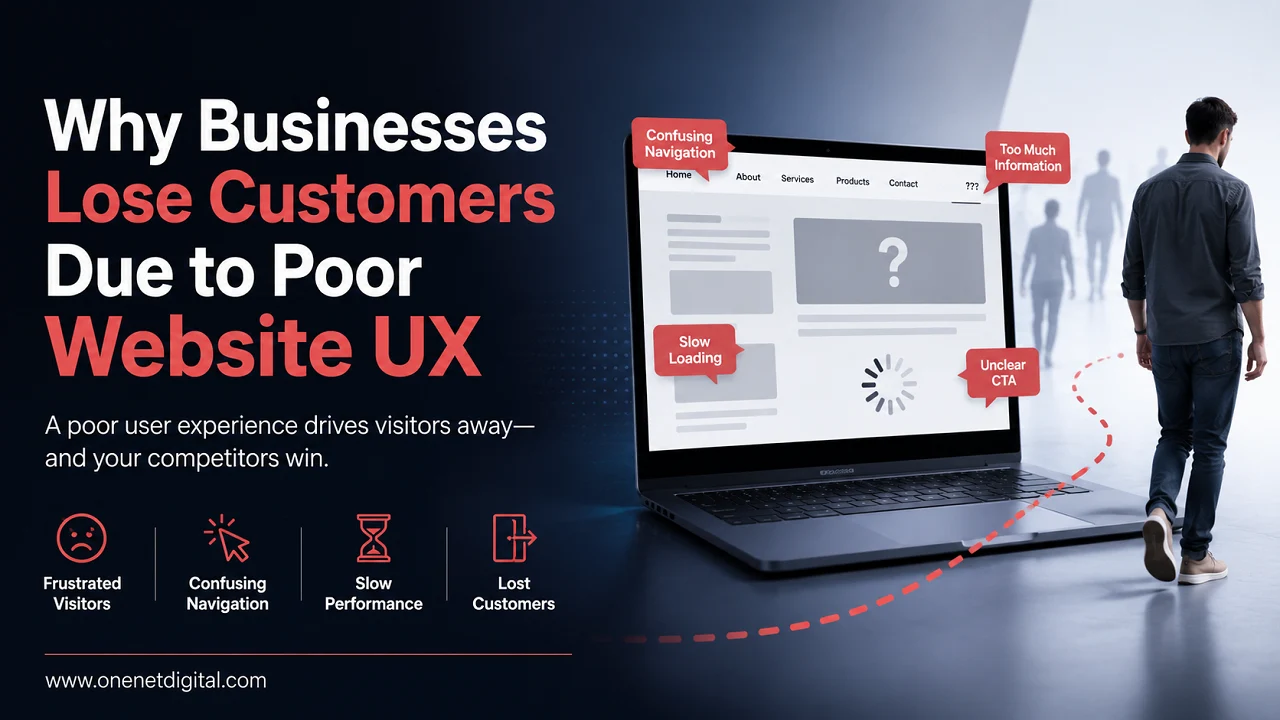
In the modern digital world, a company’s website frequently serves as the initial point of contact for customers. A person’s experience is greatly influenced by the website, whether they are looking for information, comparing products, or attempting to get in touch with a business. Visitors may abandon a website in a matter of seconds if it feels sluggish, unclear, or difficult to use.
User Experience (UX) becomes crucial in this situation. The term “website user experience” (UX) describes how easy, seamless, and beneficial it is for users to interact with a website. A good user experience makes it easier for users to find information quickly and complete tasks without becoming frustrated. Conversely, poor UX leads to confusion, a decline in trust, and a loss of potential customers for businesses.
What is Website UX?
The overall experience a visitor has when using a website is called website UX. It encompasses crucial elements such as page layout, forms, accessibility, readability, navigation, mobile responsiveness, and website speed. A positive user experience makes it easier for users to find information and complete tasks without difficulty.
For a website to function well, intricate designs and complex animations are not necessary. Because users can easily access what they need, simple, user-friendly websites often result in a better experience.
First Impressions Matter
In a matter of seconds, visitors develop opinions about a website. Users may perceive a company as unreliable or unprofessional if its website appears outdated, cluttered, or difficult to use.
When deciding whether to stay on a website or leave it, people typically consider factors such as its appearance, loading speed, mobile usability, and ease of navigation. Due to the abundance of online options, users often switch to rival websites when dissatisfied.
Also Read: Why Your Website Loads Fast on Desktop but Slow on Mobile
Slow Websites Drive Visitors Away
The user experience is greatly influenced by a website’s speed. Websites should load quickly on desktop and mobile devices, according to modern users. Reduced engagement and higher bounce rates can result from even slight loading delays.
Large image files, subpar hosting, unoptimized code, an excessive number of plugins, and complex animations are frequently the causes of slow websites. Many visitors abandon a website if it takes too long to load.
Slow websites may lose both traffic and customers because search engines view page speed as a crucial ranking factor.
Poor Mobile Experience Causes Major Problems
These days, mobile devices account for a significant portion of website traffic. Businesses risk losing a lot of potential clients if their website is not optimized for smartphones and tablets.
Small text, challenging navigation, sluggish loading times, broken layouts, and difficult-to-tap buttons are common mobile user experience issues. Poor mobile usability often leads to higher exit rates, and users expect websites to function flawlessly across all screen sizes.
Confusing Navigation Frustrates Users
Information should be easily and swiftly accessible to users. Inadequate navigation can confuse users and reduce their engagement.
Frustration is frequently caused by an excessive number of menu options, ambiguous page names, broken links, and intricate layouts. A clear and well-structured navigation system enhances overall usability and makes it easier for users to navigate the website. A better browsing experience is typically offered by simple website structures.
Also Read: Why SEO Traffic Drops After a Website Redesign
Complicated Checkout or Contact Forms Reduce Conversions
Due to lengthy forms or challenging checkout procedures, many businesses lose clients during the final conversion stage.
Users may be deterred from completing tasks by lengthy registration forms, complex payment systems, required account creation, and excessive steps. The majority of users favour quick and easy procedures.
Reducing unnecessary form fields and simplifying checkout pages can significantly improve conversion rates.
Poor Readability Affects Engagement
An essential component of website user experience is content readability. Inadequate formatting makes it hard to read even helpful content.
User engagement can be reduced by large text blocks, small fonts, poor colour contrast, and excessive pop-ups. Content that is organized with headings, spacing, and brief paragraphs is easier to read and holds readers’ attention for longer. Better SEO results are also supported by readable content.
Lack of Trust Signals Reduces Customer Confidence
People often use a company’s website quality to gauge its credibility. Insecure browsing, missing contact details, broken pages, and poor design can all undermine trust.
Users feel more confident when using a website thanks to trust signals like HTTPS security, customer reviews, professional layouts, and unambiguous business information. This is particularly crucial for websites that handle payments or gather personal data.
Also Read: How to Make Your Website Look Premium Without an Expensive Design
UX Also Impacts SEO
Because search engines prioritise websites that offer better user experiences, website UX directly impacts SEO.
Mobile friendliness, page speed, bounce rate, Core Web Vitals, site structure, and user engagement are all significant UX-related SEO factors. Search engines may consider a website low-quality if users leave quickly due to a poor experience.
Over time, businesses can improve their search engine rankings and customer satisfaction by enhancing the user experience.
Conclusion
Inadequate user experience (UX) on a website can subtly harm a company by discouraging visitors, eroding trust, and decreasing conversions. Users frequently don’t voice complaints; instead, they just move on and select an alternative.
A fast, simple, and user-friendly website helps businesses create better customer experiences and improve long-term engagement. Businesses that prioritize usability and user satisfaction are more likely to keep visitors and turn them into customers as online competition increases.
FAQs
1. Why is website UX important for businesses?
Ans- Good website UX helps visitors easily find information and complete actions. Poor UX can frustrate users, increase bounce rates, and cause businesses to lose potential customers.
2. How does slow website speed affect users?
Ans- Slow-loading websites often make users leave before the page fully loads. It can reduce engagement, lower conversions, and negatively affect SEO rankings.
3. Why is mobile responsiveness important?
Ans- Most users browse websites on mobile devices. A mobile-friendly website ensures content displays properly on smaller screens and provides a smooth browsing experience.
4. What are common signs of poor website UX?
Ans- Common UX problems include slow loading speed, confusing navigation, broken links, difficult forms, poor readability, cluttered layouts, and non-responsive designs.
5. Can poor UX affect SEO rankings?
Ans- Yes. Search engines consider user experience factors such as page speed, mobile-friendliness, bounce rate, and Core Web Vitals when ranking websites.