
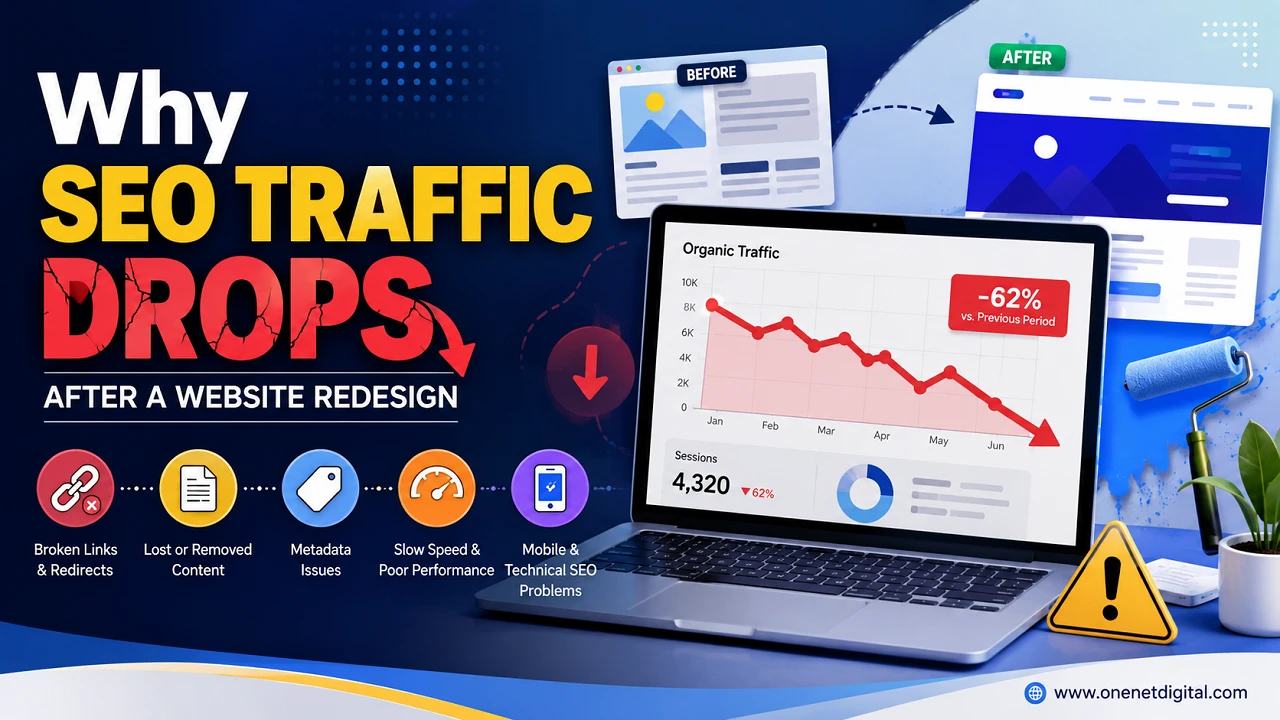
Redesigning a website is often necessary for businesses that want a modern appearance, better performance, or improved user experience. However, many website owners notice a sudden drop in SEO rankings and organic traffic after launching a redesigned website. This situation is quite common and usually happens because important SEO elements are changed, removed, or overlooked during the redesign process.
A website redesign affects much more than just the visual layout. Search engines like Google analyze URLs, page structure, content, loading speed, internal links, metadata, and many other technical factors. Even small changes can impact rankings if not handled properly.
Understanding why SEO traffic drops after a website redesign can help businesses avoid long-term ranking losses and maintain their search visibility.
Changing URLs Without Proper Redirects
One of the biggest reasons for traffic loss after a redesign is changing page URLs without setting up proper redirects.
For example, an old page URL like:
example.com/services/web-design
It may change to:
example.com/web-design-services
If the old URL is removed without a 301 redirect, search engines may treat the new page as completely different. As a result, the authority and rankings of the old page may disappear.
Users clicking old links from search results or backlinks may also land on 404 error pages, creating a poor user experience. Proper 301 redirects help transfer SEO value from old pages to new ones and guide visitors to the correct content.
Also Read: How to Make Your Website Look Premium Without an Expensive Design
Important Content Gets Removed
During redesign projects, businesses often focus heavily on visual improvements and shorten or remove existing content. Sometimes pages with strong rankings are deleted completely because they look outdated or unnecessary.
This can negatively affect SEO because search engines rank pages based on the relevance and quality of their content. If optimized content is removed, rankings may decline quickly.
Important elements that should not disappear during a redesign include:
- Target keywords
- Heading structure
- Service descriptions
- Blog content
- Internal links
- FAQ sections
- Location-specific information
Even if the design changes, valuable SEO content should usually remain intact or be improved carefully.
Metadata is Lost or Rewritten Incorrectly
Meta titles and meta descriptions play an important role in search engine visibility. During a redesign, these elements are sometimes replaced with generic text or removed completely.
For example, an optimized title like:
“Affordable Website Design Services in India”
might become:
“Home | Company Name”
This reduces keyword relevance and can impact click-through rates from search results.
Every important page should retain a properly optimized:
- Meta titles
- Meta descriptions
- Header tags (H1, H2, H3)
- Image alt text
SEO metadata should always be checked before launching the redesigned website.
Also Read: Why Your Website is Not Showing on Google Search
Website Structure Changes Too Much
A redesign often changes navigation menus, categories, and internal linking structures. While better navigation can improve user experience, major structural changes may confuse search engines temporarily.
If important pages become harder to reach or lose internal links, their authority may weaken.
For example:
- Important service pages may move deeper into the site.
- Blog categories may disappear.
- Internal links between pages may be removed.
- Navigation menus may become overly simplified.
Search engines use internal linking to understand website hierarchy and page importance. Poor structure changes can reduce crawl efficiency and rankings.
Slow Website Speed After Redesign
Modern website designs sometimes include:
- Large images
- Heavy animations
- Video backgrounds
- Extra scripts and plugins
While these features may improve appearance, they can slow down the website significantly.
Page speed is an important SEO factor. A slow website can increase bounce rates and reduce user engagement, both of which may affect rankings.
Common speed-related problems after redesign include:
- Uncompressed images
- Excessive JavaScript
- Poor hosting performance
- Unoptimized themes
- Too many third-party integrations
A redesigned website should always be tested for mobile speed and overall performance before launch.
Mobile Optimization Problems
Google primarily uses mobile-first indexing, meaning it evaluates the mobile version of a website first. If the redesigned site does not work properly on smartphones and tablets, rankings may drop.
Common mobile SEO issues include:
- Text too small to read
- Buttons are placed too close together.
- Slow mobile loading speed
- Broken layouts on smaller screens
- Popups covering content
A responsive and mobile-friendly design is now essential for maintaining SEO performance.
Also Read: How to Optimize Images for Faster Website Speed and Better SEO
Technical SEO Errors
Technical SEO issues are another major reason for ranking drops after redesigns. These problems are often hidden and may not be noticed immediately.
Some common technical errors include:
Broken Internal Links: Links pointing to deleted or incorrect pages create crawl issues and poor user experience.
Missing XML Sitemap: If search engines cannot find updated pages easily, indexing may slow down.
Robots.txt Blocking Important Pages: Incorrect robots.txt settings can accidentally prevent search engines from crawling the website.
Canonical Tag Errors: Wrong canonical tags may tell search engines to ignore important pages.
Duplicate Content: New page structures can accidentally create duplicate versions of the same content.
Technical SEO audits are very important after any redesign project.
Loss of Backlink Value
Many websites earn backlinks over time from blogs, directories, news articles, and other sources. If redesigned pages change URLs without redirects, the value from these backlinks may be lost.
Backlinks are one of the strongest ranking factors in SEO. Losing them can cause major traffic drops.
Before redesigning a website, businesses should identify pages with strong backlinks and ensure those URLs are preserved or redirected properly.
Temporary Ranking Fluctuations Are Normal
Not every traffic drop after a redesign is permanent. Search engines need time to crawl and understand website changes.
Even when SEO is handled properly, rankings may fluctuate for a few weeks after launch. Google may re-evaluate:
- Page structure
- Content updates
- Speed improvements
- Internal links
- User behavior
In many cases, rankings recover once search engines fully process the updated website.
However, large or long-term traffic losses usually indicate technical or SEO-related problems that need attention.
How to Protect SEO During a Website Redesign
Businesses can reduce SEO risks by planning the redesign carefully.
Some important steps include:
Keep Important URLs Whenever Possible: Avoid changing URLs unnecessarily.
Set Up 301 Redirects: Redirect old pages to relevant new pages.
Preserve High-Performing Content: Do not remove pages that already rank well.
Perform SEO Audits: Check technical SEO before and after launch.
Test Mobile Performance: Ensure the site works properly on all devices.
Optimize Website Speed: Compress images and reduce unnecessary scripts.
Monitor Google Search Console: Track indexing issues, errors, and traffic changes after launch.
Conclusion
A website redesign can improve branding, user experience, and performance, but it can also damage SEO if important elements are ignored. Organic traffic drops usually happen because of URL changes, missing redirects, removed content, technical SEO errors, or slow performance.
SEO should always be part of the redesign process from the beginning rather than an afterthought. Careful planning, technical testing, and content preservation can help businesses maintain rankings and avoid major traffic losses after launching a new website design.