
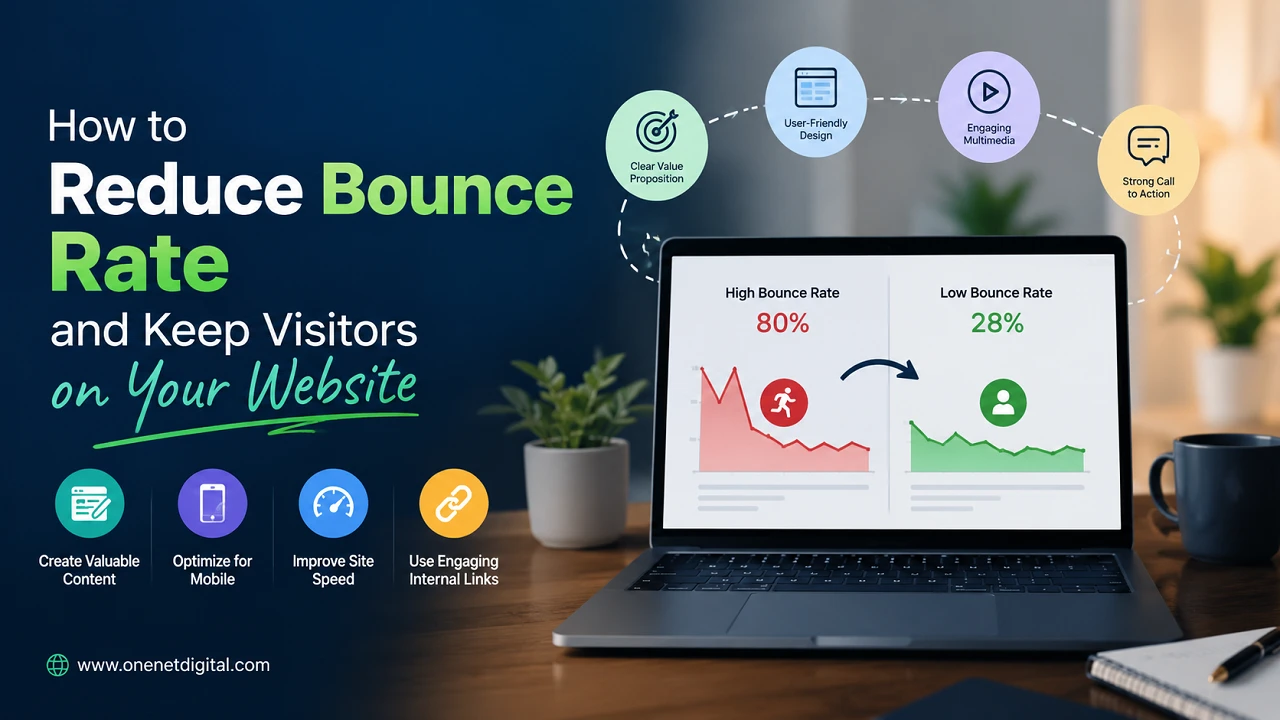
A high bounce rate means people come to your website and leave without checking other pages. High bounce rate usually means people aren’t finding what they came for, the site is slow, or the content isn’t engaging enough. Why is bounce rate important? You want to reduce bounce rate because it improves user experience, increases conversions, and helps improve your SEO performance over time, as well.
Many website owners are concerned with getting traffic to their sites, but forget that keeping visitors engaged is equally important. High traffic numbers aren’t necessarily helpful for business growth if users leave within a few seconds. The good thing is you don’t need to make huge changes to improve your bounce rate. Small changes to content, design, speed & navigation can make a big difference.
Understand Why Visitors Leave
Before you can try to lower the bounce rate, you need to understand why people leave a website fast. The problem is about user experience in many cases. Visitors may land on a page expecting useful information but instead find confusing layouts, too many ads, slow loading speed, or content that does not answer their questions.
Sometimes the culprit is the traffic source itself. For example, if someone enters from irrelevant keywords or misleading ads, they might bounce right away because the page is not doing its job. That’s why targeting the right audience is important.
Website owners can use tools like analytics reports and heatmaps to gain insights into how users behave. These insights can show which pages have the highest bounce rates and where users lose interest.
Improve Website Loading Speed
Website speed is a massive factor in user retention. Most users today expect pages to load fast, especially on mobile. If a page takes too long to load, visitors may leave without even reading the content.
To make loading faster:
• Before uploading images, compress them
• Use lightweight themes for the website
• Enable browser caching
• Reduce unneeded plugins or scripts
• Choose a reliable web hosting company
Fast-loading websites provide a better experience and encourage visitors to view more pages. Speed optimization also helps with search engine rankings, so it is good for both SEO and user engagement.”
Also Read: Why SEO Takes Time but Gives Long-Term Results
Make Navigation Easy
Confusing navigation can boost bounce rate very fast. If users cannot find what they are looking for within a few seconds, they tend to leave and go to another website.
A clean menu structure makes it easy for visitors to navigate between pages. Categories must be well organized and important pages must be visible in the main menu. Internal links are also very helpful as they take users to related content.
For example, if someone is reading a blog about SEO tips, linking to related articles such as keyword research or website speed optimization might encourage them to keep browsing.
Easy navigation improves user experience and keeps visitors engaged longer.
Optimize for Mobile Users
Nowadays, most of the traffic to websites is from mobile devices. If a site isn’t mobile-friendly, visitors may leave immediately due to bad design or hard navigation.
Mobile Optimization:
- Design of a responsive website
- Quick mobile loading speed
Easily clickable buttons - Text can be read without zooming.
Correct spacing between elements
Google also uses mobile-friendliness as a major ranking factor. Having a mobile-friendly website can decrease bounce rate and also enhance your overall SEO performance.
Use Engaging Headlines and Introductions
The headline is usually the first thing that visitors see. If the headline is weak or misleading, users will not continue reading. Good headlines tell the visitor what the page is about and generate interest naturally.
The introduction also totals. Don’t write long or confusing opening paragraphs; get to the point and explain the topic quickly. Tell users they are in the right place and what information they will get from the page.
Good headlines and intros can help keep visitors on the site longer.
Also Read: How to Create SEO Content That Actually Brings Customers
Add Internal Links Strategically
Internal linking is an easy but effective way to reduce bounce rate. Typically, when users see related content links inside an article, they click to learn more.
But internal links also should be relevant and make sense. Links can look distracting if there are too many. Link to pages that will actually help users keep learning about the topic.
This method helps in increasing user engagement and also helps search engines understand the website structure better.
Improve Visual Design
The design of a website makes the first impression. Visitors can be driven away quickly by old layouts, too many pop-ups, or cluttered pages.
The clean, modern design allows users to focus on the content. Use appropriate spacing, legible fonts and complementary colours. Proper use of images and videos can also enhance engagement.
Visuals should add to the content, not take away from the content. A professional-looking site will build trust and encourage visitors to stay longer.
Reduce Annoying Pop-Ups and Ads
Ads and pop-ups can be useful for generating leads or revenue, but too many interruptions can increase your bounce rate. When lots of pop-ups appear as soon as a page is opened, the visitors often feel frustrated.
If you must use pop-ups, use them sparingly. Keep them for a few seconds or show them only after users have done something on the page. For long-term engagement, a smooth browsing experience is more important.
Also Read: Why Mobile Website Speed Matters More Than Ever in 2026
Include Strong Call-to-Actions
Sometimes, visitors leave because they don’t have a clear next step. A clear call to action can direct them to another page, a contact form, a service page or related content.
For example:
- See related articles
- Services to explore
- Download a guide
- Contact the team
Case study
Simple and relevant CTAs encourage visitors to stay engaged with the website instead of bouncing.
Keep Content Updated
Old information can lead to lower trust and a higher bounce rate. Visitors crave fresh and accurate content, particularly when it comes to technology, SEO, marketing, or business trends.
Regularly update blogs and important pages to stay relevant. It also tells search engines the website is active and useful to users.
Updating old content with new stats, new examples and improved formatting can boost engagement and search rankings.
Conclusion
Reducing bounce rate is not about tricking users or forcing them to stay longer. It’s about creating a better experience that will lead visitors naturally to explore the site. A combination of fast loading speed, valuable content, mobile optimization, intuitive navigation, and an engaging design improves user retention.
In the long run, website owners who focus on user experience typically experience better engagement, higher SEO rankings, and higher conversion rates. Businesses need to focus not only on traffic numbers but also on engaging consumers once they arrive on the website.
FAQs
1. What is the bounce rate in a website?
Bounce rate is the percentage of visitors who leave a website after viewing only one page without taking any further action, such as clicking links or visiting other pages.
2. Why is bounce rate important for SEO?
A high bounce rate may indicate poor user experience or irrelevant content. While bounce rate itself is not a direct Google ranking factor, user engagement signals can affect overall SEO performance.
3. What is considered a good bounce rate?
A good bounce rate depends on the type of website. Generally, a bounce rate between 40% to 60% is considered average, while lower rates usually indicate better engagement.
4. How can website speed reduce bounce rate?
Fast-loading websites keep users engaged. If a page loads slowly, visitors often leave before viewing the content. Improving speed creates a smoother browsing experience.
5. Does mobile optimization help lower bounce rate?
Yes, mobile-friendly websites help users navigate easily on smartphones and tablets. Responsive design and fast mobile speed can significantly reduce bounce rate.