
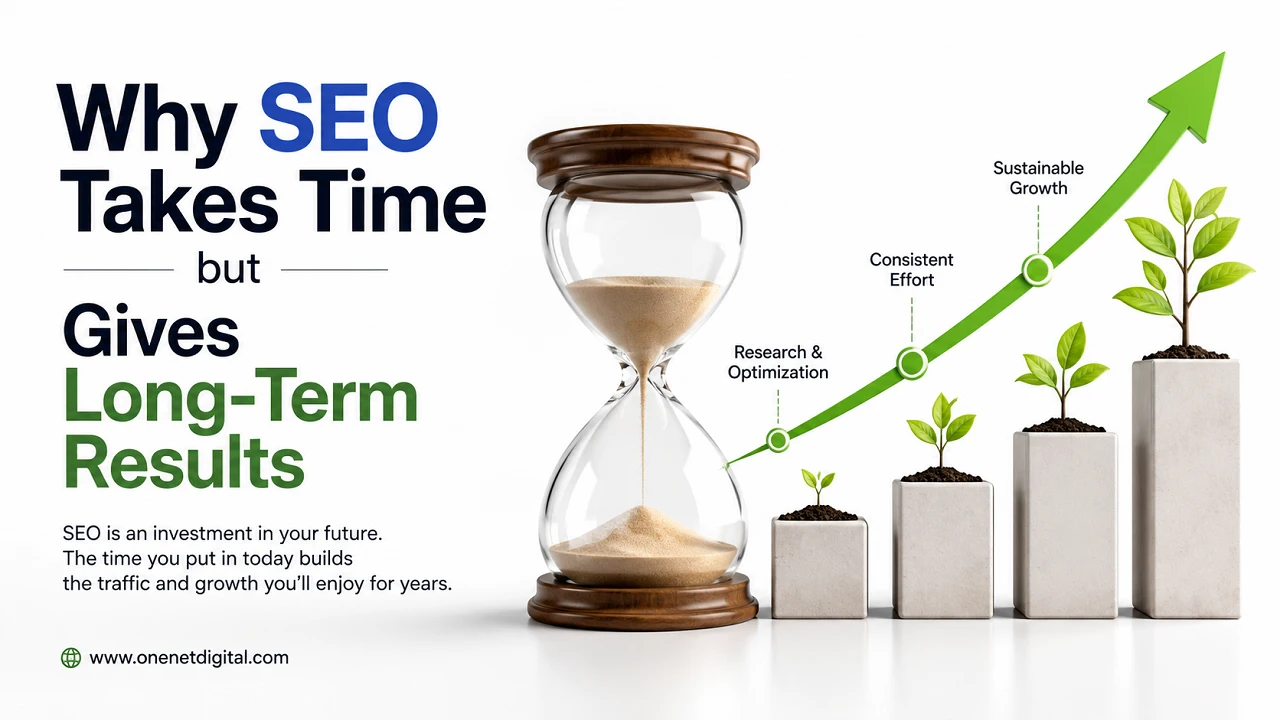
Many businesses want fast online growth in today’s digital world. One of the first expectations is that they spend on digital marketing to get immediate website traffic and instant rankings on search engines. Search Engine Optimization or popularly known as SEO, works differently. SEO is not a marketing strategy that works overnight. It takes time, consistency and patience to see meaningful results.” But as those results start to come in, they can provide long-term value for businesses without relying heavily on paid ads.
Knowing why SEO takes time can help businesses set realistic expectations and help build stronger long-term strategies. SEO might feel slow at the start, but the long-term benefits make it one of the most dependable digital marketing methods today.
Understanding How SEO Works
SEO is the practice of improving a website so that it ranks higher in the results returned by search engines when people search for relevant topics, services or products. Search engines like Google use complex algorithms to decide which websites deserve top positions.
These algorithms look at hundreds of factors to rate a page. Some of the most important factors are: website quality, relevance of the content, user experience, mobile friendliness, speed of loading, backlinks and domain authority. Search engines want to return the best results for users, so they look at websites over a period of time rather than giving instant changes immediate reward.
Thus, SEO is more akin to building trust over time, rather than purchasing instant visibility.
Search Engines Need Time to Trust Websites
One of the big reasons SEO is a slow process is that search engines don’t immediately trust new websites or new pages. Search engines watch sites for weeks and months before they boost their rankings.
For example, when a business puts out new content, search engines have to first find the page, crawl it, figure out what it’s about, and compare it to competing pages. Even if the page is indexed, the search engines continue to track user behaviour signals like click-through rate, bounce rate, time of engagement, and content quality.
Websites that regularly publish valuable content and have a good user experience build up credibility slowly. This process of building trust cannot happen overnight.
Also Read: How to Create SEO Content That Actually Brings Customers
Competition Makes SEO Slower
SEO also takes time because there are so many other websites out there competing for the same keywords. The popular industries have websites that have been working on SEO for years. These websites have a lot of authority, good backlinks and traffic already.
If you’re a newer or smaller website, you’re going to need to work constantly to outrank established competitors. Over time, businesses need to improve technical performance, develop better content, and build stronger backlinks.
Very competitive keywords are more difficult to rank for because search engines take longer to compare hundreds of sites before they pick one to rank higher than the others. You have to continually optimize for SEO, although it might seem to be a little faster in less competitive niches.
Content Growth Happens Gradually
Content is a critical factor in SEO success. Search engines love websites that publish useful, informative and updated content for users on a regular basis. But creating high-quality content takes time.
Usually, a single blog post doesn’t get massive traffic immediately. Instead, many sites build SEO success by publishing consistently over months and years. The more pages that are indexed, the better the chance of ranking for different keywords.
Older articles can also build authority over time and start to rank higher. This slow growth builds a strong content foundation which continues to bring in organic traffic in the future.
Backlinks Are Built Slowly
Backlinks are links that point to your site from other sites. Backlinks are trust and authority signals for search engines. The more reputable websites that link to your content, the more search engines consider your website to be trustworthy.
But it takes time to build quality backlinks naturally. Businesses usually get backlinks by producing helpful content, mentions in the industry, collaborations, guest posts, and digital PR. Building a strong backlink profile overnight can even look suspicious to search engines and may get you penalized. In SEO, a slow, natural backlink growth is considered healthier and more trustworthy.
Also Read: Why Mobile Website Speed Matters More Than Ever in 2026
Technical Improvements Need Time to Reflect
Technical SEO changes also take time to show visible results. SEO tasks include website speed optimization, mobile responsiveness, structured data, crawlability improvements, and broken link fixes.
Search engines take time to re-crawl and re-index the website after making technical changes. Some optimizations can positively affect rankings in a short time, while others may take weeks or months to see a visible change.
Plus, SEO results need to be maintained consistently. Websites can’t just optimize once and then ignore the rest of the updates.
SEO Delivers Long-Term Organic Traffic
SEO does take time, but the biggest advantage is its sustainable long-term. Unlike paid advertising, where traffic stops as soon as the budget runs out, SEO continues to bring visitors even after the initial work is done.
An optimized article or service page can generate organic traffic for months and even years. So you have a regular flow of potential customers, and you don’t have to pay for every click.
By being patient with investments in SEO, businesses can actually reduce their long-term marketing expenditure relative to a strategy of relying solely on paid campaigns.
SEO Builds Brand Credibility
Users tend to trust sites appearing organically in search engine results more than sponsored ads. Being on the first page of search engine results increases brand visibility and credibility.
When a business ranks over and over again for relevant searches, it gives the impression of authority in the industry. It builds trust, which means better engagement, better conversions, and better customer relationships in the long run.
So SEO helps not only with traffic growth but also with long-term brand reputation.
Also Read: Why Technical SEO is Ignored by Most Small Businesses (And They Lose Traffic)
SEO Results Compound Over Time
One of the best things about SEO is the compounding effect. Work today often continues to pay dividends into the future. Older content can still bring in traffic. Backlinks can still grow authority. Optimized pages can still rank for a long time.
When a website expands, new content might get ranked faster because the domain already has established authority. This means SEO momentum is cumulative. During this waiting period, you will see more stable and robust growth with consistent SEO efforts.
Patience and Consistency Are Important
SEO success rarely comes overnight. Those businesses that expect overnight rankings will be disappointed early on. But SEO should be considered as a long-term investment, not a short-term marketing tactic.
Consistent content creation, regular optimization, quality backlinks and strong user experience can all work gradually towards better rankings and traffic growth.
Those who stick with it and keep improving their websites are often the ones who get sustainable long-term results.
Conclusion
SEO is a long-term investment. Search engines take their time to analyze websites before rewarding them with a good ranking. All of this is an ongoing effort that needs to be improved gradually: competition, building trust, quality of content, backlinks and technical optimization.
At first, it can seem like a slow process, but the long-term benefits of SEO are huge. It helps you drive consistent organic traffic, establish trust in your brand, lessen your reliance on paid advertising, and build a long-term online presence.
SEO is still one of the most effective long-term marketing strategies for businesses looking to build sustainable digital growth today.
FAQs
1. Why does SEO take so long to show results?
SEO takes time because search engines need to analyze and trust a website before improving its rankings. Factors like content quality, backlinks, technical optimization, and competition all affect how quickly results appear.
2. How long does it usually take to see SEO results?
Most businesses start noticing SEO improvements within 3 to 6 months, while competitive industries may take even longer. Consistent optimization and content updates help improve results over time.
3. Is SEO better than paid advertising?
SEO and paid advertising both have benefits. Paid ads provide quick traffic, while SEO focuses on long-term organic growth. Many businesses use both strategies together for balanced digital marketing.
4. Why do some websites rank faster than others?
Websites with strong domain authority, better backlinks, high-quality content, and lower competition often rank faster. Older websites may also gain trust more quickly than brand-new websites.
5. Does content really matter in SEO?
Yes, content is one of the most important parts of SEO. Helpful, informative, and regularly updated content improves user engagement and increases the chances of ranking for multiple keywords.