Introduction
Ranking your website on Google is only one part of the SEO process. The real goal is to get visitors who actually click on your site and interact with your content. There are many companies that focus on rankings and traffic increases and ignore a key metric that directly impacts organic performance: Click-Through Rate (CTR).
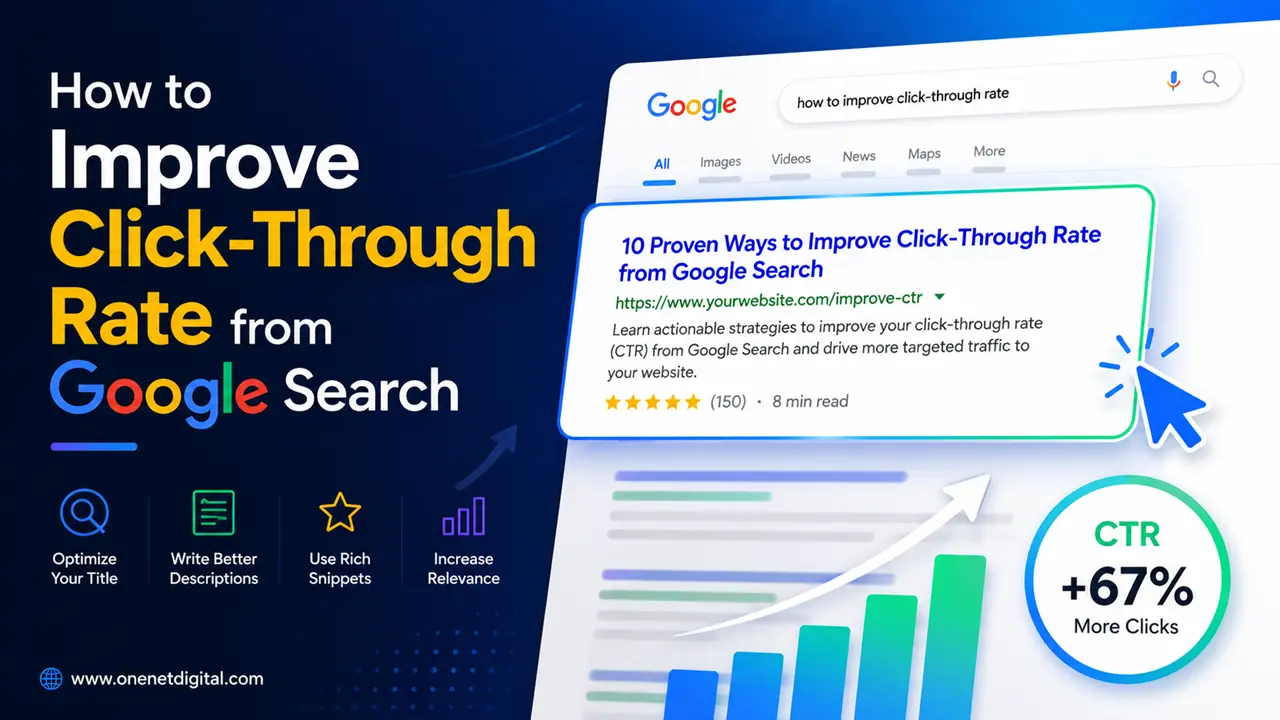
Click-Through Rate is the percentage of users who click on your website after seeing your website in the Google search results. For example, if your page appears in the search results 1,000 times and receives 50 clicks, your CTR is 5%.
A low CTR usually means that your pages are being seen, but are not convincing enough to get users to click through. Even with relatively good rankings, this can lead to missed traffic opportunities, lower engagement and fewer leads.
The good news is, you don’t always need better rankings to improve CTR. Sometimes even the smallest changes to titles, description and search presentation can make a huge difference to the number of people visiting your web site.
In 2026, companies that aim for rankings and CTRs tend to see better SEO results than companies that aim for rankings only.
Understand Why Click-Through Rate Matters
Many website owners think that being on the first page of Google is all it takes to get traffic. The reality is, people still need a reason to click on your website over the competing results.
All the search results are competing for attention. Users quickly scan through titles, descriptions, URLs and other information to decide what to click on.
A higher CTR can have some advantages. It drives more traffic to your site without having to create new content, helps you get more qualified visitors and makes your existing rankings more valuable. Small wins in CTR can translate to big wins in traffic over time.
Why you should make your pages’ appearance in search results a key part of your SEO strategy.
Write Clear and Compelling Page Titles
The title tag is generally the first thing that users see on Google search results. If your headline is weak or confusing, even if you’re on the front page, you will get a lot less clicks.
Too many businesses create titles that are either too generic or filled with keywords. Titles inform users exactly what they’ll find on the page and provide them a reason to click.
For example:
Weak Title: SEO Services
Better Title: SEO Services for Small Businesses: A Complete Guide to Improving Google Rankings
The second title is more descriptive and better sets expectations.
Titles that do the job are usually problem-solving, question-answering, or information-providing. The goal isn’t to clickbait, but to indicate relevance and usefulness.
Also Read: How to Find Pages That Are Losing Google Traffic
Enhance Meta Descriptions
Meta descriptions don’t directly impact rankings but they do have a massive impact on whether users decide to click.
A meta description should describe what the page is about and why it’s useful. It must stimulate curiosity and be faithful to the content at the same time.
Many sites skip the meta descriptions altogether or have them auto-generated by search engines. This results in less appealing search snippets.
A good meta description tells users what they’ll see when they click the link, which can lead to more clicks.
Instead of simply putting in keywords, make sure your descriptions are informative and relevant to the user’s intent.
Improved Match Search Intent
Users click on search results that appear to be what they are looking for.
People will probably pick another result if your title and description do not match search intent. This is a common problem when businesses optimize pages for keywords without understanding the intent behind those searches.
For instance, someone looking for “how to improve website speed” typically wants actionable tips and practical solutions. The title is too promotional or unclear, and users may skip it.
Understanding the search intent enables the business to create titles and descriptions that are more relevant to what users are expecting the more relevant your result, the greater the likelihood that you will get clicks.
Use Numbers and Specific Information When Appropriate
Specificity often attracts attention.
Titles with numbers, years or clear outcomes can sometimes perform better as they immediately communicate value.
Examples include:
- 10 Ways to Improve Website Speed in 2026
- 7 Common SEO Mistakes That Hurt Google Rankings
- How to Increase Website Leads by Improving User Experience
Numbers can help users know what to expect and often make content seem more structured and practical.
But numbers should only be used if they really fit the topic. I think artificially forcing numbers into everything can get repetitive.
Also Read: How to Optimize Your Service Pages for Local SEO | One Net Digital
Improve URL Structure
Good, descriptive URLs aren’t always the main source of clicks, but they can increase user trust.
Users generally prefer URLs that clearly explain what the page is about.
For example:
Good URL: yourwebsite.com/improve-click-through-rate
Poor URL: yourwebsite.com/page-id-3489
Simple URLs appear more professional and help users understand where the page will take them.
A clean and organized URL structure can help make a better overall impression in search results.
Featured Snippet and Rich Results Optimization
Google search results are becoming more and more visual and interactive.
Rich search features such as featured snippets, FAQ sections, review ratings, and other features often get more attention than standard listings.
By structuring content in a clear way and answering common questions you can improve the chances of earning additional search visibility.
Websites with rich results stand out because they take up more space and provide extra information right in the search results.
The better your search listing is at engaging and informing users, the higher the chance they’ll click on it.
Headlines That Focus on the User
A lot of businesses are creating titles from an SEO perspective rather than a user perspective. Titles should focus on real problems and describe benefits.
Users often search because they want:
- A solution to a problem
- An answer to a question
- Step-by-step guidance
- Practical advice
- Better understanding of a topic
Explicit promise of useful information in titles performs better than just keywords in titles. Think like the user and not the search engine and you will often see higher click through rates.
Analyze Pages with High Impressions but Low Clicks
One of the greatest opportunities to boost CTR is already in your website data.
Some pages get thousands of impressions but very few clicks. These pages represent often untapped traffic potential.
A page that ranks decently, but has a bad CTR might just need:
- A stronger title
- A better meta description
- Improved search intent alignment
- More compelling messaging
Often small tweaks to these pages can yield noticeable increases in traffic without having to achieve higher rankings.
Looking at your impression and click data regularly will show you which pages need attention.
Also Read: How to Update Old Content Rather Than Writing New Articles
Update Titles and Content
Changes in search behavior over time.
A title that performed well a few years ago might not be relevant to today’s users. Industries change, new trends come and search expectations evolve.
Regularly update titles and meta descriptions to keep content relevant.
Add in recent years, update terminology, improve clarity and it can make existing content feel more current and attractive. Even minor updates can boost engagement in search results.
Test & Improve Continuously
A good SEO strategy involves constantly checking the performance of your search and finding ways to improve it. Businesses need to watch the pages that have low click-through ratios and try better titles and descriptions.
These small improvements can add up over time leading to a big lift in organic traffic without publishing more content.
It’s not just about getting ranked on Google. The trick is to convince users that your page has the information they are looking for.
Summary
Click-Through-Rate is one of the most overlooked aspects of SEO. Most companies work hard to improve their rankings, but they lose valuable traffic opportunities because their search listings aren’t compelling enough to get people to click on them.
To achieve better CTR, ensure clear titles, compelling meta descriptions, strong search intent alignment, clean URLs, and user-centric messaging.
In 2026, successful SEO will be more than just appearing in search results. It’s also about being different than your competition, and getting users to choose your site.
By focusing on what the users really want, updating search snippets and regularly analyzing impressions, organic traffic will increase and the results of the rankings they already have will improve.
FAQs
1. What is Click-Through Rate (CTR) in SEO?
CTR is the percentage of users who, after seeing your website in the search results on Google, click through to your site.
2. Why is CTR important?
Higher CTR can lead to more organic traffic, and help businesses get more value from their current rankings.
3. How to Increase Website Click-Through Rate?
Enhance titles, develop improved meta descriptions, align search intent, and optimize search listings.
4. Is a higher CTR a better ranking?
CTR isn’t a direct ranking factor, but more engagement can help to boost overall SEO performance.
5. Which pages should I optimize first?
Start with pages that have a high number of impressions but a low number of clicks. These pages often have the most potential for traffic growth.