
Introduction
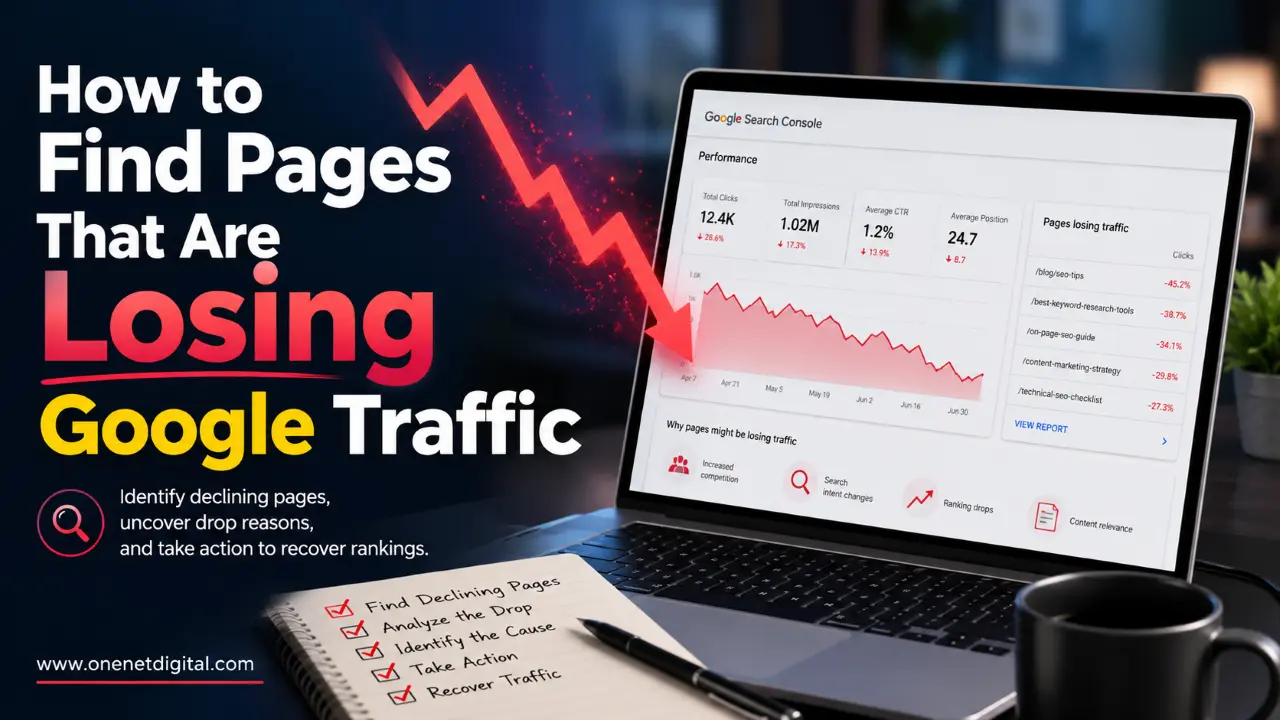
Most companies keep an eye on the traffic to their overall website but rarely do they look into the individual pages that are slowly losing visibility on Google. Some pages that performed well could be getting big drops while a website can still be getting a good amount of traffic.
Traffic declines are not accidental. Search rankings are always changing due to algorithm updates, increased competition, changing search intent, outdated content and technical issues. If these declining pages are not caught early, businesses can lose valuable traffic, leads and potential customers over time.
The good news is that it’s often possible to reclaim pages that lose Google traffic. The first step is identifying what pages are affected and why they are performing differently.
SEO success in 2026 is no longer just about creating new content. They also need continuous monitoring of the existing pages and optimization of the pages which are gradually losing visibility.
Begin with Traffic Pattern Analysis
Many website owners only look at total website traffic, which can hide important issues.
Traffic to a site as a whole might be steady, but individual pages may be decreasing. In some cases, new pages can compensate for lost traffic on other pages. The problem can be difficult to spot.
Rather than looking at overall website numbers, companies should regularly assess the performance of individual pages. Often comparing traffic over the last few months can help identify articles and service pages that are slowly losing visibility.
It’s important to find this out early because pages that have lost a little traffic are generally easier to recover than pages that have been in decline for years.
Regular traffic reviews help businesses spot problems before they become major issues.
See Which Pages Are Losing Organic Sessions
One of the easiest ways to see traffic losses is to examine organic session data.
Some pages may have been very visited in the past but now receive less visitors from search engines. Often these pages are ready for opportunity, as they may already have authority and rankings that can be improved.
There are many things that can cause a drop in traffic. Content may be outdated, competitors might have published better information, or search intent may have shifted.
Pages that are seeing a decrease in organic sessions should be treated as priority pages, as they have already proven themselves to be capable of bringing in visitors in the past.
It is often more efficient to recover these pages than to create entirely new content.
Also Read: How to Optimize Your Service Pages for Local SEO | One Net Digital
Analyze Ranking Changes
Changes in rankings are a frequent cause of traffic loss.
Even a small drop in ranking can have a big impact on organic traffic. Falling from first to fifth place or from first to second page can make a huge difference in visibility and clicks.
Businesses should monitor keyword rankings for key pages, and identify which search terms have fallen.
By looking at ranking changes, you can get valuable insights as to why a page might be losing traffic. Often the page itself is still good, but the competitors have beefed up their content or matched the user intent better.
Ranking trends can show businesses where they can improve.
Look for Pages with High Impressions but Fewer Clicks
Sometimes a page shows up in search results, but gets fewer clicks than it used to. This is generally a visibility problem, rather than a click-through rate issue.
Reasons for lower click-through rates are:
- Competitors may have more attractive titles.
- Search intent may have changed.
- The content may no longer appear relevant.
- Meta descriptions may be outdated.
If users are selecting other search results, the page can still have strong visibility but is generating less traffic.
Rather than beginning from scratch, businesses can analyze impression and click data to identify pages that could be improved.
Identify Outdated Content
Outdated information is one of the most common reasons pages lose Google traffic.
The digital world is changing quickly. Statistics get old, technologies change, and user expectations change over time. Two years ago, super relevant content may not align with current search intent.
Search engines are placing more importance on information that is fresh and helpful.
Businesses should review older articles and ask themselves:
- Is the information still accurate?
- Have industry trends changed?
- Are examples still relevant?
- Could readers benefit from newer insights?
Updating old data can often boost rankings and help recover lost traffic. Sometimes small improvements in content lead to surprisingly good results.
Also Read: How to Update Old Content Rather Than Writing New Articles
Review Changes in Search Intent
Search intent is always changing.
A keyword that once meant informational intent could now be looking for commercial content, comparison articles or how-to guides. But if a page no longer meets user expectations, it will slowly drop in rankings.
Many businesses focus on keywords but they forget about the changes in behavior of the users.
For instance, a user searching for “website speed optimization” today is likely seeking practical tools, case studies, and actionable solutions, not just a general overview.
Review current search results for important keywords to see if content still matches user expectations. Content that meets modern search intent tends to perform better over time.
Look for More Competition
The SEO industry is extremely competitive and rankings are not always ever permanent. A page can lose traffic just because competitors have created content that is more complete, up-to-date, or user-friendly.
Competitors can provide better examples, more powerful visuals, better user experiences and more detailed explanations. Over time, these improvements can rank older pages lower in search results.
Businesses should periodically test their content against competing pages and ask if their articles are still providing equal or greater value.
Traffic losses are often opportunities to improve content quality and better meet user expectations.
Review Internal Linking
Internal links are important to help search engines understand the importance of a page.
Sometimes pages lose traffic because they’re not connected to the rest of the site. Without linking back to older content, new articles may be published and there will be less chance for search engines and users to discover pages.
Fixing your internal links can help increase your page authority and improve navigation.
Connecting older pages to relevant blogs, guides, FAQs, and service pages can frequently enhance visibility and engagement. Improving internal links is pretty easy, but it’s often overlooked.
Check For Technical Problems
Traffic declines can also be caused by technical problems.
A page can become invisible due to indexing problems, bad links, slow loading speed or accidental changes during the updating of the website.
Businesses should periodically review technical factors that may affect performance, such as:
- Indexing status
- Mobile usability
- Page speed
- Broken links
- Redirect issues
- Crawl errors
Technical issues could prevent search engines from properly accessing or understanding the page, which means even great content can fail to perform.
Regular technical audits help uncover hidden issues that could be affecting rankings.
Also Read: How to Identify Lead Generation Gaps on Your Website
Evaluate the Quality of Content
Search engines are increasingly rewarding useful, comprehensive and satisfying content for users.
Older articles may start losing traffic because they are no longer as valuable compared to competing pages. Poor formatting, outdated examples, weak explanations and thin content can all lead to a performance drop.
More practical examples and more questions to answer could make the content more useful, and some sections could be expanded and made more readable.
The goal should always be to make the page more useful to readers. Pages that actually solve user problems tend to do better over time.
Create a Content Refresh Strategy
Don’t leave traffic recovery to chance updates.
A process for reviewing and improving existing content on a regular basis is common in successful businesses. They identify pages that are losing traffic and focus on updating those pages, then monitor performance after the updates.
A straightforward approach to refreshing content is review:
- Organic traffic trends
- Ranking changes
- Click-through rates
- Search intent alignment
- Content freshness
- Technical health
Track performance over time to spot problems early and build better search performance over time.
Conclusion
If you’re losing Google traffic, you don’t need to have failed a page. In many cases declining traffic is simply an indication that the content needs to be reviewed.
Pages lose visibility over time due to outdated information, changing search intent, more competition, technical issues, poor click-through rates, and weak internal linking.
By monitoring the health of each page and making adjustments to content that begins to drop off, businesses can often regain their rankings and get more traffic, without having to write whole new articles.
Effective SEO in 2026 is not just about creating new content, but also about protecting and enhancing the valuable pages you already have. Sometimes, your best opportunities for growth are hiding among pages that are slowly bleeding traffic and just need the right updates to perform again.
FAQs
1. Why pages lose Google traffic over time?
Pages often lose traffic because the content is outdated, search intent changes, competition increases or there are technical SEO issues.
2. How do I know what pages are losing traffic?
Monitor individual page performance on regular basis and compare the organic traffic trends over several months.
3. How to Recover Old Page Rankings?
Yes. Updating content, improving relevance, fixing technical problems, and optimizing the user experience can often help you recover rankings.
4. How often should the current pages be reviewed?
Every few months, check the key pages to see if traffic is dropping off and to spot ways you can optimize them.
5. Should I update old content rather than creating new articles?
Both are important, but improving existing pages can often yield quicker results, as they may already have authority and search visibility.