
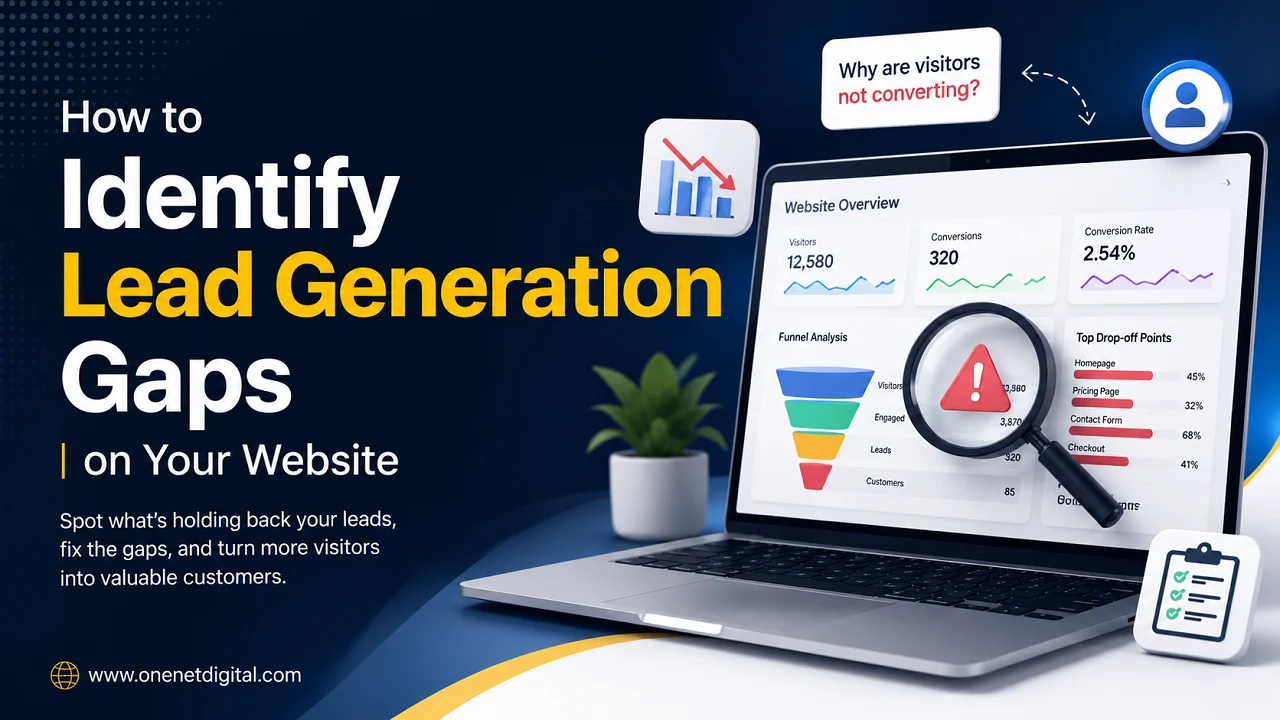
Generally, a website is one of the most important tools to attract potential customers and generate business enquiries. But many websites get consistent traffic but fail to convert visitors into leads. Usually, it’s because there are hidden lead generation leaks that are stopping users from taking action.
What are lead generation gaps? Lead generation gaps are the holes in a website’s design, content, user experience or conversion funnel that prevent the website from turning visitors into enquiries, signups or customers. Pinpointing these gaps allows companies to boost website performance and get more from the traffic they already have.
In this article I’ll explain how to spot where you’re losing leads on your website, and what typical problem areas to check.
What Are Lead Generation Gaps?
Lead generation gaps are roadblocks that prevent website visitors from taking important steps such as filling out a contact form, requesting a quote, scheduling a consultation, downloading an asset, subscribing to a newsletter, calling your business, or making an inquiry.
If users leave before doing these things, this is usually a sign that something is wrong somewhere in the customer journey.
Analyze Website Traffic and Conversion Data
The first step to uncovering lead generation gaps is understanding how visitors are using your website.
Look at key metrics like: website traffic, traffic sources, high performing pages, bounce rate, session duration, conversion rate, and exit pages. Pages with a lot of traffic but few enquiries may have problems with the content, user experience, or calls-to-action.
Review the User Journey
A seamless user journey is crucial for lead generation. Visitors should be able to easily understand your services, navigate your website, find information easily and contact your business.
Even small roadblocks such as complicated layouts or confusing navigation can hurt conversions and cost you opportunities.
Also Read: How to Find Low-Competition Keywords for Your Business (2026 Guide)
Check Your Calls-to-Action (CTAs)
Calls to action help direct visitors to take the next step. Buttons like “Contact Us”, “Get a Quote” or “Book a Consultation” must be easy to find and clearly written. If your CTAs are hard to see or aren’t strategically placed, visitors might leave without converting into leads.
Evaluate Contact Forms
Contact forms are a cornerstone of lead generation but can also be a barrier. Forms that are too long, irrelevant, or difficult to fill out tend to turn users away from submitting enquiries. The form should be simple, mobile friendly and display a confirmation message after it’s been submitted.
Assess Content Quality
Content influences trust and conversions. Visitors want useful information that clearly explains your products or services and answers their questions. Thin, outdated, or too promotional content can hurt credibility and make users leave the website without making an inquiry.
Examine Mobile User Experience
A lot of web traffic is mobile. Is Your Website Not Working Well on Smartphones? You Could Be Missing Out on Leads! Make sure pages load properly, text is legible, forms function properly and buttons are easy to click on smaller screens.
Also Read: How to Encourage Visitors to Contact Your Business
Identify High Exit Pages
Exit pages are the pages your visitors exit your website from. Service pages, pricing pages, contact pages, and landing pages may have high exit rates and that could be a problem. Check for missing information, bad CTAs, slow loading times or trust issues that might be affecting conversions on these pages.
Review Website Speed and Technical Issues
Technical problems can seriously impact lead generation. Slow pages, broken links, error pages and non-working forms can frustrate visitors and increase bounce rates. Regular website audits can help identify and correct these issues before they impact conversion performance.
Analyze Traffic Sources
Different traffic channels may convert at different rates. Organic search visitors generally have higher purchase intent, whereas social media visitors typically require more nurturing before they convert. By identifying the channels that are producing qualified leads, you can identify the gaps between your traffic and your conversions.
Look for Missing Trust Signals
Trust is a key factor in lead generation. Credibility is built with elements such as customer reviews, testimonials, case studies, certifications and clear contact information. If visitors don’t find evidence that your business is trustworthy, they may hesitate to contact you or send enquiries.
Monitor Conversion Paths
Every website should have clear conversion paths that guide visitors to act.
A strong conversion path should have:
1. Visitor finds the website.
2. Visitor gets useful information.
3. Visitor understands the answer.
4. Visitor has trust in the company.
5. Visitor takes an inquiry or contact action.
There may be a gap that needs to be addressed if users fall out of the process at any stage.
Tracking how visitors navigate the website allows companies to identify exactly where potential leads are lost.
Also Read: How to Reduce Drop-Offs in the Customer Journey
Final Thoughts
Most companies are obsessed with getting traffic to their websites. But traffic doesn’t always mean leads. Issues with content, user experience, forms, calls-to-action and technical performance can prevent visitors from becoming customers.
To discover the lead generation gaps, you need to regularly analyses website data, understand user behavior, and evaluate each step of the conversion process. Small improvements in these areas can make a huge difference to the effectiveness of existing traffic and help businesses generate more enquiries without necessarily increasing marketing spend.
By continuously identifying and addressing these gaps, businesses can create a website that not only attracts visitors, but converts them into meaningful leads.
FAQs
1. What are lead generation gaps on a website?
Lead generation gaps are issues that prevent website visitors from taking desired actions, such as filling out a contact form, requesting a quote, or making an inquiry.
2. Why is it important to identify lead generation gaps?
Identifying these gaps helps businesses improve conversion rates, generate more inquiries, and make better use of their existing website traffic.
3. Which website metrics can help identify lead generation gaps?
Important metrics include website traffic, bounce rate, conversion rate, session duration, traffic sources, high-traffic pages, and exit pages.
4. How can the user journey affect lead generation?
A confusing navigation structure, unclear information, or difficult contact options can create friction and discourage visitors from becoming leads.
5. Why are calls-to-action important for lead generation?
Calls-to-action guide visitors toward taking the next step. Weak or poorly placed CTAs can reduce conversions and cause potential customers to leave the website.