
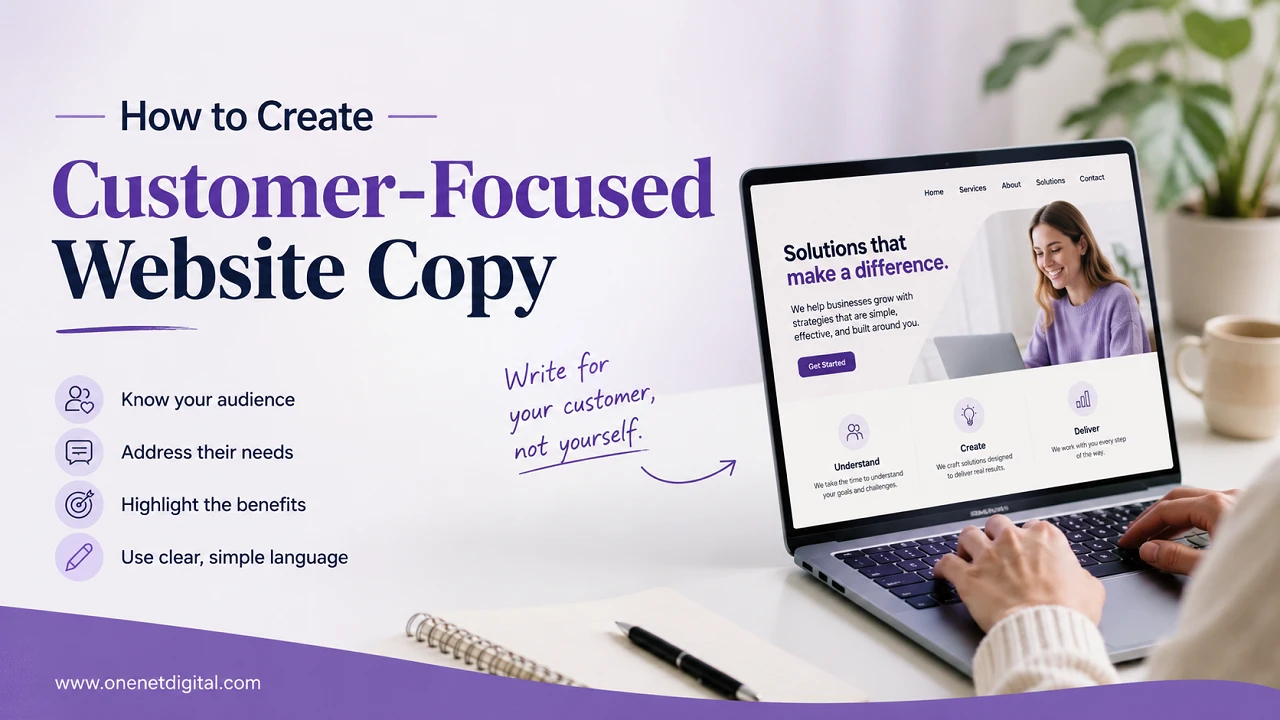
Today in the digital world, a website is often the first point of contact between a business and its prospective customers. While design and navigation are important, the text on a website is just as important when it comes to the user experience. Website copy isn’t about filling pages with text. It’s about communicating value, serving customer needs, and directing visitors to take meaningful actions.
A mistake many companies make is only writing about their website content about themselves. Their accomplishments, their services, and their company history. While there’s a place for this info, consumers today are more interested in how a business can help them solve their problems or improve their lives. That’s why customer-centric website copy is so important.
When businesses create content with the customer in mind, it can help them improve engagement, build trust and encourage conversions. It also helps with search engine optimization (SEO). The trick is to create content with the customer in mind at every step of the creation process.
Understanding Customer-Focused Website Copy
Customer-centric website copy is content written for the audience, not the business itself. It is more about how products or services can solve customers’ problems and satisfy their needs, rather than just describing products or services.
For example, saying, “Grow your online visibility and reach more customers” is more customer-centric than simply stating, “We provide digital marketing services.” This clearly states the value and advantages.
Why Customer-Focused Copy Matters
Website visitors tend to skim content quickly and decide if it’s useful within seconds. If the information answers their questions or addresses their concerns, they are more likely to stay on the website.
It is customer-centric copywriting that boosts engagement, builds trust, increases conversions, decreases bounce rates and creates a better user experience. That’s good for SEO as well, because search engines love content that is useful to users.
Start by Understanding Your Audience
The first step in writing effective website copy is understanding your target audience. Companies have to understand what customers need, their challenges, objectives and what kind of information they are looking for online.
You can research through customer feedback, surveys, website analytics, social media interactions, reviews, and frequently asked questions. The more you know about your audience, the easier it is to create content that is relevant and useful.
Also Read: How to Structure Content for Better User Experience
Focus on Benefits Instead of Features
Customers are more interested in outcomes than in technical features. Don’t say what a product or service does, say what it does for the user
For instance, “Get help anytime you need it, and don’t have to wait for business hours” is a better way to frame 24/7 customer support. Benefits make website copy compelling and persuasive.
Use Simple and Clear Language
The website content should be easy to read and understand. Long sentences, complex terms and industry jargon can confuse visitors and reduce engagement.
Using simple words, short sentences and a conversational tone make it easier for users to quickly understand your message and improve their overall experience on the website.
Address Customer Pain Points
People often visit websites when they are looking for solutions to specific problems. Good copy acknowledges these pain points and demonstrates an understanding of customer struggles.
If you address pain points such as a lack of time, budget, or the challenge of sourcing trustworthy information, visitors will know you understand their needs and trust your content.
Write Headlines That Focus on User Value
Headlines are the first thing a visitor usually sees on a web page. Good headlines communicate benefits instantly and motivate users to read on.
Headlines that solve problems, highlight benefits or address specific needs tend to improve engagement and make content more navigable.
Also Read: How to Explain Complex Services in Simple Language
Use the Customer’s Language
The language you use should match the language your audience uses when Googling. Simple, common phrases can work better than complex industry buzzwords.
Not only does customer-friendly language make your content more readable, but it also helps you align your content with search intent, which can improve your SEO performance.
Build Trust Through Helpful Information
The purpose of customer-focused copy is to educate and help—not to sell aggressively. Offering relevant facts, responding to typical questions, and making useful suggestions will help you build your credibility.
When your content is useful, it builds your site as an authority and makes visitors want to return in the future.
Create Clear Calls to Action
A call to action (CTA) directs visitors to the next step. A good CTA is clear, relevant and simple to understand.
Simple phrases like Learn More, Explore Our Services, or Get Started Today tell users what to do next without pressure.
Improve Readability with Proper Formatting
Even if well structured, it may be difficult to absorb useful information. Short paragraphs, headings, bullet points and plenty of white space make content easier to scan and understand.
Good formatting makes for a good user experience and often increases the amount of time visitors spend on a website.
Optimize Content for Search Intent
Content that is customer-centric and SEO are two sides of the same coin. Search engines like pages that answer questions users have and provide helpful information.
By adding relevant keywords in a natural way, descriptive headings and helpful content, you can improve search visibility and increase the chances of attracting the right audience.
Also Read: How to Create Website Content People Actually Read
Continuously Test and Improve Your Copy
Customer tastes and online behavior change over time. Regularly checking your website copy helps ensure it remains accurate, relevant and effective.
Measuring engagement, bounce rates, conversions, search rankings, and customer feedback can provide useful information to improve content of websites and sustain long term performance.
Final Thoughts
Customer-focused website copy is all about understanding your audience and communicating in a way that speaks to their needs, challenges and goals. Businesses need to be thinking about content that helps them be of service and solve problems, not just talking about their products or how successful they are.
By using easy language, emphasizing benefits, solving customer pain points, enhancing readability, and matching content to search intent, businesses can develop website copy that is both user and SEO friendly. Creating customer-focused content will improve website performance and create more engaged relationships with the visitors which will lead to trust, engagement and long-term growth.