
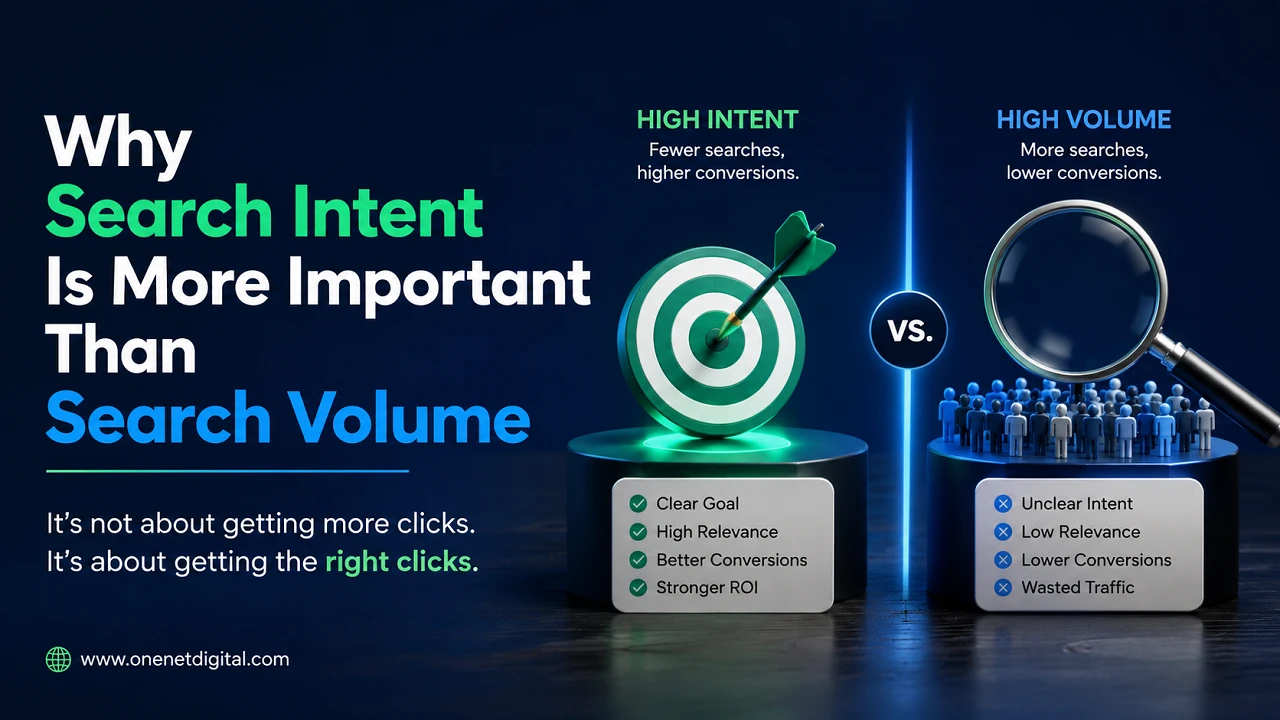
Most people do keyword research by looking at search volume. A keyword that has thousands of searches a month always looks like the best option as it promises more traffic. However, SEO has evolved considerably over the years and search volume alone is not enough to know if a keyword is worth it. If the visitors coming to your website are not interested in your content or services, high traffic numbers won’t help you reach your goals.
That’s why search intent is one of the most important ranking factors in modern SEO. Search intent is the purpose behind a user’s search. It helps you know what people are looking for when they type a query into Google. When your content meets those expectations, users stay longer, engage more with your site and are more likely to return. Successful websites do not chase the highest search volume; they focus on satisfying user intent.
Search Intent Explained
Search intent is the intent behind a search query. Every individual who uses a search engine has a specific purpose. Some users want to learn something new, some want to compare products, some want to visit a particular website, some want to make a purchase.
For example, if someone searches for “how to improve website speed” they are looking for educational information and practical tips. A user searching for “best website speed optimisation tool” however is likely to be comparing different tools before making a buying decision. Both keywords are related to website performance, but the intent behind them is completely different.
These intentions are very carefully analysed by the search engines in an effort to return the most relevant results. Websites that understand and respond to user intent are far more likely to rank well.
The Four Major Kinds of Search Intent
Understanding the various kinds of search intent allows you to produce the appropriate content for the appropriate audience.
Informational Intent
People want to know something or get an answer to a question. Such searches often have phrases like ‘what is’, ‘how to’, ‘why’ or ‘tips. This type of search works best for blog posts, tutorials and long-form guides.
Navigational Intent
Users already know which website/brand they want to go to. They just use Google as a shortcut instead of typing the website address directly.
Commercial Investigation
These users are doing their homework before they buy. They look up products, read reviews, and get recommendations. These searches are best suited for buying guides, comparison articles and product reviews.
Transactional Intent
Users are prepared to act. Maybe they want to buy something, sign up for a service, or make an appointment. Transactional keywords tend to do best on product pages, landing pages, and service pages.
Also Read: How to Know Search Intent Before Choosing a Keyword
Why Search Volume is Misleading
Search volume gives you the number of people looking for a keyword in a given month, but not why they’re looking. A keyword with very high search volume often attracts users with different expectations.
For example, the keyword “SEO” gets thousands of searches per month. Some users want to learn the basics, others are looking for tools, courses or agencies. No single article can possibly satisfy all types of visitors.
Therefore, websites can sometimes get huge amounts of traffic but not much in terms of engagement or conversions.
Why Search Intent Delivers Better Results
Search engines attempt to provide the most useful response to each search. Google is more likely to recommend your content if it answers the user’s question or need directly.
Visitors that find useful information quickly tend to spend more time on your site and visit more pages. These positive user signals tell search engines that your content is valuable and relevant.
Pages that meet search intent tend to perform better over time than pages that just go for the highest search volume keywords.
Quality Traffic Is Best Compared to Heavy Traffic
Many website owners only care about visitor numbers, but quality traffic is worth more than large traffic volumes.
A site with fewer visitors who actually need what it offers will often have better engagement, more trust, and better conversions than a site that gets thousands of users who aren’t looking for it.
People who have come to you for a reason are more likely to sign up, get in touch, buy something, or come back another time.
Search Intent Increases Conversion Rates
SEO is more than simply getting traffic; it’s about attracting people who are likely to take action.
For example, a person searching for “best laptops for students” wants comparisons and recommendations before buying. A simple product page doesn’t serve that intent as well as a detailed buying guide.
In the same way, users searching for “buy laptop online” are ready to buy. Giving them product pages vs. educational articles leads to a better experience and higher conversion rates.
Also Read: Why Website Familiarity Enhances Usability | One Net Digital
How To Find Search Intent
A quick way to get a good sense of search intent is to Google your target keyword.
Check the pages that are shown on the first page. See if Google shows blog posts, product pages, videos or comparison articles. Normally the search results show what people are looking for.
Also check out things like Featured Content, People Also Ask, videos and shopping results, because they give you more clues about user intent.
Mistakes to Avoid
A lot of beginners simply go for keywords with a high search volume. Some produce the wrong type of content for the keyword they target.
Another common mistake is to ignore the page that are already ranking on Google. By analysing these results, you can get insights into what users expect from you and how you can create even better content.
Avoiding these mistakes means you can target keywords that produce valuable results, rather than simply increasing visitor numbers.
Summary
Search volume is a vital SEO metric, but it should not be the only factor when choosing keywords. Search intent helps you understand what users are actually looking for, so you can create content that answers their questions and solves their problems. By focusing on intent rather than just traffic numbers, you’ll attract more relevant visitors, boost engagement, improve conversions and build a stronger long-term SEO strategy. In the current SEO landscape, understanding user intent is more important than just focusing on the largest keywords.
Frequently Asked Questions (FAQs)
1. What is the Search Intent?
Search intent is the motivation behind a user’s search query. It helps the user learn something, compare products, visit a website, or buy.
2. Why search intent is more important than search volume?
It’s because it helps you bring in visitors who are genuinely interested in your content, resulting in better engagement, conversions and long-term SEO performance.
3. What are the four types of search intent?
The four types are informational, navigational, commercial investigation and transactional intent.
4. How do I know the search intent?
Go to Google and search for the keyword and study the top-ranking pages. The format of their content often tells us what the user wants.
5. Do low volume search keywords perform better?
Yes, less searched keywords with clear user intent can bring more relevant visitors and better conversion opportunities.
6. Does search intent impact SEO rankings?
Yes, Content that best fulfils user intent is given priority by search engines, which makes it crucial for achieving and maintaining high rankings.