
Introduction
Internal links are one of the most overlooked aspects of SEO. Many businesses focus heavily on backlinks, keyword research, and content creation while paying very little attention to how their own pages connect with one another. However, a well-structured internal linking strategy can significantly improve website navigation, user experience, and search engine visibility.
Internal links are hyperlinks that connect one page of your website to another page on the same domain. They help visitors discover additional content and allow search engines to understand the relationship between different pages and topics.
Over time, websites naturally grow. New blog posts, service pages, and guides are added regularly, but internal links are often forgotten. As a result, important pages become isolated, older content loses visibility, and search engines struggle to understand which pages are most valuable.
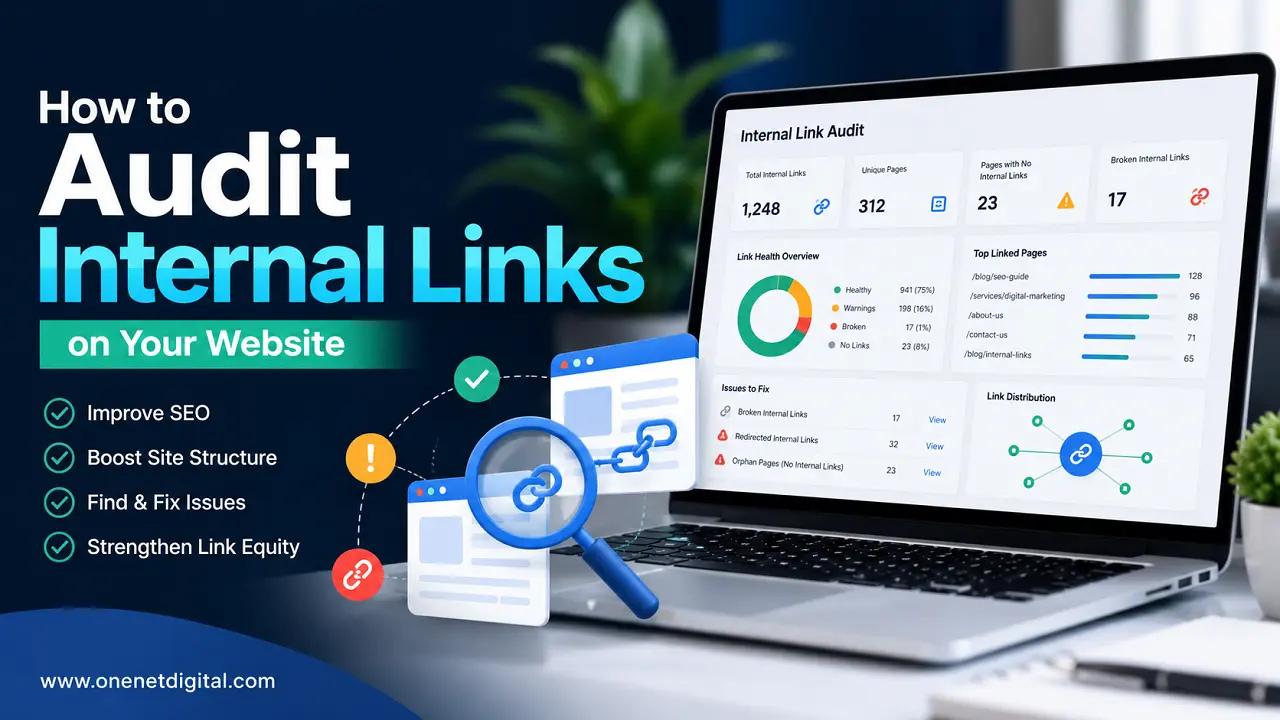
This is why conducting regular internal link audits is important. An internal link audit helps identify missed opportunities, broken connections, and pages that need better integration into your website structure.
In 2026, businesses that regularly audit their internal links often create better user experiences and stronger SEO foundations than those that ignore their website architecture.
Understand Why Internal Links Matter
Internal links do much more than simply help users navigate a website.
Search engines use internal links to discover pages, understand content relationships, and determine which pages are important. Strong internal linking can help distribute authority across the website and support better rankings for important pages.
For users, internal links make it easier to explore related topics and find additional information without returning to search engines.
A strong internal linking structure can help:
- Improve website navigation
- Increase page discovery
- Strengthen topical authority
- Encourage deeper engagement
- Support better SEO performance
Because internal links influence both user experience and search visibility, auditing them should be a regular part of website maintenance.
Identify Important Pages First
Before reviewing internal links, businesses should identify their most valuable pages.
Not every page carries the same importance. Service pages, high-performing blog posts, landing pages, and conversion-focused pages often deserve greater internal link support than less important content.
Many websites unintentionally direct internal links toward low-priority pages while neglecting pages that actually generate leads and revenue.
An audit should begin by determining which pages are strategically important and ensuring they receive sufficient internal linking opportunities throughout the website.
Prioritizing important pages helps create a stronger website structure and improves the chances of these pages performing well in search results.
Also Read: How to Build Topical Authority in Your Industry | One Net Digital
Find Orphan Pages
Orphan pages are pages that have little or no internal links pointing to them.
These pages can create problems because search engines may struggle to discover them, and users rarely find them through normal navigation. In many cases, businesses forget that these pages even exist.
Orphan pages often appear because:
- New pages were published but never linked.
- Old content was removed or reorganized.
- Website structures changed during redesigns.
- Internal linking was never properly implemented.
Finding orphan pages is one of the most valuable parts of an internal link audit because these pages often contain untapped SEO opportunities.
If a page is important, it should be connected naturally to relevant sections of the website.
Review Internal Links on High-Traffic Pages
Some pages receive significantly more traffic than others.
These high-traffic pages can become powerful sources of internal links because they already attract visitors and search engine attention.
Many websites miss opportunities by allowing high-performing pages to exist without directing users toward other valuable content.
For example, a popular article about local SEO can naturally link to service pages, conversion optimization guides, and content marketing articles.
Auditing high-traffic pages helps identify opportunities to guide visitors deeper into the website and distribute authority more effectively.
Every popular page should contribute to the overall website structure rather than exist in isolation.
Check Anchor Text Usage
Anchor text is the clickable text used within a link.
Many websites use generic anchor text such as “Click Here,” “Read More,” or “Learn More.” While these phrases are not always harmful, they often fail to provide context for users and search engines.
Effective anchor text should describe the destination page naturally.
For example:
Instead of:
Click Here
Use:
Learn more about improving service page rankings
Descriptive anchor text helps search engines understand page relationships and improves usability for visitors.
An internal link audit should review whether anchor text is informative, relevant, and naturally integrated into the content.
Also Read: How to Improve Click-Through Rate from Google Search
Look for Broken Internal Links
Broken internal links create poor user experiences and waste opportunities for both visitors and search engines.
As websites evolve, URLs often change. Pages may be deleted, moved, or redirected. Over time, these changes can leave broken links scattered throughout the website.
Broken internal links can:
- Frustrate users
- Increase abandonment rates
- Disrupt website navigation
- Create crawling issues
- Reduce overall user experience
Regular audits should include checking whether all internal links still lead to active and relevant pages.
Fixing broken links is often a simple improvement that can positively impact both usability and SEO.
Evaluate Content Clusters and Topic Relationships
Modern SEO increasingly focuses on topical authority.
Internal links help demonstrate relationships between related topics and show search engines the depth of your expertise.
For example, if your website contains articles about:
- Local SEO
- Technical SEO
- Content marketing
- Website conversions
- Service page optimization
These articles should naturally connect with one another.
An internal link audit should determine whether related content is properly interconnected.
Well-structured topic clusters make it easier for both users and search engines to understand your content ecosystem and strengthen your authority within your industry.
Check Whether Important Pages Are Buried Too Deep
Some valuable pages become difficult to find because they are buried several clicks away from the homepage. When important pages are too deeply nested, they often receive less internal link value and lower visibility.
An audit should evaluate whether key pages are easy to access through navigation and contextual internal links. Users generally prefer finding information quickly. Search engines also benefit from clear website structures.
Pages that generate leads or target important keywords should not be hidden behind multiple layers of navigation. A flatter and more organized structure often improve both usability and SEO performance.
Add Internal Links to Older Content
Older articles frequently become disconnected as websites continue publishing new content. Businesses often focus on linking new content to old articles but forget to update older pages with links to newer resources.
This creates missed opportunities.
Reviewing older content can reveal numerous possibilities for adding relevant internal links that:
- Improve navigation
- Increase page visibility
- Encourage deeper engagement
- Strengthen topic relationships
Updating old content with fresh internal links is often one of the easiest ways to improve overall website architecture.
Also Read: How to Find Pages That Are Losing Google Traffic
Avoid Overusing Internal Links
Although internal links are valuable, adding excessive links can reduce their effectiveness.
Some pages contain dozens of unnecessary links that distract users and create cluttered experiences. Every internal link should have a clear purpose and provide additional value.
The goal is not to add as many links as possible. The objective is to create meaningful connections that help users continue their journey and better understand related topics.
Quality and relevance matter far more than quantity.
A clean and logical linking structure generally performs better than an overloaded one.
Create a Regular Internal Link Audit Process
Internal linking should not be treated as a one-time project.
As new content is published, website structures change, and pages evolve, new internal linking opportunities constantly emerge.
Businesses should periodically review:
- Important pages
- Orphan pages
- Broken links
- Anchor text quality
- Topic clusters
- Older content that needs updates
Regular audits help maintain an organized website structure and ensure that valuable pages continue receiving proper support.
Consistent improvements often lead to better user experiences and stronger long-term SEO performance.
Conclusion
Internal links are one of the simplest yet most powerful SEO elements that businesses often overlook. They help search engines understand content relationships, improve navigation, strengthen topical authority, and guide visitors toward valuable information.
An effective internal link audit involves identifying important pages, finding orphan content, fixing broken links, improving anchor text, strengthening topic clusters, and regularly updating older articles.
In 2026, successful websites are not simply collections of individual pages. They are connected ecosystems where every piece of content supports the broader user journey and reinforces topical expertise.
By auditing and improving internal links regularly, businesses can create stronger website structures, improve user engagement, and unlock SEO opportunities that might otherwise remain hidden.
FAQs
1. What is an internal link audit?
An internal link audit is the process of reviewing how pages on your website link to each other and identifying opportunities for improvement.
2. Why are internal links important for SEO?
They help search engines discover content, understand topic relationships, and distribute authority across important pages.
3. What are orphan pages?
Orphan pages are pages with few or no internal links pointing to them, making them difficult for users and search engines to discover.
4. How often should I audit internal links?
A review every few months is generally recommended, especially if new content is published regularly.
5. Can improving internal links increase organic traffic?
Yes. Better internal linking can improve content visibility, user engagement, and the overall SEO performance of important pages.