
Introduction
Many businesses believe that low website engagement means they need a complete redesign. Because of this, they start thinking about changing the entire layout, rebuilding pages, or investing large amounts of money into a new website.
But in reality, that is not always necessary. In many cases, websites already have a decent design. The real problem is usually related to user experience, speed, content quality, readability, or poor engagement strategy. A website can look visually attractive and still fail to keep visitors engaged.
In 2026, user engagement has become one of the most important parts of online growth. Businesses not only need traffic, but they also need visitors to stay longer, explore multiple pages, trust the brand, and eventually become customers.
Search engines like Google also pay close attention to how users interact with websites. If visitors leave quickly or do not engage with the content, rankings may slowly decline over time.
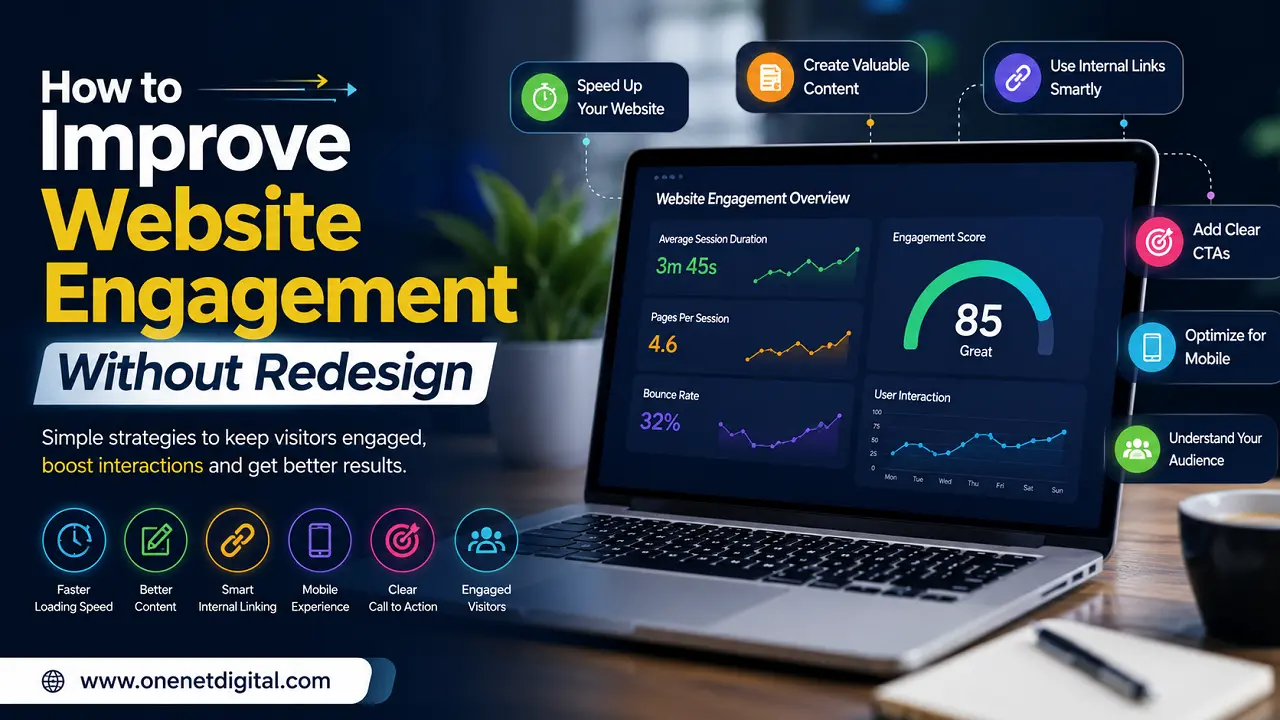
The good thing is that businesses can improve engagement without changing the entire design. Small improvements in content, speed, navigation, and user experience often create much better results than expensive redesigns.
Website Speed Has a Huge Impact on Engagement
One of the biggest reasons visitors leave websites quickly is poor loading speed. Modern internet users have very little patience. If a page takes too long to load, most people simply leave and open another website.
This is especially common on mobile devices where users expect fast browsing experiences. Many business owners focus heavily on visual appearance but forget that performance matters equally. A slow website creates frustration even before visitors start reading the content.
Improving website speed does not require a redesign. Simple optimizations like compressing images, reducing heavy scripts, improving hosting quality, and cleaning unnecessary plugins can make a huge difference.
Even a few seconds of speed improvement can increase:
- User engagement
- Time spent on website
- Conversion rates
- SEO performance
Fast websites feel more professional and trustworthy, which naturally encourages visitors to stay longer.
Also Read: Why Businesses Need Evergreen Content for Long-Term Traffic
Content Readability Matters More Than Businesses Realize
Sometimes the content itself pushes visitors away. Even useful information can perform poorly if it looks difficult to read. Large text blocks, complicated words, poor formatting, and cluttered layouts reduce engagement very quickly.
People prefer websites that feel simple and comfortable to read. Businesses should focus on creating content that feels natural and conversational instead of robotic or overly technical.
Short paragraphs improve readability because users can scan the content more easily. Clear headings also help visitors understand what each section is about without confusion.
When visitors can quickly understand the content, they are more likely to continue reading and explore more pages on the website. Good readability keeps users engaged without needing any major visual redesign.
Better Internal Linking Can Increase User Interaction
Many websites fail to guide visitors properly after they finish reading one page. For example, a user may read a blog post and then leave immediately because there are no clear suggestions about what to explore next. Internal linking helps solve this problem. When businesses connect related pages naturally, visitors spend more time browsing the website.
For example:
- A blog post can link to another helpful article
- Service pages can connect with case studies
- Educational content can guide users toward contact pages
This creates a smoother browsing experience.
Internal linking also improves SEO because search engines understand website structure more clearly. Simple internal linking improvements often increase engagement significantly without changing the website design.
Mobile Experience Is Extremely Important in 2026
Most website visitors now come through smartphones. A website may work perfectly on desktop but still create a poor experience on mobile devices.
Small text, broken layouts, difficult buttons, and slow mobile loading can quickly frustrate users. Businesses often ignore mobile optimization because they only test websites on laptops or desktop screens.
This becomes a major problem because mobile experience directly affects:
- User engagement
- Bounce rate
- SEO rankings
- Customer trust
Improving mobile usability does not always require redesigning the website. Small adjustments in spacing, image optimization, text size, and loading speed can create a much smoother experience.
Websites that work properly on mobile devices usually keep visitors engaged for longer periods.
Also Read: How to Optimize Website Navigation for Better User Experience
Too Many Distractions Reduce Engagement
Some websites include too many popups, animations, sliders, banners, and autoplay videos. While businesses may think these features make the website look modern, they often create distractions instead.
Visitors usually want quick access to information. Excessive distractions interrupt the browsing experience and push users away. Simple and clean websites often perform much better because users can focus on the content without confusion.
Reducing unnecessary elements can instantly improve engagement without changing the overall design style. Businesses should focus on simplicity and user comfort rather than trying to overload pages with effects.
Trust Signals Keep Visitors on the Website Longer
People engage more with websites they trust. If a website looks unreliable or incomplete, visitors often leave quickly without exploring further. Trust signals help users feel more comfortable.
Businesses can improve trust by adding:
- Customer reviews
- Testimonials
- Real contact information
- Secure HTTPS connection
- Business details
- Professional branding
These small improvements create confidence and encourage visitors to stay longer. Trust is one of the biggest factors behind strong website engagement and conversions.
Strong Headlines Improve User Interest
Headlines are often the first thing visitors notice when they land on a page. Weak or unclear headlines fail to grab attention, which reduces engagement immediately.
Good headlines should clearly explain:
- What the content is about
- Why it is useful
- What problem it solves
Users decide within seconds whether they want to continue reading. Improving headlines is a very simple change, but it can increase user interaction significantly. Businesses should avoid overly generic headlines and focus on clear value-driven messaging.
Updated Content Performs Better
Old content can reduce engagement over time. Visitors prefer updated and relevant information, especially in industries like SEO, digital marketing, and technology. If a blog post contains outdated advice or old statistics, users may lose interest quickly.
Businesses should regularly refresh old pages by:
- Updating information
- Improving readability
- Adding new examples
- Expanding sections
Fresh content improves both SEO and engagement naturally. Updated websites also appear more active and trustworthy to visitors.
User Experience is More Important Than Fancy Design
Many businesses think engagement only depends on visual appearance. But in reality, user experience matters much more.
Visitors care more about:
- Fast loading
- Easy navigation
- Useful content
- Mobile usability
- Clear structure
A visually simple website with excellent user experience usually performs much better than an overly stylish website with poor usability. This is why businesses should focus more on practical improvements instead of rushing toward complete redesigns.
Also Read: Why Businesses Lose Customers Due to Poor Website UX
Engagement Helps SEO and Conversions
Website engagement is not just about keeping visitors busy.
Strong engagement can improve:
- Search rankings
- Customer trust
- Lead generation
- Conversion rates
When users stay longer and interact more, search engines often see the website as valuable and useful. Engaged visitors are also more likely to contact the business or become paying customers. This is why engagement optimization is important for long-term online growth.
Conclusion
Improving website engagement does not always require expensive redesigns or complete website rebuilds. In many cases, simple improvements in speed, readability, mobile experience, navigation, content quality, and trust signals can create major results.
Businesses should focus on making websites easier, faster, and more comfortable for users. In 2026, websites that provide smooth user experiences and genuinely helpful content will naturally keep visitors engaged longer.
Small improvements made consistently often produce much better long-term results than unnecessary redesigns.
FAQs
1. What is website engagement?
Website engagement refers to how users interact with your website, including time spent, clicks, scrolling, and page visits.
2. Can I improve engagement without redesigning my website?
Yes, many engagement problems can be solved through better content, faster speed, and improved user experience.
3. Why do visitors leave websites quickly?
Common reasons include slow loading, poor mobile experience, confusing layouts, and weak content readability.
4. Does engagement affect SEO rankings?
Yes, strong engagement signals can positively impact SEO and search visibility.
5. What is the easiest way to improve website engagement?
Improving speed, readability, internal linking, and mobile usability are some of the easiest ways to increase engagement.