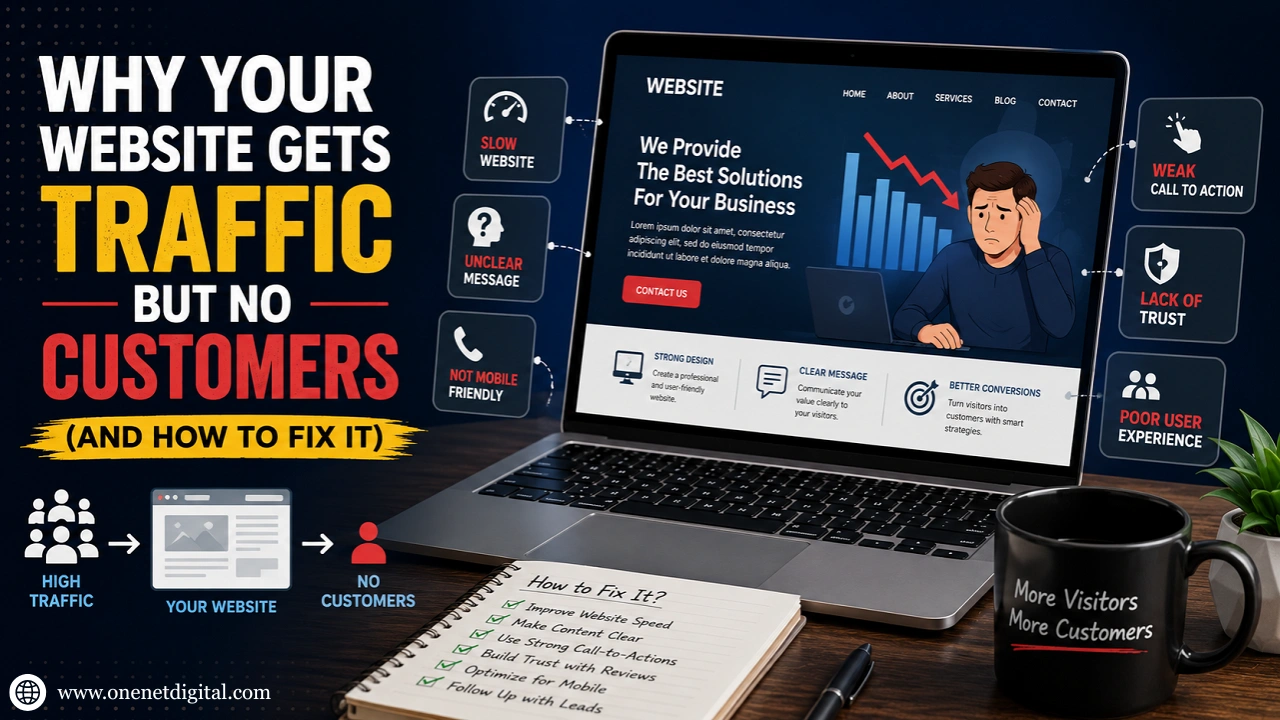
The problem many business owners face in 2026 is the same. They have visitors to their site daily, but not many people contact them, and even fewer become customers. Initially, it can be a bit perplexing. So, if there is traffic, why aren’t there sales or inquiries? But the truth is that traffic is not all there is to it. A website should also earn trust, direct visitors correctly, and provide a seamless experience.
There are many websites that have focused solely on SEO and traffic generation, without considering conversion optimization. One of the primary issues that arises for businesses in order to convert visitors to customers is this.
The bright side is that many of these issues can be resolved by making minor adjustments. In this article, we’ll delve into the reasons some websites underperform and how businesses can enhance their performance.
Your Website May Not Make a Good First Impression
A person’s first impression of a site is immediately formed, and they will see if the business looks trustworthy or not. This is typically within a few seconds. If the site seems dated, has a confusing structure, or is poorly organized, visitors are likely to bounce.
When a business’s website design does not look professional, many of its customers end up being lost. A clean layout, easy navigation, readable text, and modern design create a positive impression on visitors.
Customers do trust businesses that look professional online. Customers may lose faith in your services if they have a bad impression of the quality of your website.
Visitors Don’t Know What You’re Offering
The top issue is poor communication. Some websites have jargon and don’t explain services well.
The visitor should realize:
- What the business does
- How can it help them?
- Why they should choose it
When users are confused, they tend to leave and go to the sites of competitors. Simple and straightforward messaging is more effective. The services of a business should be described in natural and understandable language. Clear communication boosts trust and extends user engagement.
Also Read: Why AI Tools are Supporting Small Businesses to Save Time and Grow Faster
Weak CTA’s Lead to Fewer Conversions
Many websites do not have adequate guidance for visitors. Users should be aware of the next steps following their reading of the content. Many visitors don’t make contact with the business if it isn’t directed to them.
Good call-to-action sections invite people to:
- Contact the business
- Request a quote
- Book a consultation
- Fill in the inquiry forms.
The CTAs should be in a natural and perceptible way throughout the website. Just a few tweaks in CTA location can make a big difference in conversions.
Slow Website Speed Makes Visitors Leave
Speed is a major factor in websites in 2026. Users want a website to load quickly, particularly on their mobile devices. Slow page loading times can lead to visitors dropping off even before reading the content. Slow websites are frustrating and impact user experience.
Page speed is also a crucial ranking factor for search engines such as Google. Businesses should ensure that images are optimized, the hosting quality is improved, and unnecessary elements that hinder the website are removed. A faster website means better SEO and conversions.
Your Content is Overly Promotional
One of the mistakes that some businesses make is making overly promotional content. People don’t like to receive messages that are constantly selling the product. People go to sites looking for answers, solutions, or information to solve problems. The content should be helpful and natural.
Rather than only stating “how great the business is”, businesses should be focused on:
- Solving customer problems
- Explaining benefits clearly
- Providing useful information
- Building trust naturally
Useful content leads to greater engagement and higher conversion rates.
Also Read: Why Businesses Need a Blog Section on Their Website in 2026
Lack of Trust Signals Can Hurt Sales
Customer trust is a major factor in Online transactions. Without trust signals, visitors might be hesitant to reach out to a business. A lot of users verify the authenticity of a business before disclosing their personal details. Trust signals are customer reviews, testimonials, contact information, business information, and secure website connections.
Positive reviews and the true customer experiences that visitors witness increase their level of confidence. One of the main reasons that some sites convert well is that they have a high level of trust.
Mobile Experience May Be Poor
Lots of individuals these days search the web from their cell phones. Without a site that functions well on mobile devices, businesses may lose out on a significant number of customers.
Typically, a poor mobile experience consists of:
- Text that is hard to read
- Buttons that are difficult to click
- Slow loading pages
- Broken layouts
Mobile-friendly websites result in a better user experience and keep visitors on the site longer. It is important for businesses to regularly test their website across multiple devices to ensure that it performs well.
Your Website May Be Inviting the Wrong Audience
There are times when users visit a website but aren’t really interested in the service. This is frequently done in an attempt to get more traffic in the door, but businesses aim for broad or unrelated keywords. Good traffic does not always equate to high traffic.
Businesses must concentrate on seeking out individuals who are actively looking for their business. Relevant traffic converts at a higher rate than random traffic. Good SEO strategy and targeted content can enhance the quality of the leads.
Excessive Distractions Can Lead to User Confusion
Too many popups, animations, banners, or other unnecessary design elements on some websites. Businesses can find themselves using these features to their advantage, but they can also cause confusion and deter visitors from taking action.
The simple and focused website performs very well. The information that is important should be readily accessible without overwhelming the visitor. A clean design enhances the user experience and enables users to concentrate on services and contact information.
Also Read: Why Every Business Needs a Reliable and Strong Online Reputation in 2026
No Follow-Up Strategy
Not all visitors are customers the first time they visit. There are some users who require time to think before making their choice. Businesses can miss out on potential leads if they fail to follow up with visitors.
Email marketing, inquiry follow-up, and remarketing techniques are ways for businesses to remain in touch with customers after they have left the website. Regular follow-up will build conversion opportunities over time.
Conversion Optimization Is Important
Many companies place a lot of emphasis on traffic and neglect optimization for conversion. Conversion optimization involves optimizing the website for more conversions.
These little changes can make a huge difference, for example:
- Better headlines
- Clearer service descriptions
- Faster page speed
- Improved contact forms
- Stronger CTA placement
There is a need to review and enhance the performance of websites regularly to ensure businesses stay ahead in the game.
Conclusion
Once a website exists, the task is to get traffic to it. The actual target is to convert visitors into customers. Some of the top website design mistakes that lead to poor lead generation include slow speed, lack of trust signals, lack of clear messaging, poor user experience, and poor website design.
Fortunately, many conversion problems have simple solutions. Companies that implement a user experience, trust, and transparent communication strategy tend to do much better. In 2026, online businesses with websites that do SEO and smart conversions will expand at a faster rate and generate more customers for the business online.
FAQs
1. Why is my website getting visitors but no leads?
This may occur due to bad user experience, ineffective CTA, confusing content, or a lack of trust signals.
2. What are the best ways to convert visitors to your website?
Optimize web page speed, content, mobile design, and increase visibility and clarity of CTAs.
3. Does the design of a website influence customer trust?
Yes, business websites will look more trustworthy if they are professional and clean.
4. Why is mobile optimization important?
A lot of users use their smartphones to navigate websites, which ultimately helps to improve user experience and conversions.
5. What is the meaning of conversion optimization?
Conversion optimization is the process of optimizing a website to deliver more leads, inquiries, and customer actions.