
- Introduction
- The Difference Between Traffic and Conversions
- The Content Does Not Match User Intent
- Weak or Missing Calls to Action
- Visitors Are Not the Right Audience
- Poor User Experience
- Lack of Trust Signals
- The Offer Is Not Compelling Enough
- Too Many Distractions on the Page
- The Page Targets Early-Stage Visitors
- Mobile Optimization Issues
- Analytics May Reveal Hidden Problems
- Conclusion
- Frequently Asked Questions (FAQs)
Introduction
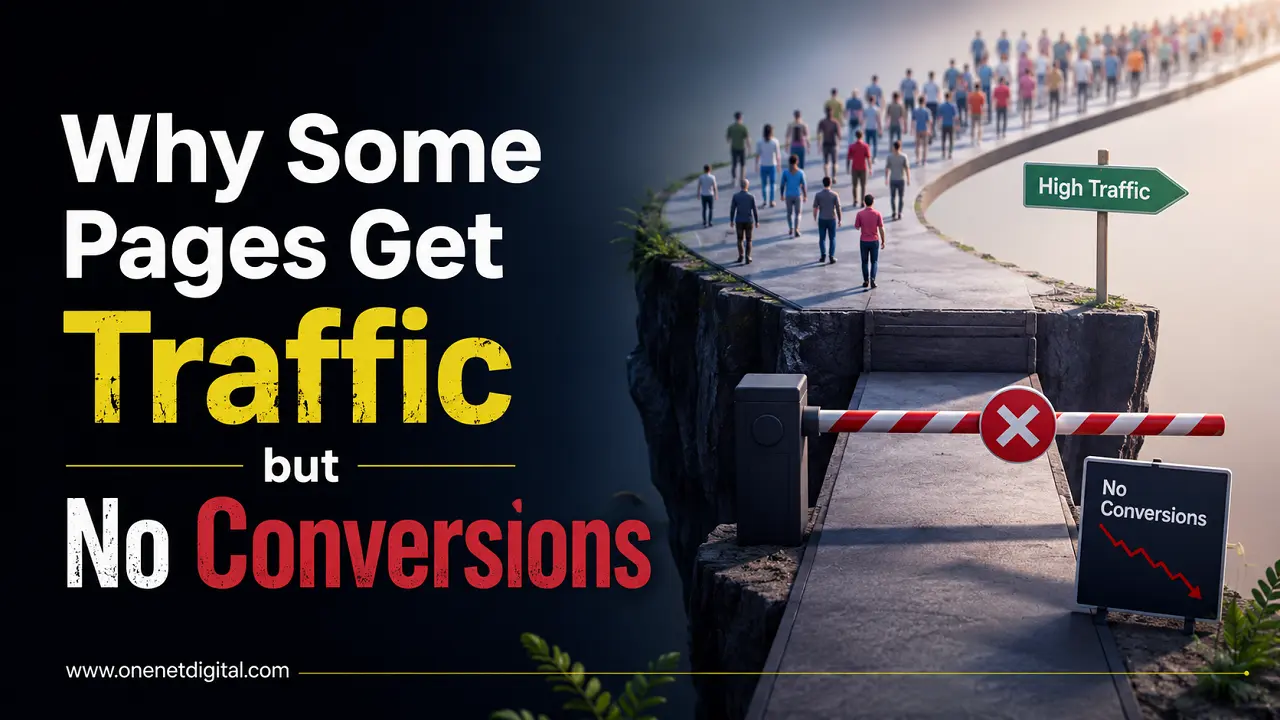
More traffic to a website is often seen as a good thing. Companies invest in search engine optimization, content creation and digital marketing campaigns to attract visitors. But traffic does not necessarily equal success. Many website owners have a common problem: some pages receive a steady stream of visitors but produce very few leads, enquiries or sales.
Knowing why certain pages receive traffic but fail to convert can help businesses enhance their website performance and achieve better results from their marketing efforts.
The Difference Between Traffic and Conversions
Website traffic is the number of people who visit a page. Whereas conversions are when visitors do something you want them to do. This could include:
• Complete a contact form
• Providing a quote request.
• Shopping
• Signing up for a newsletter
• Downloading a resource.
• Scheduling a consultation
A page may attract thousands of visitors per month, but if those visitors don’t take action, the page may not be contributing much to business goals.
The Content Does Not Match User Intent
One of the most prevalent causes of low conversion is a mismatch between content and user intent. For example, a blog post may rank well for an informational keyword and be getting visitors looking for answers to a question. If the page is only informational and does not lead users to the next step, visitors may leave after they get what they came for.
People searching for educational content tend to be at the start of their decision-making process. They may not be ready to make a purchase or call a business right now.
Developing content that aligns with the visitor’s position in the customer journey can help to increase opportunities to convert.
Also Read: How Website Consistency Builds Customer Confidence
Weak or Missing Calls to Action
A lot of pages get good traffic but don’t convert because you don’t guide visitors in the right direction to the next step. If you don’t have a clear and relevant call to action, users will simply leave after consuming the content. Simple calls to action like calling the business, getting a quote, or subscribing for updates can help improve conversion.
Visitors Are Not the Right Audience
High traffic numbers don’t always mean high-quality traffic. Sometimes pages rank for broad keywords, bringing in users who aren’t interested in the actual product or service. More specific keywords can help attract visitors who are more likely to become customers.
Poor User Experience
Even if the content is great, a bad user experience can stop visitors from doing anything. Slow loading pages, confusing navigation and cluttered layouts often cause users to abandon the site before converting. A fast and user-friendly website helps to keep visitors engaged.
Lack of Trust Signals
The more trust the website gets from its visitors, the more likely they are to convert. Without key trust signals like testimonials, reviews, certifications and/or clear contact information, users may hesitate to take the next step. Credibility can make a huge difference to conversion rates.
Also Read: Why People Bounce From Your Website Without Clicking Anything
The Offer Is Not Compelling Enough
Sometimes it’s the offer itself that’s the problem. People may understand what is being offered but don’t see enough value to take action. A good offer describes the benefits, addresses the needs of the user and gives people a reason to act.
Too Many Distractions on the Page
Too many banners, too many links, or competing messages can overwhelm visitors on the page. Too many choices might mean no choice. More often than not, a page that sticks to one goal performs better in terms of conversion.
The Page Targets Early-Stage Visitors
Many informational pages are visited by users who are researching a topic and are not yet ready to purchase. Here, businesses can encourage smaller actions such as signing up for a newsletter or downloading a resource to keep engagement levels high and create opportunities in the future.
Mobile Optimization Issues
Mobile devices account for a large share of web traffic. If a page is difficult to use on a smartphone, visitors might exit without converting. Responsive design, readable text and easy-to-use forms can help improve performance on all devices.
Also Read: The Secret Reasons People Don’t Fill Out Your Contact Form
Analytics May Reveal Hidden Problems
Website analytics can give some insight as to why visitors aren’t converting. Metrics like bounce rate, session duration, exit rate and conversion rate can help identify areas that need improvement. Often the first step to increasing conversions is understanding user behaviour.
Conclusion
Traffic is an important aspect in digital marketing but it’s just one piece of the puzzle. A page that gets visitors but doesn’t convert might have issues with user intent, content quality, trust, user experience, or call to action.
Rather than focusing solely on counting visitors, organization’s need to consider the extent to which their pages help users to take meaningful actions. Websites that understand visitor behavior and optimize key conversion factors, can turn traffic into valuable leads, customers and long-term business growth.
Frequently Asked Questions (FAQs)
1. Why does my website get traffic but no conversions?
A website may receive traffic but fail to convert visitors due to factors such as poor user experience, weak calls to action, low-quality traffic, lack of trust signals, or content that does not match user intent.
2. What is the difference between traffic and conversions?
Traffic refers to the number of visitors coming to a website, while conversions are the actions users take, such as filling out a form, making a purchase, subscribing to a newsletter, or requesting a quote.
3. How can calls to action improve conversion rates?
Clear and relevant calls to action guide visitors toward the next step. Effective CTAs help users understand what action to take, increasing the chances of generating leads or sales.
4. Why is traffic quality more important than traffic quantity?
A large number of visitors does not guarantee business results. Targeted traffic from users who are genuinely interested in your products or services is more likely to convert than broad, untargeted traffic.
5. How does user experience affect conversions?
A positive user experience encourages visitors to stay longer and engage with the website. Fast loading speeds, easy navigation, and mobile-friendly designs can significantly improve conversion rates.