
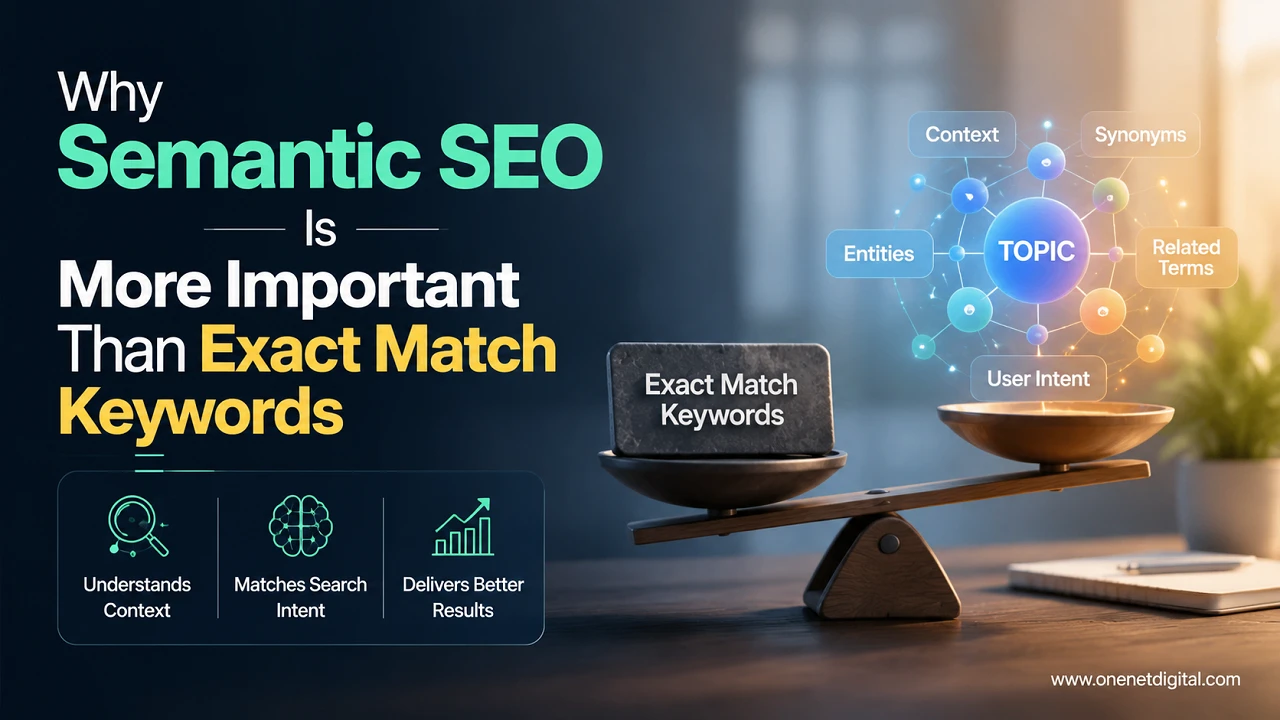
SEO has developed a lot in the last few years. Back in the day of SEO, the best way to get rankings was to repeat the exact keyword throughout a page. Search engines of today are much smarter. Google can understand the meaning of words, see related topics and know if a page actually answers a user’s query. This has made Semantic SEO more important than just using exact match keywords.
Semantic SEO prompts content creators to dig deeper into a topic instead of just using the same keyword over and over. It helps search engines understand the context of your content and also provides more complete and valuable information to your readers. Search algorithms just keep getting better, and building content around topics rather than single keywords is a smarter long-term strategy.
Understanding Semantic SEO
Semantic SEO is the process of writing content that covers a topic in full, with all related concepts, phrases and user intent. It looks at the meaning of the whole piece of content, not a single keyword.
For example, if a user searches for email marketing data, Google knows that related topics like newsletters, automation, audience segmentation, and campaign performance are useful. A page that naturally talks about these concepts is often more useful than a page that just keeps repeating the same keyword over and over.
This helps search engines better understand your content and gives the reader a more complete answer. It also forces the writer to think about the entire topic and not just a single search phrase. This makes the content more informative, answers more user questions, and remains useful as search trends shift over time.
How Google figures out what searchers want
Modern search engines do not only care about the exact words in the ranking of pages. They are trying to understand what the intent is behind each search query.
Someone looking for “best laptop for students” might also be interested in battery life, price, portability, performance and durability. Even if those exact words are not typed into the search box, Google expects quality content to answer them.
If your article satisfies the broader search intent, it can rank for several related searches instead of just one keyword.
Also Read: How to Look for Questions Google Would Like You to Reply
Limitations of Exact Match Keywords
Exact match keywords still have their place, but they’re no longer a good SEO strategy if you’re only using them. Keyword stuffing can make content sound unnatural and affect readability.
Google’s algorithms can now identify keyword stuffing and low-quality writing. Repeating the same keyword in every paragraph does not lead to better rankings.
Search engines reward content that answers questions naturally, explains concepts clearly, and offers real value to readers.
Semantic SEO Benefits
Semantic SEO helps improve search visibility as well as user experience. Naturally, discussing related topics makes your content more informative and relevant.
It also increases your chances of ranking for many long-tail keywords, as search engines understand the whole topic instead of just one phrase. That is, one article can attract traffic from a number of related searches.
The readers also benefit from it as they get the detailed information in one place without the need to go through several different websites.
Create Content on Topics
Instead of writing articles targeting a single keyword, think about the whole topic your audience wants to learn about. Consider the types of questions they might ask before, during, and after searching.
Organize your article using logical headings and include explanations, examples, comparisons, tips, and practical advice wherever relevant. This creates a richer experience for readers while making it easier for Google to understand the subject.
Topic-focused content generally remains valuable for a longer period because it covers the subject in greater depth.
Also Read: How to Decide Whether a Keyword Is Worth Targeting
Use Naturally Related Words
Semantic SEO is not about stuffing your article with random synonyms. The goal is to only include related words and concepts where it makes sense.
For instance, if your article is about digital marketing, you will obviously use words like SEO, content marketing, social media, paid advertising, email campaigns, website traffic, and consumer engagement. These words add to the context of the article without feeling unnecessary.
Content written in a natural way always outperforms content written just for search engines.
Focus on the Customer Experience
One of the main goals in Semantic SEO is to improve the experience of the reader. If users find the answers, they need fast, they are more likely to stay on your website and keep digging into your content.
Use easy to understand language, short paragraphs, descriptive headings and easy to follow explanations. Cover related questions in the same article, if possible.
When your readers leave your page happy, it’s a positive message that your content is valuable. This can lead to a positive experience for users, drive engagement, encourage visitors to spend more time on your website, and increase the likelihood they will return for future content. These factors will help you in the long run to improve your SEO and establish your website as a reliable source of information.
Also Read: Why Search Intent Is More Important Than Search Volume
Conclusion
Semantic SEO is how today’s search engines measure content. Google doesn’t reward pages that copy exact keywords anymore; it rewards content that gives a complete explanation on a topic and matches user intent. By concentrating on related concepts, answering common questions, and writing naturally, you create content that’s useful for readers and easier for search engines to understand. As SEO continues to evolve, one of the most effective ways to achieve long-term organic growth will be to create high-quality, specialized content.
FAQs
What is Semantic SEO?
Semantic SEO is the process of creating content around a complete topic, rather than just one exact keyword. This helps search engines better understand the meaning of your content and makes it more relevant to different types of user searches.
Do Exact Match Keywords Still Matter?
Yes, but they should be used naturally in the content. Google now cares more about content quality, context, user intent and topic relevance overall as opposed to just keyword repetition.
Why Semantic SEO is Better for Rankings?
It helps a single page to rank for a number of related search queries by covering the topic more in depth and answering different user questions more completely and meaningfully.
Does Semantic SEO enhance user experience?
Yes, it gives all the information in one place so that the readers can find answers easily, without going to multiple pages, and they can understand the topic in a clearer way.
How can beginners use Semantic SEO?
Research related questions and topics, and create content that answers them clearly in simple language. Use natural wording and well-organized sections that are easy to read.