
Introduction
One of the biggest mistakes business owners make when building a website is trying to cram too much onto one page. A page that sells products, explains services, tells the company’s story, displays testimonials and asks for contact info all at once can confuse visitors.
Every website should have a clear goal that guides its design, content, and calls to action. Whether you want to generate leads, educate users, encourage purchases or provide support, a dedicated page makes it easier for visitors to know what to do next.
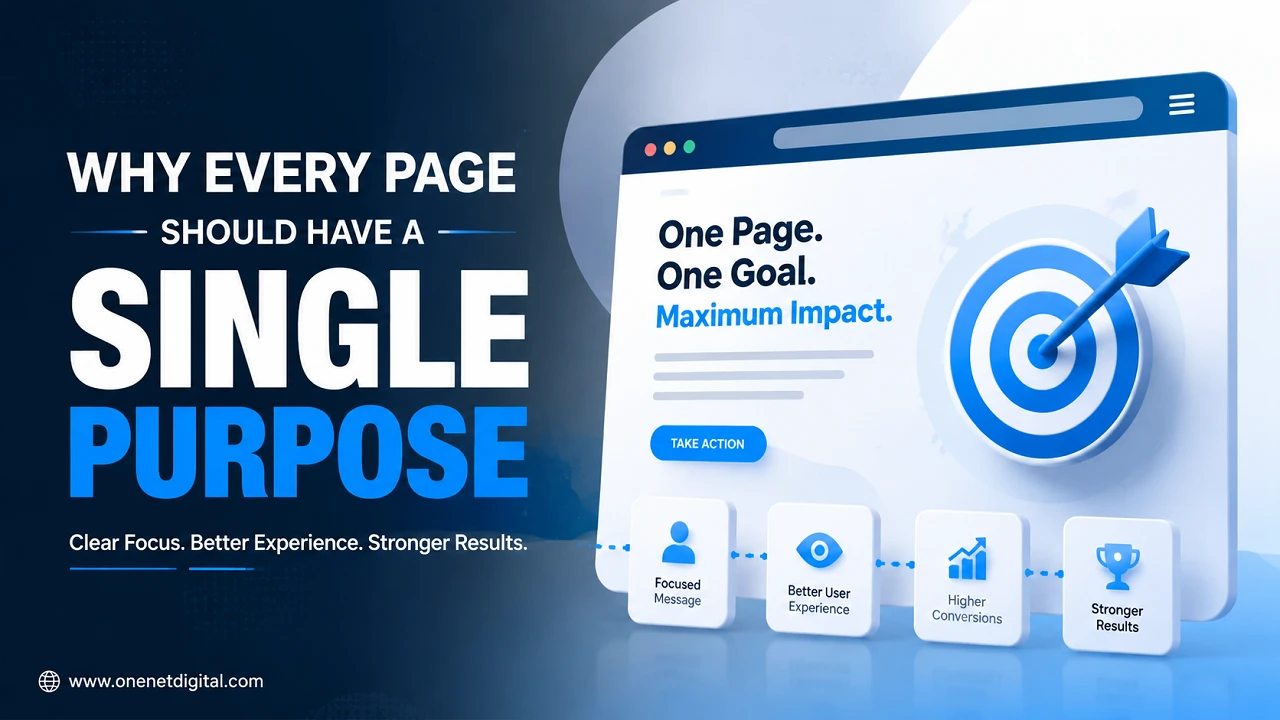
A one-purpose page provides a better user experience, better search engine optimization (SEO), and often better conversion rates.
What Does a Single-Purpose Page Mean?
A single-purpose page is a web page that is designed to serve one, clear purpose. The page should be designed to support that goal as much as possible, including the headline, content, images, buttons, and calls to action. The page is not trying to do a lot of things; it is focused on giving visitors one message and pointing them to one specific action.
A service page ought to describe one specific service and a product page should describe a single product and its features. A contact page should make it easy for users to get in touch. A blog post should teach readers about one topic. And a landing page should convince visitors to take a specific action. Supporting information can be added but the overall content should always guide users to one clear outcome.
Why Focus Matters
The overwhelming majority of website visitors decide in a few seconds whether a page is relevant to their needs. If it’s immediately obvious what the page is there to do, they’re more likely to read on, engage with the content, and do what you want them to do. A focused page reduces distractions and helps users understand what is on the page faster.
Pages that cover many unrelated topics, however, tend to confuse visitors. This can make it hard for them to find what they’re looking for, resulting in higher bounce rates and fewer conversions. By keeping each page focused you will make the browsing experience smoother and information will flow in a logical and easy to follow way.
Improves User Experience
Most users visit a website with a specific goal in mind, whether it’s to learn about a service, compare products, get a quote, or contact a business. Each page can be devoted to a single purpose, allowing users to find what they are looking for without wading through unrelated content. It makes the site easier and more fun to use.
A simple page layout reduces frustration by not adding unnecessary distractions. Users now can easily find the information they care most about without having to browse through various sections. Such clear organization often prompts visitors to stay longer on the website and explore more pages.
Also Read: How to Create a Website That Grow Your Business
Makes Content Easier to Read
People don’t usually read every word on a webpage. Instead, they scan headings, subheadings, bullet points and highlighted information to help find the answers they need quickly. If a page has a single, obvious goal, it’s easier to understand and navigate the content, and the structure will just flow.
The information is passed smoothly from the introduction to the main content, supporting details, frequently asked questions and the call to action, as each section supports the same topic. This organized structure improves readability, allowing visitors to absorb information without being bombarded with unrelated information.
Supports Better SEO
Search engines are trying to understand what every page is mostly about so they can return results that users are actually interested in. If a page covers multiple topics that are unrelated, it becomes harder for search engines to determine what the page is generally about. This means that the page may not rank well for any particular search query.
A one-purpose page is better for SEO as you can focus on one main keyword and add related terms in a natural way. It also makes it easier to create a clear title tag, useful meta description and well-structured content based on a single topic. By having separate pages for each subject you are able to build stronger topical relevance on the site.
Helps Visitors Make Decisions Faster
Every webpage needs to answer a question or solve a problem. Visitors usually come to your site for a reason – to see prices, get the facts about a service, or grab contact info. If you have a page devoted to that one task, users can easily find the information they need to make an informed choice.
For example, if someone lands on a pricing page, they want to see pricing information and not company history or unrelated blog articles. Similarly, when readers come to an educational blog, they are looking for useful insights and not too much promotional content. A focused page helps users stay on track and achieve their goals more efficiently.
Improves Conversion Rates
A conversion occurs when a visitor takes the main action you want them to take, like filling out a contact form, requesting a consultation, downloading a guide, making a purchase or subscribing to a newsletter. When you have multiple competing calls to action on a page, your visitors may be confused about what they should do next.
A dedicated page eliminates the confusion and guides users to one clear call to action. For example, a service page might be about getting a quote, while a product page is about buying something. Keeping the primary call to action simple and relevant can boost engagement and make the user journey more straightforward.
Also Read: How to Identify Dead Ends on Your Website
Makes Website Navigation More Organized
A well-structured website is composed of pages that each have a unique purpose. If each page has a clear purpose, visitors will have no difficulties navigating the website and finding the information they need. The organization also helps search engines to understand how pages relate to each other.
For example, the homepage introduces the business, about page shares information about the company, service pages explain individual services, blog pages provide educational content, and contact page helps users get in touch. Each page with a purpose creates a cleaner, more intuitive navigation experience.
Simplifies Content Updates
Having one focus per page makes maintaining a website so much easier. If information changes you only need to update the one page instead of multiple sections across the website. This helps to save time and to ensure visitors always get the right information.
For example, service updates are kept on service pages, price changes stay on price pages, and product specifications are updated on product pages only. The content is organized. It means less effort to maintain and less risk of outdated or inconsistent information.
Strengthens Internal Linking
Single-purpose pages encourage more meaningful internal linking because each page covers one clearly defined topic. This enables you to naturally connect related pages without confusing visitors or search engines. Internal links also encourage users to continue finding related content throughout your website.
For example, if you write a blog post on how to plan a website, you can link to a page on website design. If you have a service page, link to case studies or FAQs. These links make it easier to navigate a website and help search engines understand the relationship between different pages.
Reduces Information Overload
When you try to put too much information on a single webpage, visitors can get overwhelmed and have trouble finding important details. You can prevent users from getting overwhelmed by dividing information over separate pages so that they can focus on one topic at a time.
This method also results in cleaner page layouts and enhances readability. If visitors need more information, they can check out additional topics with internal links, which makes the overall browsing experience more comfortable and user-friendly.
Also Read: How to Reduce Decision Points Across Your Website
Supports Better Mobile Experience
Smartphones and tablets are driving more and more website traffic. On smaller screens, pages with many unrelated sections can mean too much scrolling, making it harder for users to find important information quickly.
Single-purpose pages are generally more mobile-friendly, because they only show the information that’s relevant to the visitor’s immediate goal. It enhances usability, eliminates unnecessary navigation and provides a smoother experience across devices.
Examples of Single-Purpose Website Pages
Many websites are constructed with pages, each with a single clear purpose. For instance, the homepage introduces the business and guides visitors to key areas, while the About page highlights the company’s history and principles. Service pages describe the specific services you provide. Product pages describe specific products. Contact page describes ways customers can contact the business.
FAQ pages do the same, answering common questions from customers, blog articles educate readers about one topic, and landing pages prompt visitors to perform a specific action. Every page should serve a purpose and that makes it easier for visitors to understand and navigate the site.
Tips for Creating Single-Purpose Pages
Before you start creating a web page, identify its primary goal. Then make sure each section helps you achieve that goal. Concentrate on one primary topic, of course, concentrate on one primary keyword, and organize the content with clear headings and subheadings. Avoid including unrelated information that may distract visitors from the page’s purpose.
Also, one clear call to action that aligns with the goal of the page is helpful. Make it easy to navigate. Link related pages internally. Audit content regularly to ensure it is accurate and focused. These practices will help you to keep things consistent across the website.
Common Mistakes to Avoid
Many websites are ineffective because individual pages try to accomplish too many things at once. When you try to mix multiple services, use several competing calls to action or cover unrelated topics on a single page, visitors often get confused and the message gets diluted.
Another common mistake is to put too much information on pages or to repeat similar content from one page to the next. Having each page focused on a single topic makes it easier to read, provides a better experience for users, and makes it easier for visitors and search engines to understand the website.
Also Read: Why Every Website Should Have a Clear Primary Goal
Conclusion
Each page should have a single, clear purpose that satisfies the needs of the user and the search engine. Focused pages help visitors better absorb content, organize websites, improve SEO and guide visitors through the right actions with less confusion.
Rather than trying to cram everything onto one page, splitting up information onto dedicated, purpose-driven pages offers a better overall experience of the website. This helps visitors find what they need quickly and helps businesses present their content in a more structured and effective way.
FAQs
1. What is a single-purpose webpage?
A single-purpose webpage is designed to achieve one specific goal. Whether it is explaining a service, showcasing a product, collecting inquiries, or providing information, every element on the page supports that primary objective.
2. Why is it important for every page to have a single purpose?
A focused page makes it easier for visitors to understand the content, find the information they need, and complete the intended action. It also improves website organization and overall user experience.
3. How does a single-purpose page improve SEO?
Search engines can better understand the topic of a page when it focuses on one subject. This makes it easier to target relevant keywords, build topical authority, and improve visibility in search results.
4. Can a webpage have more than one goal?
While a page can include supporting information, it should have only one primary goal. Trying to achieve multiple objectives on the same page may confuse visitors and reduce its overall effectiveness.
5. What are some examples of single-purpose pages?
Common examples include service pages, product pages, blog articles, landing pages, contact pages, FAQ pages, pricing pages, and About pages. Each page serves a specific purpose and addresses a particular user need.