
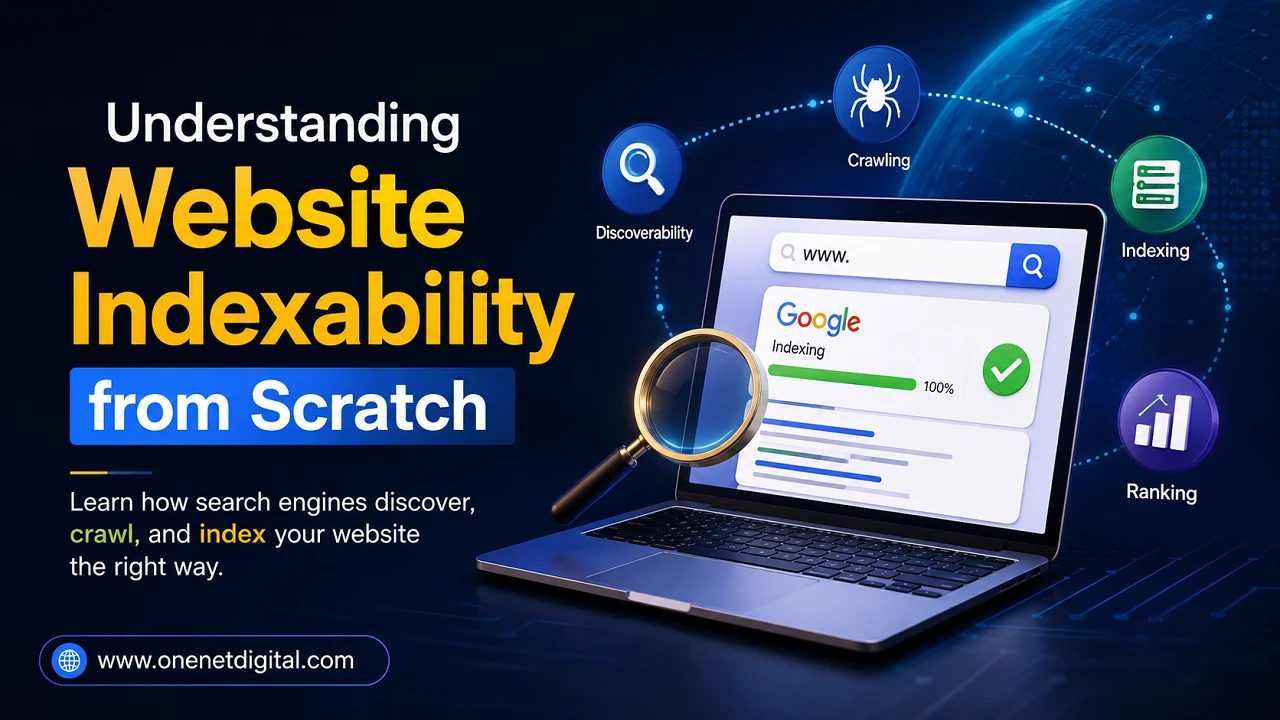
Search engine optimisation is one of the most important aspects of indexability. If a page can’t be indexed, it’s almost impossible to show up in search engine results. Many website owners spend a lot of time creating good content, but forget to check if search engines can actually read and store their pages. This simple mistake can mean that a website gets no visitors from organic search.
You don’t have to be a technical expert to get website indexability. Once you get the hang of the basics, it will be a lot easier to find common problems and fix your website. If you have a blog, business website, online store or portfolio, knowing how indexability works can help your pages reach more people.
What is Website Indexability?
Engines like Google can read, access, and save your webpages in their database if your website is indexable. Once a page is indexed, it can show up in search results if it’s relevant to a user’s search query.
It’s important to understand crawling and indexing are not the same thing. Crawling is the process of search engines visiting your page. Indexing is when they decide to add that page to their search database. A page can be crawled but not indexed if there are technical issues or if the content is not considered useful.
A well indexed website has a much better chance of getting organic traffic over time.
Why Indexability Matters for Every Website
Your website may be beautiful and user friendly, but it won’t perform well in search engines if pages aren’t being indexed. Before rankings, traffic and visibility, comes indexability.
If your pages are properly indexed, search engines can understand your content and figure out where it should appear in search results. What this means is that your website can be found organically by users without paying for ads.
Good indexability also helps new blog posts, product pages and service pages become visible faster. It provides a good foundation for all other activities of SEO.
Also Read: XML Sitemaps Explained with Real Examples
How Search Engines Discover and Index Pages
Crawlers or bots are automated programs used by search engines. These bots go from one web page to another by following links. Whenever they find a new page they look at the content of that page and decide whether to add it to the search index.
This page is easy to navigate, has useful information and uses some basic SEO practices that increase the chances that it will be indexed. Internal links help crawlers to navigate your website and find new content.
Indexing could take a few hours, several days or longer depending on website quality, popularity and how often the site is updated.
Common Reasons for Not Indexing Pages
A lot of websites have pages that are not seen in search results because of simple technical problems. A common reason for this is a “noindex” tag which instructs search engines to not cache the page.
Another reason is if pages are blocked by the robots.txt file. Indexing can also be hindered by broken links, server errors, duplicate content, and pages of low quality.
Sometimes sites create many pages with nearly identical info. Search engines might decide that these pages aren’t very valuable and won’t bother indexing them.
Regular checks of your website can help you spot these problems before they affect your overall performance.
How to Easily Make Your Website Indexable
The first step to making your website index friendly is to have a clear structure. All-important pages should be linked to from other pages so that search engines can find it easily.
Original and useful content also increases the chances of successful indexing. Search engines like original information that answers users’ questions.
A fast-loading website with clean design, working links and mobile-friendly design gives better experience for users and search engines.
You can also submit an XML sitemap via Google Search Console to help search engines find your important pages more easily.
Also Read: Robots.txt Made Simple for Website Owners
What is the Difference Between Crawling and Indexing?
Many beginners think that crawling and indexing are the same things. But, crawling and indexing are two different steps.
Crawling is the process in which search engine bots visit your website and read the content. They collect information from each page they visit while they are following links.
Crawling is followed by indexing. Search engines take a look at the information collected and decide whether or not the page should be included in their search database.
Crawled but not indexed pages typically don’t appear in search results. That’s why both processes are equally important for website visibility.
How to Check If a Website is Indexable
You don’t need expensive software to see if your pages are indexed. Google Search Console is one of the easiest free tools to use for this. It shows you which pages are indexed and which pages have problems.
Type “site: yourwebsite.com” into Google’s search box to use it as well. This shows a lot of the pages that are currently being indexed.
They can also be used to find broken pages, missing internal links and technical issues that can prevent indexing. By checking your website regularly, you can fix problems before they become serious.
Best Practices to Keep Indexability High
Website indexability is not something you check once. Websites change over time so it needs to be monitored regularly.
Whenever you publish new content, ensure it is accessible thru internal links. Update your sitemap regularly and delete pages that are no longer providing value.
Avoid creating duplicate pages with similar content. Check your robots.txt file and meta tags to ensure that you are not blocking key pages.
Regular maintenance keeps your website healthy and helps search engines continue to index your content without unnecessary problems.
Also Read: Crawling vs Indexing: What Is the Difference
Summary
Website indexability is the first step in successful SEO. Before a webpage can rank, be visited, or generate traffic, it first needs to be indexed by search engines. Knowing how search engines crawl, understand and store webpages is the first step in building a website that works well in search results.
Creating useful content, maintaining a clear structure on your website, fixing technical issues, and regularly checking your indexed pages all increase the chances of more people finding your website. Even small improvements in indexability can have a huge impact over time. The good habits you establish today will keep your website visible and competitive in the future.
Common Questions
1. What does it mean for a website to be indexable?
Search engines can read, understand and store your webpages in its search database, this is known as website indexability. A search engine can only return results from pages it has indexed.
2. How can I check if my webpage is indexed?
Check the index status of your pages with Google Search Console. You can also Google “site: yourwebsite.com” to see a lot of your website’s pages that are indexed.
3. Why aren’t some pages indexed?
Pages may not be indexed if they have noindex tags, robots.txt settings that block robots, duplicate content, server errors, poor quality content or other technical issues that prevent search engines from storing the page.
4. How long does it take Google to index a page?
There is no specific time. Some pages may be indexed in just a few hours, while others may take days, weeks, or even longer depending on the website’s quality, authority, and crawl frequency.
5. Do all crawled pages get indexed?
No. Search engines can crawl a page but choose not to index it if it is low-quality, duplicate, or has technical issues that diminish its value for search results.