
Introduction
Search Queries and keywords are terms that many people use interchangeably. While they are closely related, they are not the same. For anyone wanting to improve a website’s SEO, create useful content or understand how search engines work, knowing the difference is important.
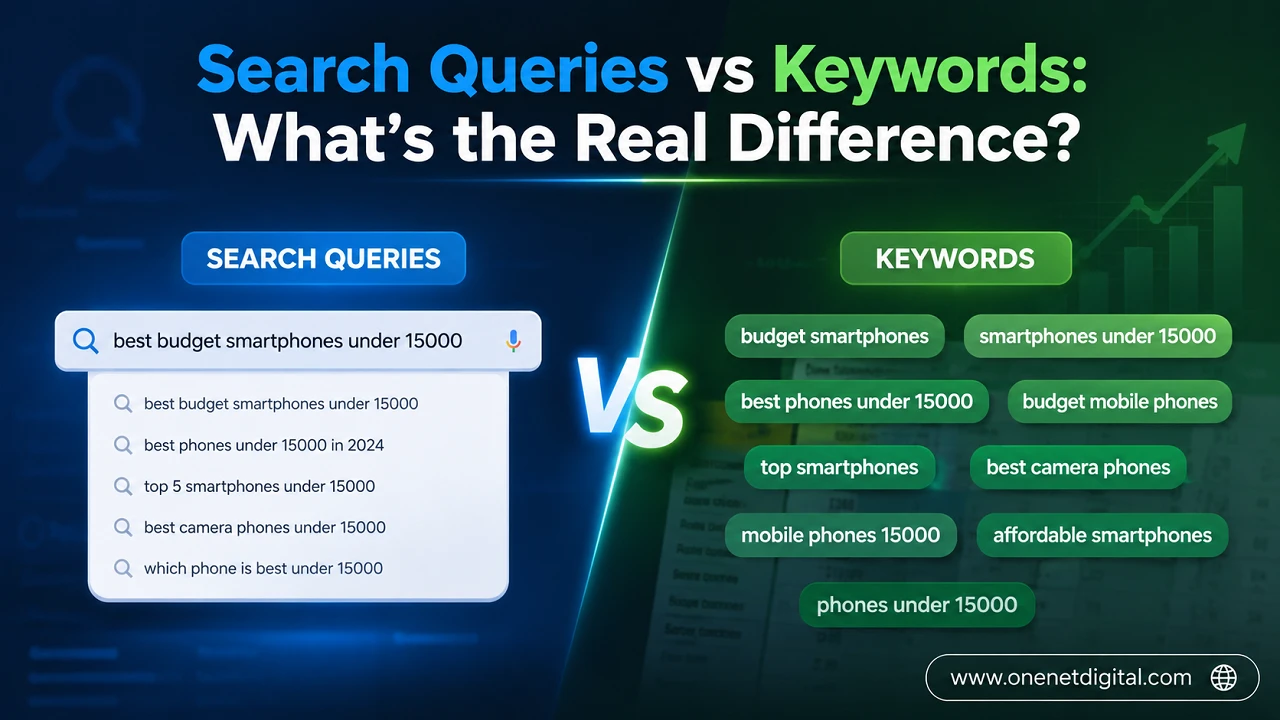
A search query is what the user types in to the search engine as a word or phrase. A keyword is the word or phrase that website owners focus on when they create content. Knowing how these two interact, can help you to create content that is a better fit to what people are looking for.
What Is a Search Query?
A search query is the actual text someone types into a search engine when they’re looking for information. Each user can type something different even when they are looking for the same topic.
For instance, one person may type in “best laptops for students” while another may type in “good laptop for college.” Both users have the same goal. However, they have different search queries.
Search queries are how people naturally ask questions or describe what they want. They can be long or short, or written as full questions.
What Does a Keyword Mean?
A keyword is the main topic or phrase that a content creator chooses to write a page or article about. It assists search engines in understanding what the content is.
For example, if you are writing an article about laptops for students, then your keyword might be “best laptops for students”. In the process of writing you naturally include this keyword in the title, headings and content where it makes sense.
The keywords are selected by doing research to see what people are searching for and the difficulty of those subjects.
Also Read: What is Search Visibility and How It’s Measured
The Main Difference Between Them
The only real difference is who makes them.
A user issues a search query. It is the exact term that someone types into a search engine.
A keyword is selected by the content writer or the owner of the website. This is used to generate content that answers the user’s search.
A keyword and a search query can sometimes be exactly the same, but often they’re not. Search engines are smart enough to know that people search for similar information with lots of different words.
Why It Matters
Knowing the difference helps you create content that matches what users are actually searching for, instead of just one exact phrase.
Today’s search engines understand synonyms, related terms and search intent. That means your content doesn’t have to repeat the same keyword again and again. Rather it should approach the subject in a clear and natural fashion.
If you cover a topic well in your content, it will be more likely to rank for many different search queries, not just one.
How Search Intent Connects Them
Search intent is the purpose behind a user’s search. It describes what the person is looking to achieve when they type in a query.
For example, a person searching for “how to grow tomatoes” is looking for information, whereas a person searching for “buy tomato seeds online” is looking to make a purchase.
It is important to understand the search intent behind keywords when selecting them. Your page will be more likely to appear in the search results if your content is what users actually want.
Don’t think about words, think about solving the user’s problem.
Also Read: A Complete Breakdown of Google’s E-E-A-T Framework
How a Keyword Can Match Multiple Queries
One keyword can cause a page to rank for hundreds or even thousands of different searches.
A page on “healthy breakfast ideas” might also rank for searches like “easy breakfast recipes,” “quick healthy breakfast” or “simple morning meals.”
This is because search engines are looking for the meaning of the words, not just matching exact phrases.
Having full and useful content will give your page more chances to show up for different types of searches.
Common Mistakes to Avoid
A common mistake you want to avoid is overusing the same keyword. This makes content harder to read and won’t help with SEO.
Another error is to ignore how people actually search. Users often ask questions, use natural language, or search using longer phrases.
Some writers also only target keywords with high search volume, forgetting whether those keywords are aligned with their content and audience.
Suggestions for Better Content Planning
Research the main topic before you write and know what users want to know. Pick a keyword that is relevant to the aim of your content, but also think about the different ways people might search for the same data.
Use plain language, answer common questions, and include related terms when natural. This makes it easier for readers to enjoy, and helps search engines to understand your content as well.
Updating older articles with new information can also help them rank for more search queries over time.
Also Read: Semantic SEO: Everything You Need to Know
Summary
Search queries and keywords are very closely related, but they are not the same. Search queries are what users input into a search engine and keywords are the topic that content creators select when building a page.
When you understand the difference, you can create content that matches what people are really searching for. Instead of thinking about exact words, think about the user’s goal and provide clear, helpful answers.
As search engines continue to improve, the most effective way to reach more people via organic search will continue to be the creation of useful content that fulfils user intent.
Frequently Asked Questions
1. What is the difference between a keyword and a search query?
A search query is what a user is actually typing in a search engine and a keyword is what a website is targeting when creating content.
2. Can one keyword rank for different search queries?
Yes. A page can rank for a lot of related search queries by using one keyword, because search engines understand similar words and user intent.
3. Do I need to repeat the exact keyword?
No. It is better to use the keyword naturally and focus on writing helpful content rather than repeating the same phrase again and again.
4. Why does search intent matter?
Search intent helps you know what users want. The better you can meet their needs with your content, the better chance you have of ranking well.
5. Do keywords always match search queries?
No. People use different words to search for the same thing and search engines know that.
6. Which is more important, keywords or search queries?
Both are essential. Keywords help you plan your content; search queries help you understand how people actually search online. The best way to do that is to create content that connects both.