
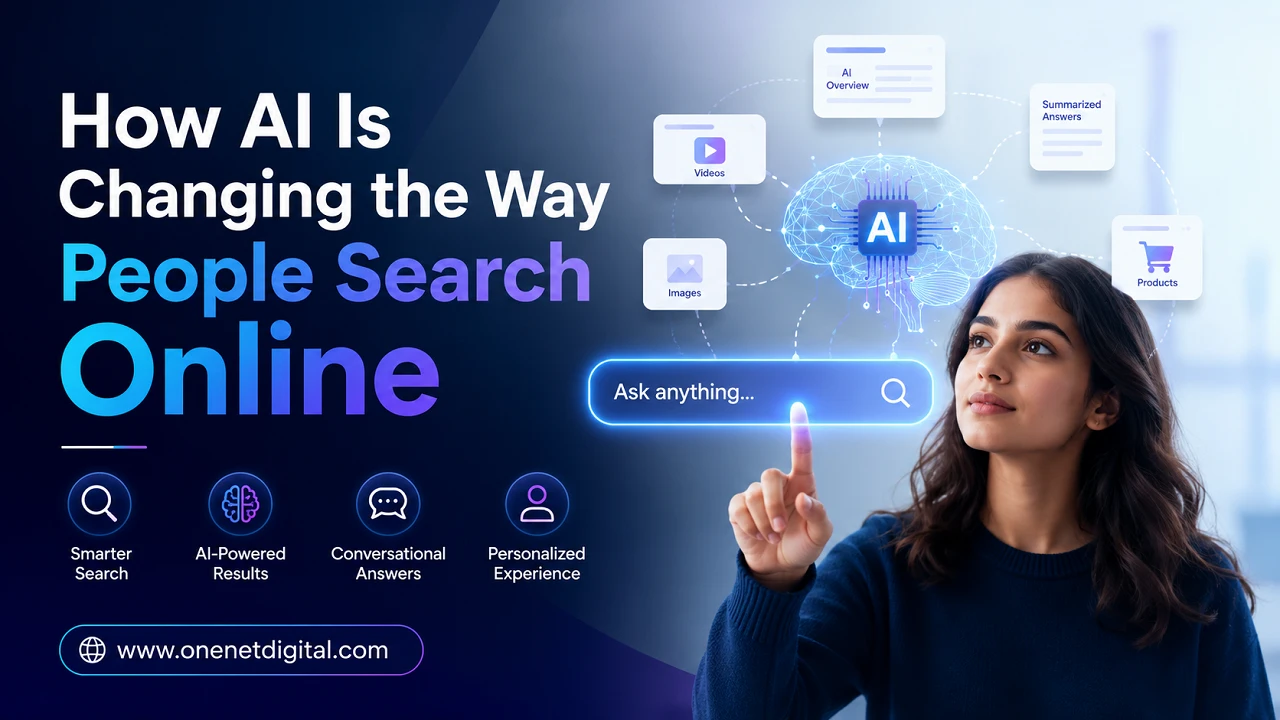
The way people search online has changed a lot over the last few years. In the past, most people would put a few words into a search engine, click on a website and get the information they need. Artificial intelligence (AI) is making online search faster, smarter and more personalised today. Instead of a long list of links, AI can understand questions, give you direct answers, and even have a conversation with users.
This change is improving the search experience for people and changing how websites build content. Now companies, bloggers and marketers need to focus on useful and trustworthy information, not just keywords on their pages. Understanding how AI is changing search can help individuals and businesses prepare for the future.
What is AI Search?
Artificial intelligence is a technology that enables computers to learn, understand and respond in ways that are similar to human thought. In online search, AI helps search engines to understand what users really mean, rather than matching specific words.
For example, if someone is searching for “best way to save electricity at home,” AI can recognize that the person wants practical tips rather than just pages that contain those exact words. This helps search engines provide more useful and accurate results.
AI also learns from the behaviour of users. It looks at what results people click on, how long they stay on a page and if they continue searching. This information is used to improve future searches.
Search Results are Getting Personal
One of the biggest changes AI brings is personalised search. Different people can find different results even when searching for the same topic.
Search engines take into account things like your location, your language preference, previous search history and the device you’re using to display results that are more relevant to you. For example, if someone searches for “best restaurants,” they usually want to see restaurants near their current location, not businesses in another city.
Personalised search saves time as the users are served with more relevant information.
Also Read: How to Turn Your Website into a Lead Generation Asset
AI Gets Better at Understanding Natural Language
Now people can search online without typing short or weird keywords. Instead, they can ask complete questions in everyday language.
For example, instead of searching for “weather Delhi tomorrow,” users can search for “Will it rain in Delhi tomorrow?” AI understands both searches and knows they mean the same thing.
This enhancement provides a more natural search experience, particularly when users rely on voice assistants or mobile devices.
Voice Search is Expanding
As smartphones and smart speakers get better, voice search has become more popular. Many people prefer to speak now rather than type, especially when driving, cooking or doing other things.
AI is playing a key role in understanding spoken language. It recognizes different accents, sentence structures and ways of asking questions.
As voice search takes off, websites are starting to build content that answers full questions, not just short keywords.
AI Offers Faster Answers
These days many users get answers on the search page itself without having to go to multiple websites.
AI can take information from a variety of sources, summarize it and deliver it in an easy-to-use format. Therefore, users receive quick responses to most common questions, without wasting time opening multiple pages.
But people still turn to websites when they want detailed information, advice from experts, product comparisons or in-depth guides.
This means that websites should continue to develop valuable content that goes beyond the brief answer.
Also Read: How to Check the Quality of a Website Beyond SEO Scores
Quality Content is More Important than Ever
In the past, some websites ranked well by repeating keywords many times. Today AI is much more about content quality.
Search engines now favour content that is accurate, helpful, easy to understand and written for real people. Content created purely for search rankings tends to not perform as well as articles that clearly answer questions.
Businesses should concentrate on solving user problems, offering reliable information, and ensuring content is updated.
The easy-to-read language, simple headings and well-structured articles make reading easier.
User Experience Impacts Search Performance
AI doesn’t only analyse written content. It also examines the way visitors interact with a website.
If pages take a long time to load or are difficult to use, visitors will leave quickly. Search engines will see this behaviour and may downgrade the site’s visibility over time.
A good website is fast, works well on mobile devices, and has simple navigation. Visitors should not be confused to find information.
Better user experience means better search and better customer satisfaction.
AI is transforming SEO Methods
Search engine optimisation is still important, but the techniques are changing.
SEO is no longer just about repeating keywords. It’s about creating useful content, speeding up your page, building trust, and answering questions.
Writers should consider what users actually want to know instead of just going with popular keywords.
Clear titles, descriptive headings, internal links and up-to-date information help users and search engines understand the content better.
Also Read: How To Identify Navigation Problems Before Visitors Leave
Trust is Key for Businesses
Trust is now one of the most crucial factors in online search.
AI systems attempt to identify content that is credible and from reputable sources. Sites that deliver factual information, keep their content fresh and explain themselves well often do better.
Businesses can earn trust by providing clear contact details, posting original content, citing credible sources as needed, and updating outdated information.
Trust is a long-term game, but it’s worth it, both for search visibility and customer relationships.
The Future of Search on the Internet
AI will keep transforming how people search on the web. A more conversational future for search could let users ask follow-up questions without having to start a new search.
Search engines are likely to get better at understanding images, videos, voice commands and even user intent. AI can learn more about user preferences and keep improving on personalisation, while complying to privacy standards.
Technology will continue to evolve but one thing is not likely to change. People will always appreciate clear, honest and useful information.
The future winners will be businesses and content creators that focus on helping users, not just chasing rankings.
Conclusion
Artificial intelligence is transforming online search, making it faster, smarter and more personalised. Now, users can ask questions in natural language, get relevant answers in an instant, and have a better search experience. At the same time, businesses need to adapt. Create helpful content, improve website performance and build trust with their audience. As AI continues to evolve, websites that deliver genuine value and respond to user needs will be well-positioned for long-term success.
Frequently Asked Questions
1. What is artificial intelligence (AI) in online search?
AI search engines can better understand the questions that users are asking and provide results that match the user’s intent, not just the keywords.
2. How does AI change the way people look for things?
AI makes searching easier by understanding natural language, personalising results and providing faster answers to common questions.
3. Is AI going to replace search engines?
No. AI improves search engines by helping to make the results more relevant and useful, but search engines still have an important role to play in finding information online.
4. How does AI impact SEO?
AI is pushing businesses to generate quality, useful and user-centric content instead of just repeating keywords or old optimisation practices.
5. How can businesses get ready for AI-powered search?
Businesses should focus on creating useful content, enhancing website speed, making websites mobile-friendly and providing accurate information that answers users’ questions clearly.