
Introduction
Many people believe that publishing a page on their website will automatically result in Google indexing it. But that’s not how search engines work. Search engines have to find, check and store a page before it can rank. The process has two important steps, called crawling and indexing.
These terms are frequently used interchangeably but they mean different things. Knowing the difference between crawling and indexing can help website owners fix common SEO problems and improve their chances of making it into search results. Knowing how these processes work makes it easier to find possible problem areas that may keep your pages from getting traffic.
What is Crawling?
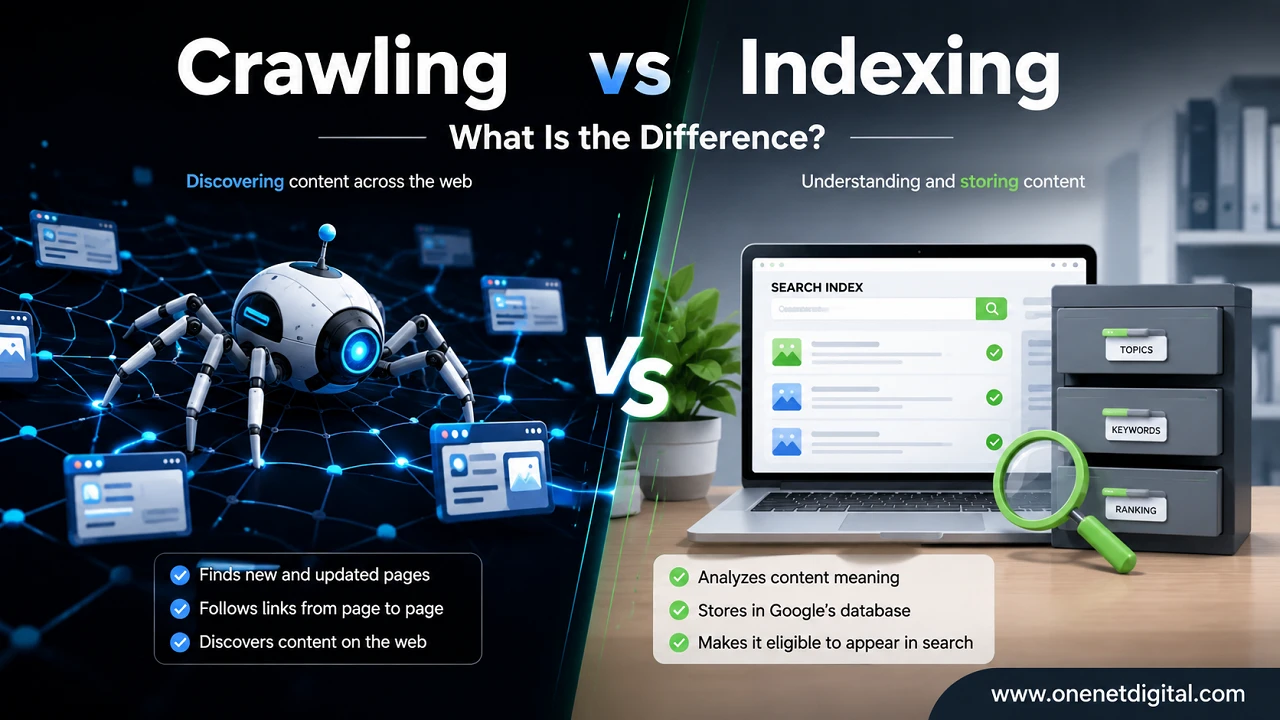
Crawl is the first thing to do. Search engines have special programs called bots or crawlers that go to websites and find new pages. These bots follow links to crawl from page to page. They also check refreshed pages for any changes.
A crawler visits your website and gathers data on your pages. It verifies the content, images, links, titles and other important information. Crawling does not guarantee that a page will be in search results. That just means the search engine has found the page and is beginning to crawl it.
Search engines find sites with good internal linking and a clear structure easier to crawl. Updating your XML sitemap can also help search engines find new pages faster.
What Does Indexing Mean?
Indexing is the next step after a page is crawled. When the search engine indexes it, it determines whether the page is useful enough to be stored in its database. When the page is indexed, it can then show up in search results if someone searches for related topics.
Not all pages crawled are indexed. Search engines look at the quality, originality and usefulness of the content before adding it to their index. Pages with little content, duplicate content, or technical issues may not be indexed.
Great content that clearly answers the questions of users have a better chance to be added to the index of the search engine.
Also Read: Why Some Pages Are Never Get Indexed
The Difference Between Crawling and Indexing
The main difference is crawling means finding and checking a page, and indexing means saving that page in the search engine’s database.
It’s like a library. Crawling is like a librarian getting a new book and looking at the details. Indexing is putting that book on the shelf in the library so that people can look it up later. If the book never makes it to the shelf, nobody can borrow it. Similarly, a page that has been crawled but not indexed can’t be listed in search results.
Knowing this difference helps website owners know where the problem is if their pages are missing from Google.
Why Aren’t All Crawled Pages Indexed
There are various reasons why a crawled page may not be indexed. One of the most common reasons is low quality of content. Pages with little useful information may not be added to the index.
Duplicate content is another reason. If there are lots of pages with nearly the same information, search engines might just pick one version. Technical issues such as a noindex tag, blocked pages or server errors can also prevent indexing.
Pages with poor internal linking seem less important. The search engine may not include the pages with a small number of links pointing to them in its index.
Better content and fixing technical problems can increase the odds of successful indexing.
Search Engines Make It Simpler to Crawl Your Website
Making your website crawlable by search engines is an important part of SEO. A good website structure means the search engines can move from page to page without any problems.
Internal links should link to related pages naturally an updated XML sitemap guides search engines to the important pages to visit. And removing unnecessary pages and fixing broken links helps with crawling too.
A good performance website makes it easier for search engine to crawl your content. Regularly publishing fresh and useful content will also encourage the search engines to come back more often.
Also Read: Inside Google’s Crawling Process: A Simple Explanation
How To Make Indexing Better
If you want more pages to be indexed, make sure you create original and helpful content. Every page should serve a unique purpose and be useful to visitors.
Don’t publish duplicate pages or very short pages that provide little information. Make sure important pages aren’t blocked by technical settings like noindex tags or incorrect robots.txt rules.
Adding internal links from other relevant pages can help search engines know that a page is important. Regularly checking your website using the search engine tools can also help you to spot indexing problems before they become bigger problems.
Why Crawling and Indexing are Both Important
Crawling and Indexing go hand-in-hand. If your pages are not crawlable, search engines can’t find them. Your pages won’t be discoverable in search results without indexing.
Even the best-written article won’t bring visitors if it’s not indexed. At the same time, a page can’t be indexed if search engines never see it. That is why both processes are as important.
Website owners should regularly check their website structure, content quality and technical settings. Over time, small improvements can help search engines to crawl and index more pages successfully. This can lead to higher visibility, increased organic traffic, and improved long-term SEO performance.
Also Read: Everything You Need to Know About Keyword Cannibalization
Conclusion
Crawling and indexing are two different but related steps in the search engine process. Crawling is how search engines find and check your pages. Indexing is how they decide whether to store and show those pages in search results. Knowing this difference will help you to solve SEO problems and improve your website. If you create useful content, maintain a tidy site structure and regularly review technical settings, you’ll improve the chances of your pages being crawled and indexed successfully. Good SEO isn’t just about publishing content, it’s about ensuring search engines can find, understand and store it.
Frequently Asked Questions
1. What’s the difference between indexing and crawling?
Crawling is when a search engine finds a webpage and looks at it. Indexing is when it stores that page in its database so it can show up in search results.
2. Is it possible to crawl a page without indexing it?
Yes. If a page has low-quality content, duplicate information, technical issues, or doesn’t provide enough value for users, it can be crawled but not indexed.
3. How can I help search engines crawl my site more quickly?
You can improve crawling by Internal links Updating your XML sitemap Fixing broken links Improve website speed Keep your website structure simple and organised
4. Why is indexing crucial for SEO?
Remember that only indexed pages can appear in search results. When a page isn’t indexed, it’s not going to be able to get organic traffic from search engines.
5. How do I know when my page is indexed?
You can check your page using Google Search Console or find your page using the site: operator in Google. These methods can be used to verify that your page has been indexed successfully.