
Introduction
Search engine optimization has changed significantly over the past few years. Earlier, ranking on Google often depended on using an exact keyword multiple times throughout a page. Today, search engines are much smarter. Instead of looking only for specific words, they try to understand the overall meaning, context, and intent behind a search query.
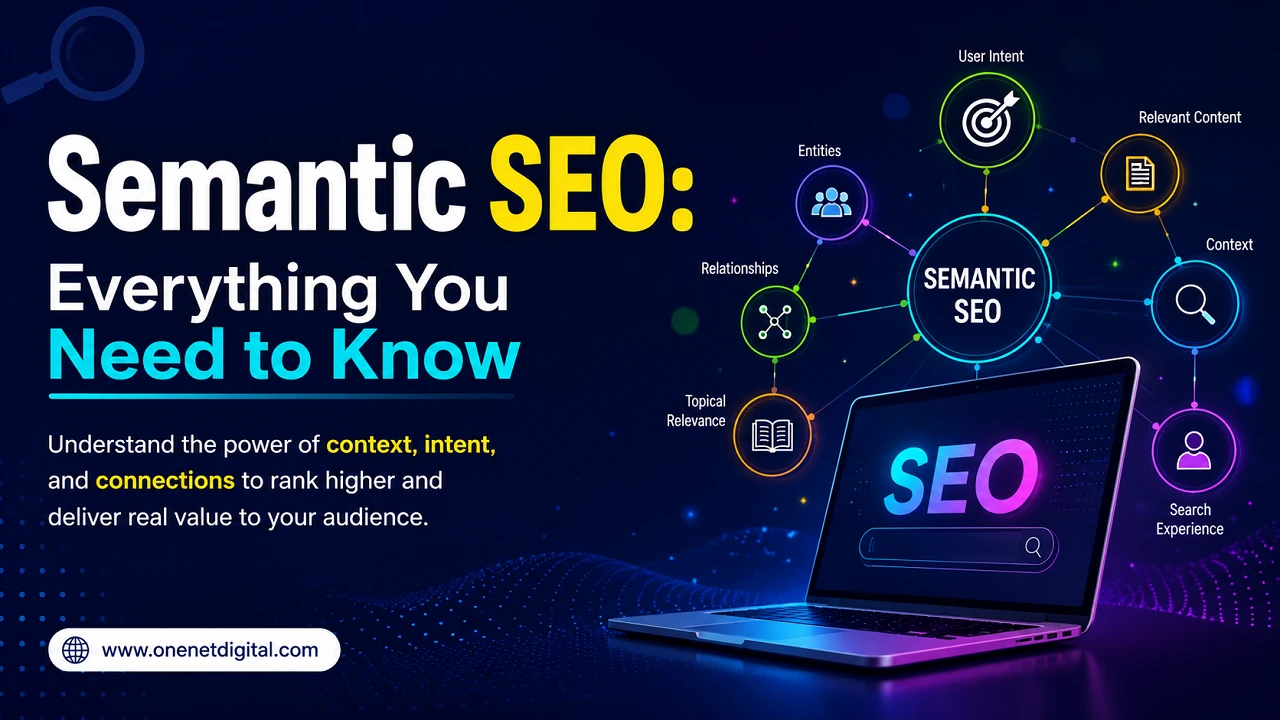
This is where Semantic SEO becomes important. Rather than optimizing a page for a single keyword, Semantic SEO focuses on covering a topic comprehensively. It helps search engines understand how different concepts, terms, and questions relate to one another, making your content more useful for readers and more relevant for search engines.
For businesses, this means creating content that answers multiple related questions, explains topics in depth, and provides genuine value instead of simply repeating the same keyword. As Google continues to improve its understanding of language and user intent, Semantic SEO has become an essential part of building long-term organic visibility.
In this guide, you’ll learn what Semantic SEO is, how it works, why it matters, and how you can use it to improve your website.
What Is Semantic SEO?
Semantic SEO is the practice of optimizing content around the meaning of a topic rather than focusing only on exact-match keywords. The goal is to help search engines understand the complete context of your content while ensuring readers receive comprehensive and helpful information.
For example, if you’re writing about website speed optimization, your content shouldn’t only mention website speed. It should naturally cover related concepts such as Core Web Vitals, image optimization, browser caching, page load time, user experience, mobile performance, and website hosting. These related topics help search engines recognize that your page thoroughly covers the subject.
Instead of asking, “How many times should I use my keyword?” Semantic SEO encourages you to ask, “What information would someone searching this topic actually need?”
Why Semantic SEO Matters Today
Modern search engines no longer rely solely on matching keywords. They analyze relationships between words, understand entities, recognize search intent, and evaluate whether a page answers a user’s question completely.
This means a page can rank for hundreds of different search queries even if those exact phrases never appear in the content. When your article covers a topic naturally and comprehensively, Google understands its relevance beyond individual keywords.
For businesses, this creates an opportunity to attract traffic from a wider range of searches without creating separate pages for every keyword variation.
Also Read: Keyword Difficulty or Search Volume: Which is More Important?
How Search Engines Understand Topics
Search engines use advanced language processing to identify how different words and concepts connect.
For example, an article about local SEO may naturally include terms like Google Business Profile, local citations, customer reviews, location pages, NAP consistency, and Google Maps. These related concepts tell search engines that the page genuinely covers local SEO rather than simply mentioning the phrase repeatedly.
This contextual understanding helps Google deliver more relevant search results and rewards websites that provide complete information instead of keyword-focused content.
Semantic SEO Starts with Search Intent
One of the biggest principles of Semantic SEO is understanding why someone performs a search.
A person searching “how to improve website speed” wants practical advice, while someone searching “website speed optimization services” may already be looking to hire a professional. Although both searches relate to the same topic, the content should address different user intentions.
Creating content that satisfies search intent helps improve user experience while increasing the likelihood of better search rankings.
Rather than writing for search engines, Semantic SEO encourages businesses to write for the people using search engines.
Cover Topics, Not Just Keywords
Many businesses still create separate pages for every small keyword variation.
For example, instead of publishing individual articles targeting “website loading speed,” “improve page speed,” and “website speed tips,” it’s often more effective to create one comprehensive resource that covers the entire topic naturally.
This approach reduces duplicate content, strengthens topical authority, and gives readers a complete understanding of the subject without forcing them to visit multiple pages.
A well-written article can naturally rank for dozens or even hundreds of related search terms.
Also Read: Everything You Need to Know About Keyword Difficulty
Use Related Concepts Naturally
Semantic SEO doesn’t mean adding random keywords throughout your content.
Instead, include related concepts only when they genuinely help explain the topic. If you’re writing about SEO, discussing crawling, indexing, internal linking, content quality, and search intent makes sense because these ideas are closely connected.
Adding related information improves content depth while helping readers understand the bigger picture.
Natural language is always more valuable than forced keyword placement.
Build Topical Authority Over Time
Semantic SEO works best when supported by a strong content strategy.
Instead of writing isolated blog posts, create multiple articles around related subjects. For example, if your website focuses on SEO, publish detailed content about keyword research, technical SEO, Core Web Vitals, local SEO, internal linking, search intent, and content optimization.
When these articles link to one another naturally, search engines begin recognizing your website as a trusted resource within that topic.
This process gradually builds topical authority, which often leads to stronger long-term rankings.
Structure Your Content Clearly
Even the best information becomes less useful if readers struggle to follow it.
Semantic SEO encourages clear headings, logical content flow, descriptive subheadings, and organized sections. This structure helps visitors quickly understand the page while making it easier for search engines to interpret the relationships between different sections.
Simple formatting also improves readability, allowing users to scan the page and find the answers they’re looking for more efficiently.
A well-organized article benefits both search engines and readers.
Also Read: Understanding Search Intent: A Practical Guide for Beginners
Common Semantic SEO Mistakes
One of the most common mistakes is believing that Semantic SEO simply means adding more keywords.
In reality, the goal is to improve understanding, not keyword density. Repeating multiple keyword variations without adding meaningful information rarely improves rankings.
Another mistake is creating thin articles around closely related topics instead of combining them into one comprehensive resource. This often results in overlapping content and weaker topical authority.
Businesses should also avoid ignoring user intent. Even technically accurate content may struggle to perform if it fails to answer the questions users actually have.
How to Improve Semantic SEO on Your Website
Improving Semantic SEO starts with understanding your audience and the topics they care about.
Before writing, research the questions people ask, analyze Google’s search results, and identify related concepts that naturally belong within the topic. Focus on explaining ideas clearly instead of repeating keywords.
Regularly updating older content, strengthening internal links, and expanding important topics also helps improve semantic relevance over time.
Most importantly, write content that completely satisfies the user’s search rather than trying to optimize for individual keywords alone.
Conclusion
Semantic SEO represents the evolution of modern search engine optimization. Instead of focusing on exact-match keywords, it emphasizes context, user intent, topic relationships, and comprehensive content. This approach helps search engines better understand your website while providing visitors with more valuable and complete information.
Businesses that invest in Semantic SEO create content that answers real questions, covers topics thoroughly, and builds authority over time. Rather than publishing dozens of similar articles targeting slight keyword variations, they develop high-quality resources supported by related content and strong internal linking.
As search engines continue becoming more intelligent, Semantic SEO will remain one of the most effective strategies for achieving sustainable rankings. By focusing on topics instead of individual keywords, your website can attract broader organic traffic, improve user experience, and establish lasting credibility within your industry.
FAQs
1. What is Semantic SEO?
Semantic SEO is the process of optimizing content around the meaning and context of a topic rather than relying only on exact-match keywords.
2. How is Semantic SEO different from traditional SEO?
Traditional SEO focused heavily on keyword usage, while Semantic SEO emphasizes search intent, topic relevance, related concepts, and comprehensive content.
3. Why is Semantic SEO important?
It helps search engines better understand your content, improves topical authority, enhances user experience, and allows pages to rank for a wider variety of related search queries.
4. Does Semantic SEO replace keyword research?
No. Keyword research is still important, but Semantic SEO expands beyond individual keywords by focusing on complete topic coverage and user intent.
5. How can I improve Semantic SEO on my website?
Create comprehensive content, answer related questions, use natural language, strengthen internal linking, organize content logically, and build topic clusters around your core subjects.