
Introduction
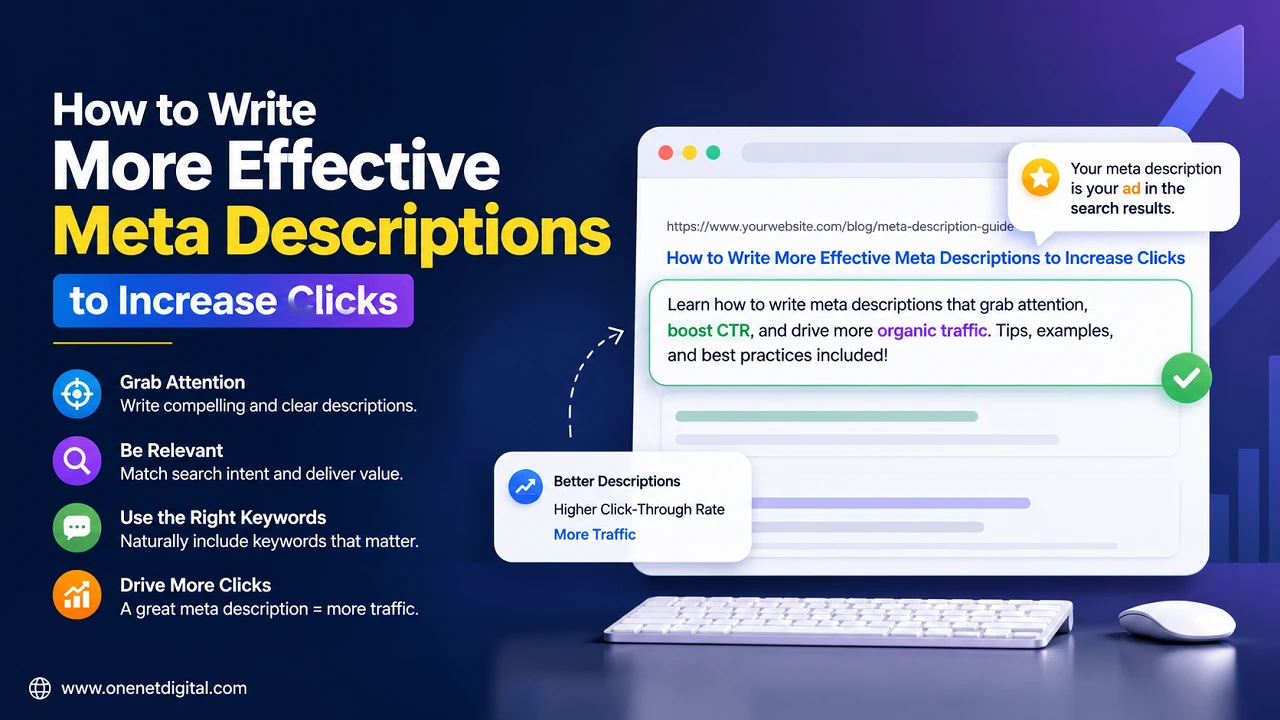
A meta description is a short summary that shows up under a webpage title in search engine results. It’s not a real ranking factor, but it is essential to encourage users to visit your website. A good description helps people understand what your page offers before they click. If it is clear, relevant and useful, users are more likely to choose your page over another result.
Many website owners try to produce quality content and attractive titles, but forget about meta descriptions. They may only be a few lines long but can make a huge difference to click-through rates. A good description can create interest, bring in the right crowd, and improve the search experience overall.
Know the Purpose of a Meta Description
A meta description is like a small preview of your web page. It tells searchers what they can expect to find when they click on the link. You’re not trying to impress the search engines here; you’re trying to provide useful information that answers the user’s question or emphasizes the value of your content.
People tend to compare a number of search results online before making a decision. Clearly explaining what the page is about will increase the chances of the visitor trusting your site. A good first impression leads to more clicks and better engagement once the users arrive on your page.
Choose People Over Search Engines When Writing
The best meta descriptions are written in a simple and natural language. Don’t stuff them with keywords. Instead, explain the primary benefit of the page. Your readers should know right away why it’s worth their time to read your content.
The topic of your web page is short and easy to read sentences. All descriptions must accurately describe the page so that users know what they are going to get. The article is about how to do something. The article is about how to do something. People are far more likely to click when they are confident that your page has the information they are looking for.
Also Read: How To Discover Hidden Keyword Opportunities Inside Search Results
Maintain Clarity and The Correct Length
Length is an important factor in writing an effective meta description. Because search engines usually only show a limited number of characters, longer descriptions might be cut off before users can get the entire message. Keeping your description short will help make sure the most important information remains visible.
Explain the subject for each description. Include the primary benefit. Tell users where to learn more. It should be finished, without any extra words. Clear writing makes it easier for readers to quickly understand what your page is about when scanning search results.
Use Keywords Naturally Without Overusing Them
Using relevant keywords in a meta description helps users see that your page is relevant to their search. This often makes the result stand out, as those words are highlighted by search engines. But the keywords should always be used naturally in the sentence.
Repeating the same phrase again and again makes the description feel unnatural and less attractive. Be conversational and friendly. Consider what users are looking for and describe how your page fulfills that. Often, it’s more valuable to match search intent than simply add more keywords.
Make Your Description More Clickable
A good meta description gives the user a reason to click-through to your page. Don’t make false promises, just talk about the benefits of your content. The page provides practical advice? Easy to follow explanations? Current information? Helpful tips that solve a common issue?
Simple action words also can get readers to click. Phrases that encourage users to learn, discover, explore or find helpful information tend to generate more interest. But the description should always be truthful. If the content doesn’t deliver on the promise, visitors might leave quickly, creating a bad user experience.
Also Read: How to Create Supporting Content Around a Main Topic
Avoid Common Writing Mistakes
Many sites are losing visitors because their meta descriptions aren’t strong enough or are incomplete. One mistake that is often made is leaving the description blank, and then the search engine will automatically show some random text from the page. That text may not represent the content accurately.
Another error is that the same description is used for several pages. Each page has a different purpose and requires its own summary. Generic statements that don’t explain what the topic is about also reduce the chances of getting clicks.
Avoiding misleading information is equally important. It may lead to more clicks in the short term, but promising something that the page does not deliver can damage user trust in the long term. Keep meta descriptions relevant as your content evolves through regular review and updates.
Conclusion
While a good meta description may only be a few words long, it has a big effect on how people interact with your website in search results. Descriptions are more effective with clear language, accurate information, and a strong focus on user needs and a higher click-through rate.
Each page of your website should have an original description that is relevant to the content and gives a true reason to users to click through. Write naturally, and don’t overuse keywords. Keep your message simple. Over time, this will help your pages look better in search results and attract more visitors who are relevant to your site.
Also Read: Why Semantic SEO Is More Important Than Exact Match Keywords
FAQs
1. What does Meta Description mean?
A meta description is a brief summary of a webpage that is shown below the page’s title in search engine results. It provides a brief description of the page’s content, helping users know what the page is all about before they click.
2. Why is a meta description important?
This helps users to know what the page is about at a glance, which can increase click-through rates from search results and help bring more relevant visitors to your website.
3. How long should you make a meta description?
Most meta descriptions perform best around 150-160 characters, although the length displayed may differ depending on the device, search engine and search query used.
4. Does each page need a unique meta description?
Yes, each important page should have a unique meta description that reflects the content and purpose of the page and helps users to quickly understand what is useful about the page.
5. Can a meta description have too many keywords?
Yes, Keyword stuffing makes the description look unnatural and less attractive. Using keywords in a natural way is always better, keeping the text clear, informative and easy to understand.