
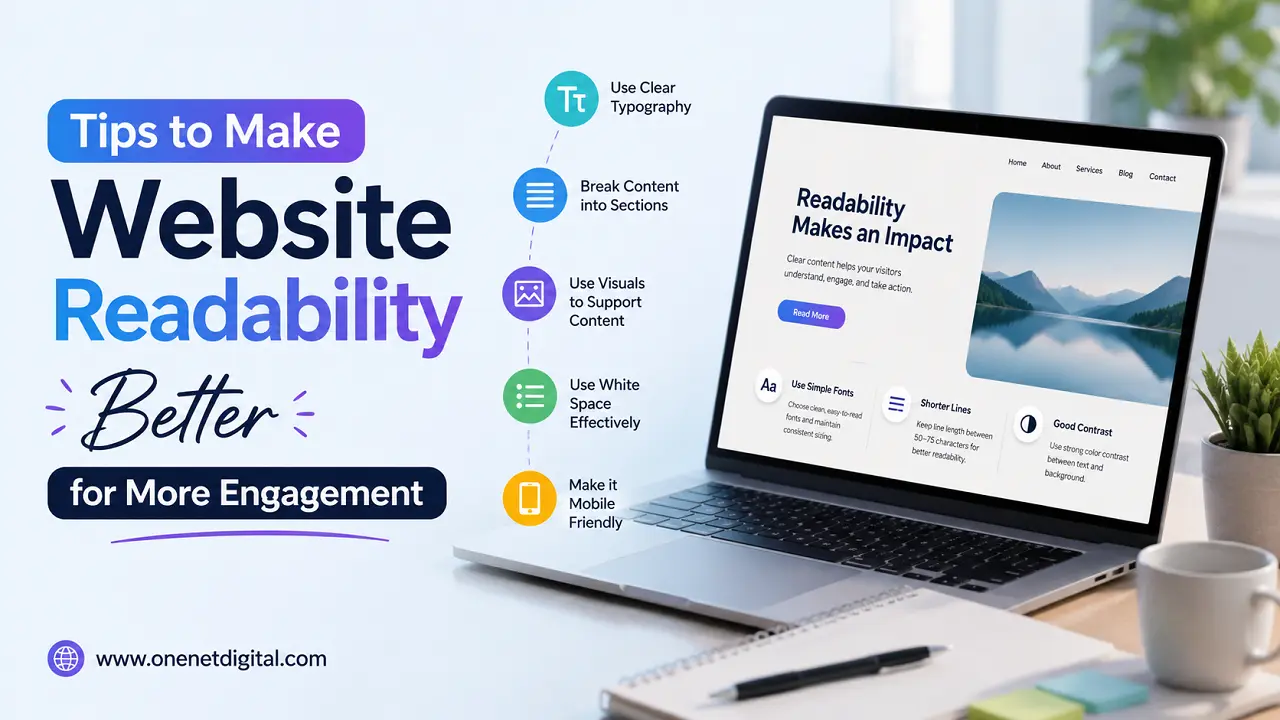
- What Is Website Readability?
- Why Readability Matters for User Engagement
- Use Clear and Simple Language
- Keep Paragraphs Short
- Use Descriptive Headings and Subheadings
- Add Bullet Points and Lists
- Choose Readable Fonts
- Improve Content Formatting
- Optimize for Mobile Users
- Increase White Space
- Use Relevant Visual Elements
- Focus on Content Structure
- Regularly Review User Behavior
- Conclusion
- Frequently Asked Questions (FAQs)
Traffic to your website is important, but what really contributes to long-term online success is keeping your visitors engaged. One of the most often overlooked factors that affects user engagement is website readability. If visitors find it difficult to read or understand content, they are more likely to leave the website quickly, resulting in higher bounce rates and lower conversions.
Making your website readable makes the way users digest information better, keeps them on pages longer and engage with content better. Whether you have a business website, blog, eCommerce store or service platform, paying attention to the readability can dramatically improve the user experience.
What Is Website Readability?
Website readability is the degree to which visitors can read, understand and interact with the content of a website. Language clarity, font selection, text formatting, paragraph length, spacing, and overall page structure influence it. A very readable website allows people to find information quickly without feeling overwhelmed or confused.
Content must be organised clearly and presented in a user-friendly way. This increases the likelihood that visitors will stay on the site, visit other pages, and enjoy a good browsing experience. Improved readability not only benefits users, but can also result in better website performance and SEO results.
Why Readability Matters for User Engagement
Readability of a website is the key factor for keeping visitors engaged. When users come to a webpage, they generally scan the content to see if they want to continue reading. Clear formatting, simple language and well-organised content can make information easier to understand and navigate. Better readability can lead to longer time spent on pages, lower bounce rates, greater user satisfaction and wanting visitors to check out more content. Search engines reward good user experience, too, so making your content more readable can be a win-win for engagement and SEO.
Use Clear and Simple Language
Writing in plain, simple language helps visitors understand content easily, without confusion and in a short time. Avoid excessive technical jargon, complex sentences, and unnecessary industry terms that may make content difficult to follow. Instead, concentrate on communicating information in a clear and easy-to-read way. Simple language is more accessible, appeals to a wider audience and creates a better overall user experience.
Also Read: How to Identify Conversion Problems on Your Website
Keep Paragraphs Short
Short paragraphs are easier to read and look nice. Large blocks of text can be intimidating to readers and lead to lower engagement, especially on mobile devices. Short paragraphs are easier to scan, reduce visual fatigue, and help users better absorb information. A good structure of content will make visitors stay longer on the page and read more.
Use Descriptive Headings and Subheadings
Headings and subheadings give structure to content and help readers navigate a page. They give the reader a quick idea of what a section is about and help them to find specific information without reading the whole article. A clean heading structure not only helps organise your content, but also helps with SEO as pages are easier to understand for both users and search engines.
Add Bullet Points and Lists
Bullet points and lists enhance readability by displaying information in a clear and concise format. Many users skim web pages. Lists are easier to digest content and to highlight important details. They also break up large chunks of text and give a cleaner layout and overall better reading experience.
Choose Readable Fonts
Typography plays a huge role in how easy it is to read a website. Clean, easy-to-read fonts, appropriate font sizes, and spacing can help make content accessible across various devices. Good fonts relieve the strain and make visitors comfortable while reading.
Also Read: How to Identify Why People Leave Your Website
Improve Content Formatting
If you format your content properly, it’ll be much easier for your audience to consume and understand. Clear and consistent headings, spacing, bold text and sections make the information easier to navigate. Proper formatting makes it visually appealing and keeps the users engaged throughout the whole page.
Optimize for Mobile Users
With so much of the traffic to the web being mobile, mobile readability is a must. They use responsive layouts, appropriately sized text, ample space and concise content to make sure visitors can easily read and interact with web pages on smaller screens. If you’re mobile-friendly, you’ll see you can boost engagement and retain your users.
Increase White Space
White space creates a neat and orderly page design. It creates breathing room between text, images, and other elements, reducing visual clutter and making content easier to scan. Good white space helps focus and makes a design more professional and user friendly.
Use Relevant Visual Elements
Images, graphics and illustrations can assist in making text more readable by breaking it up and helping to explain concepts more effectively. Images help make the content engaging and easy to understand. But they should be in support of the topic. Not taking away from the main message.
Also Read: Why Businesses Lose Leads Without Realizing It
Focus on Content Structure
A well-structured article helps readers follow the information in a logical manner. Organise content with a clear introduction, main sections, supporting examples and practical insights, and a conclusion. This will increase understanding and create a better flow of the story. Good structure keeps visitors interested from start to finish.
Regularly Review User Behavior
Readability is a constant work in progress. You can learn how visitors are interacting with your content by tracking user behaviour metrics such as bounce rate, session duration, scroll depth, and pages per session. These insights are leveraged to identify areas for improvement and to support ongoing optimisation efforts to improve engagement and user experience.
Conclusion
Website readability is an important aspect of creating a positive user experience. Easy-to-understand language, structured content, readable fonts, good formatting, and mobile friendly design make it easy to consume information.
Visitors tend to stay longer on a website, view more pages, and interact with the information provided when they can quickly understand and navigate content. Focusing on improving readability helps website owners increase user satisfaction and overall website performance, while supporting long-term SEO goals.
Frequently Asked Questions (FAQs)
1. What is website readability?
Website readability refers to how easily visitors can read, understand, and navigate the content on a website. It includes factors such as language clarity, formatting, font selection, and content structure.
2. Why is website readability important?
Good readability helps visitors consume information more easily, stay engaged with content, and navigate pages efficiently. It can also contribute to improved user experience and better website performance.
3. How does readability affect user engagement?
Readable content encourages visitors to spend more time on a website, explore additional pages, and interact with content. Poor readability may lead to higher bounce rates and reduced engagement.
4. What are the best ways to improve website readability?
Some effective methods include using simple language, creating short paragraphs, adding headings and subheadings, using bullet points, improving formatting, and ensuring mobile-friendly design.
5. Why are short paragraphs important for online content?
Short paragraphs make content easier to scan and understand. They reduce visual clutter and help visitors read information more comfortably on both desktop and mobile devices.