
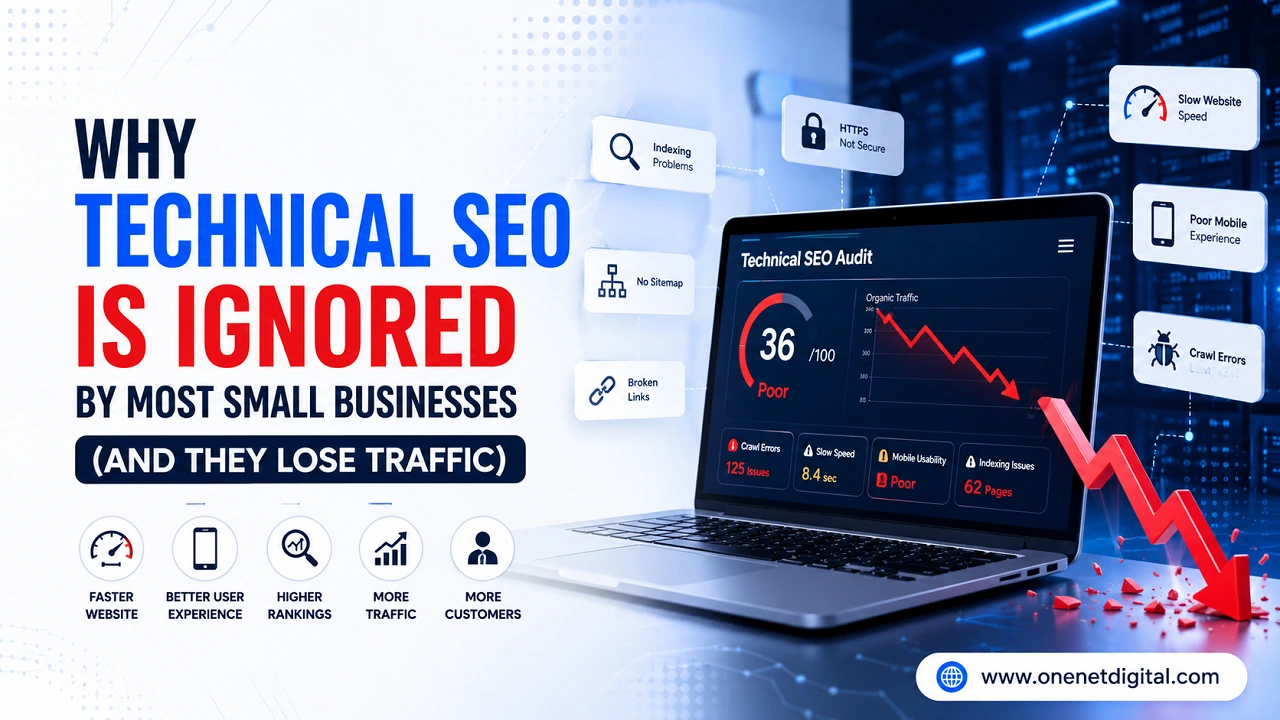
Most small businesses concentrate on website design, social media marketing, and content creation. These things are important, but one major area that is often overlooked is technical SEO.
Technical SEO is a big deal for website performance and search rankings in 2026. Even if a business has amazing content and good services, technical SEO issues can be the reason the website doesn’t rank well on search engines.
The biggest problem is that a lot of business owners don’t understand technical SEO. Some think it’s too complicated. Some think content alone makes you successful at SEO.
The ‘truth’ is that websites don’t rank, get traffic, and have visibility online without strong technical SEO.
In this article, we will learn why small businesses ignore technical SEO, how it affects rankings, and what the businesses can do to enhance their website performance.
What is Technical SEO?
Technical SEO is the optimization of the technical elements of a website so that search engines can crawl, interpret, and rank it correctly.
Technical SEO is more in the shadows than content SEO. It’s not something visitors might see directly, but it has a huge impact on website performance.
Technical SEO covers things such as:
- Loading speed of the website
- Responsive Design
- Indexability
- Security of the website
- URLs Structured
- Indexing errors
Even good content can struggle to rank when technical SEO is weak.
A Lot of Businesses Only Focus on Content
One of the biggest reasons technical SEO is missed is that businesses only focus on content marketing.
A lot of companies believe publishing blog posts regularly is enough for SEO growth. Content is very important, but if the website has technical problems, it won’t be able to do its job.
For instance, a website might have excellent articles, but if:
- Pages are slow to load
- Poor mobile usability
- Search engines can’t crawl pages well.
Then the rankings may still fall. The best SEO is when content and technical performance work in harmony.
Also Read: Why Did My Google Rankings Drop? (And How to Fix)
Technical SEO Can Be Overwhelming for Newbies
Small business owners think technical SEO sounds difficult. For one, crawl errors, indexing, Core Web Vitals, schema markup, and XML sitemaps can feel confusing.
As a result, many companies completely neglect technical optimization, focusing exclusively on visible marketing activities. The issue is that overlooking technical SEO can slowly harm website performance over time.
Businesses don’t always need advanced knowledge, but having a basic knowledge of technical SEO is extremely important for long-term growth.
Slow Websites Lose Traffic Fast
One of the biggest technical SEO factors in 2026 is website speed. Today, people want websites to load almost instantly. If the pages are too slow before they get to the content, visitors are probably going to leave.
Search engines like Google also like faster sites because speed enhances user experience.
There are many small business websites that get slow because of:
- Big images
- Bad hosting
- Too many plugins
- Unoptimised code
Slower sites generally have higher bounce rates and lower rankings.
Mobile SEO is Often Overlooked
Most online searches are done on mobile devices, but many small businesses still don’t properly optimize their websites for mobile users.
A poor mobile experience can be:
- Shattered layouts
- Tiny unreadable text
- Pages load slowly
- Hard navigation
Mobile performance is now tied to rankings because Google uses mobile-first indexing. Ignoring mobile optimization can cost you traffic and customers, with no clue what went wrong.
Also Read: How to Fix a Slow Website Without Changing Your Design
Ranking is Limited by Crawl and Indexing Problems
For search engines to show website pages in search results, they need to crawl and index them properly. Sometimes, technical SEO issues can stop important pages from being indexed correctly.
The more common problems are:
- Dead links
- Blocked pages
- Duplicate pages
- Missing sitemap(s)
- Bad redirect
Even if the content is good, the rankings can be impacted if search engines can’t understand the website properly.
SEO Issues from Poor Website Structure
The structure of a website impacts user experience and SEO. Many small business websites have confusing navigation and poor page organization.
If a website is hard to navigate, users bounce faster, and search engines can’t tell what’s important on a page.
A tidy structure helps:
- Improve crawlability
- Boost user engagement
- Enhance SEO performance
From a technical point of view, websites are better when they are easy to navigate and have well-structured categories.
HTTPS is More Important Than Ever
Website security is a major ranking factor now. Websites without HTTPS security may be viewed as insecure by users and browsers. Security warnings and people don’t trust the site.
Secure websites are good for:
- Users trust
- Performance SEO
- Protection of data
Still, many small businesses don’t upgrade their security to the most basic level, which can affect rankings and customer trust.
Technical SEO Enhances User Experience
Technical SEO isn’t just for search engines. It also enhances the overall user experience. Users can feel more comfortable when interacting with websites, and this is due to fast loading, smooth navigation, mobile-friendly design, and secure browsing. Websites that offer a better user experience are now favored by search engines.
Companies that improve technical SEO often see:
- Higher engagement
- Reduced bounce rates
- More time spent on visits
- Conversion rates increased
Technical SEO & User Experience now work hand in hand.
Also Read: How to Make Your Website Look More Professional and Trustworthy
Competitors With Superior Technical SEO Get Ahead
In competitive industries, small technical improvements can have a big impact.
If the competitors have:
- More responsive websites
- Improved mobile optimization
- Cleaner code structure
- More robust technical setup
They may even rank higher, even if the quality of the content is the same. Technical SEO can often be the difference between being on the first page and disappearing into the search results.
Technical SEO Problems Tend to Snowball Over Time
Some of the dangers of technical SEO problems are that they tend to build up slowly.
A website can do well initially, but over time:
- Broken links grow
- plugins become obsolete.
- Pages freeze up
- Errors are shown
Rankings & traffic may gradually decrease in the case of no maintenance. Many businesses don’t realize they’re losing traffic until the problem is severe. Do regular SEO audits to catch technical issues early.
How Can Small Businesses Improve Their Technical SEO
The good news is that not all technical SEO changes need big budgets.
Small businesses can begin by:
- Speeding up your website
- Mobile-friendly optimization
- Broken link repair
- Keep your plugins up to date.
- Secure hosting with HTTPS.
- Creating a proper sitemap
Small technical improvements can lead to very large improvements in SEO performance over time. It’s more about consistency than doing everything at once.
Summary
It’s often the case that technical SEO gets overlooked in the digital marketing world, especially by small businesses. Many companies focus on content and social media but neglect the technical health of their website.
But technical SEO directly impacts rankings, traffic, user experience, and conversions. Slow websites, poor mobile optimization, crawl errors, and security issues can all quietly reduce search visibility over time.
Companies that combine good content with the right technical SEO will be much more likely to succeed in growing online in 2026. Technical SEO might be a behind-the-scenes effort, but its impact on business growth can be huge.
Frequently Asked Questions
1. What is technical SEO?
Technical SEO is the process of optimizing the technical aspects of a website that help search engines crawl and rank it properly.
2. Why does Technical SEO matter?
With technical SEO, you can improve your site speed, mobile usability, crawlability, and overall SEO performance.
3. Can bad technical SEO affect ranking?
Yes, technical issues can negatively impact rankings even if the content is good.
4. Does website speed matter for SEO?
Yes, slow websites have lower rankings and higher bounce rates on average.
5. What can small businesses do to improve their technical SEO?
Regularly fix technical errors, boost speed, improve mobile optimization, and security for businesses.