
Introduction
Having a website is no longer sufficient to generate online sales. Every day millions of pages are trying to get visibility and Google and other non-optimized websites often can’t rank well, no matter how good the products or services are. And that’s where search-friendly website design comes in.
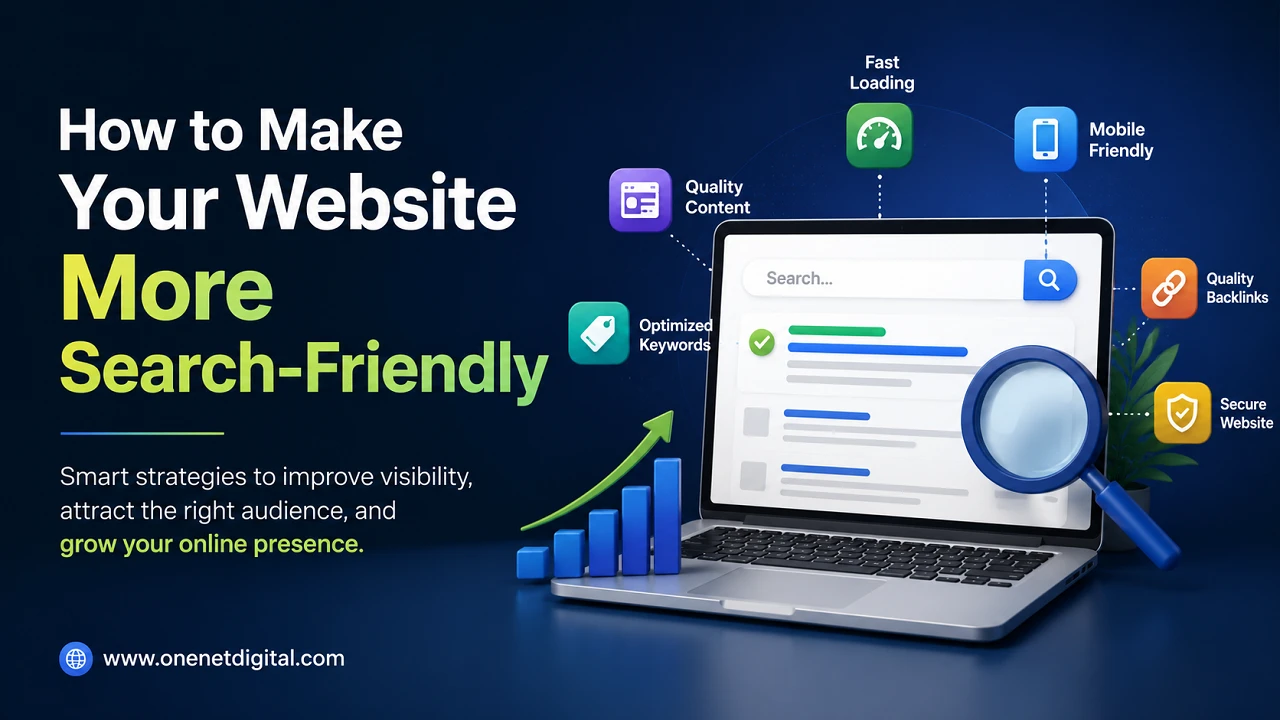
A search-friendly website is one that is easy for search engines to understand, crawl and index its content, while also providing a positive user experience. Search engines are placing more emphasis on websites that are fast loading, easy to navigate, mobile friendly, and contain useful content.
A lot of businesses believe SEO is just about putting keywords on pages. In fact, a search engine friendly website is much more than just keyword placement. It needs a better website structure, more quality content, better user experience and improved technical performance.
The good news is that you don’t have to spend a lot of money or do major redesigns to create a search-friendly website. Incremental and consistent improvements can go a long way in improving the visibility and helping businesses gain more organic traffic in the long run.
Build a Clear Website Structure
One of the first things that search engines will look at is the way a site is structured. A confusing website structure can make it difficult for users and search engines to find important information.
A well-structured website guides visitors through the pages naturally and allows them to easily find the information they are looking for. In the same way, search engines can look at the links between pages and determine the most important topics.
Menus and internal links should make important pages such as service pages, blog categories, contact pages, and key resources easy to find. If the website is easy and logical to navigate, people are more inclined to stay longer and look at more pages.
A clear structure also helps search engines crawl the website more efficiently which can have a positive impact on search visibility.
Focus on High-Quality Content
Content is still one of the most important factors in SEO. Search engines want to rank pages for useful, relevant and trustworthy information.
If you build content for keywords, not for users, you’re going to fail a lot of websites. Articles that provide little value, contain outdated information, or don’t answer the questions users are asking tend to rank poorly in search results.
Search engine optimized content should solve problems, answer questions and give helpful information to users. Instead of publishing lots of content, businesses should focus on producing articles and pages that completely satisfy user needs.
Over time, quality content will help you establish trust and authority in your niche and make it easier to rank higher.
Also Read: How to Improve Search Rankings Without Publishing Every Day
Improve Website Speed
The speed of a website is very important for user experience and SEO.
Users expect their sites to be fast today. Fast page load speeds mean visitors don’t bounce before seeing your content. Search engines also know that a slow website can be a bad experience for users and may hurt their visibility.
Optimizing images, reducing extra scripts, and making sure pages load well on all devices are common ways to improve website speed.
Even small speed improvements can make a site more user-friendly, and help with search performance over time.
Create a Mobile-Friendly Website
A large percentage of online searches now occur on mobile devices. People spend all day searching for services, reading articles and making purchasing decisions on their smartphones.
If a website is not easy to use on mobile devices, visitors will leave quickly and go to a competitor instead. Small text, poor navigation, and slow mobile loading speeds can all create negative experiences.
A search-friendly website should offer:
- Responsive design
- Easy navigation
- Readable text
- Fast loading pages
Mobile usability is no longer optional. It’s become imperative to build websites that perform well and meet the expectations of users, and also be visible in search results.
Use Keywords Organically
Keywords are still important because they tell search engines what a page is about. But the use of keywords has evolved a lot over the years.
Repeating phrases and stuffing them into pages can make content difficult to read, often resulting in a poor user experience. Search engines now reward content that uses keywords in a natural way to provide meaningful and useful information.
Business owners should pay attention to what their audience is searching for and create content that answers those topics in a clear way.
The best way to use keywords is to include them naturally into headings, introductions, descriptions and pertinent sections of content.
The primary goal should be communication and usefulness, not repetition.
Improve Internal Linking
Internal links are used to link between pages on a website. They help search engines understand relationships between topics and users find additional information.
A lot of sites publish new content but don’t link it back to older articles and service pages. This often leads to content being isolated and hard to find for both users and search engines.
A strong internal linking strategy not only improves navigation but also helps distribute authority across the site. For instance, an article about website speed will naturally link to a page about user experience, conversion optimization and technical SEO.
Good internal links create a more interconnected website that makes it easier to understand and navigate.
Also Read: How to Spot Content That Needs Update
Page Title and Meta Description Optimization
Page titles and meta descriptions are often the first things users see in the search results. A page might rank well, but a bad title or description may ruin your clicks.
A good title should clearly describe the topic of the page and entice users to find out more. Similarly, your meta description should provide a short explanation of the content and clarify its value.
These features help users to determine whether or not a page meets their needs before they click. You can optimize titles and descriptions to drive traffic without creating new content.
Search-friendly websites care not just about rankings, but how pages appear in search results.
Update Content Frequently
Search engines prefer content that’s up to date and relevant.
An article written a few years back might have outdated examples, statistics or recommendations. Industries evolve, and so do user expectations. Pages that aren’t kept up to date will gradually disappear.
Regularly reviewing existing content enables businesses to improve information, expand explanations and ensure pages continue to provide value.
Updating content often creates a faster SEO impact than writing completely new articles since your older pages already have rankings and authority.
Now the key is to keep the content fresh and building a search-friendly website.
Enhance User Experience
Search engines are increasingly rewarding websites that provide positive experiences to visitors. Even the best content on a website can suffer from poor usability, which can hurt performance.
Better user experiences are also a function of simple navigation, readable layouts, clean design, and logical organization of content. Visitors should know immediately what the site offers and be able to find relevant information easily.
After all, a search-friendly website is designed for people, not algorithms. The easier it is for users to navigate and consume information, the more likely it is that there will be improved engagement and better long-term SEO performance.
Build Topical Authority
Websites that consistently publish useful information related to their core subjects tend to rank higher in search results.
Businesses should be creating content related to their industry and areas of expertise, rather than covering random topics. This helps search engines understand that the website is authoritative and trustworthy in a particular niche over time.
For instance, a digital marketing website can create content on a daily basis on topics like SEO, website optimization, user experience, local SEO, lead generation, etc. Such a level of coverage helps to build topical authority and increases the chances of the website ranking for related searches.
Building authority takes time, but it’s still one of the most effective SEO strategies in the long run.
Also Read: How to Audit Internal Links on Your Website | One Net Digital
Conclusion
SEO isn’t just about stuffing your website with keywords or constantly publishing new articles. Search engines are rewarding more and more sites that are well organised, easy to use, fast loading, mobile friendly and filled with truly useful content.
Optimizing titles, refreshing content, improving internal linking, and making them website more user friendly, all can increase search visibility. These improvements will help search engines understand the website, and also provide better experiences for visitors.
The winners of 2026 are those sites that have a purpose and are always improving their quality over time. By constantly refining and honing in on what users are searching for, businesses can create search-friendly websites that draw in more organic traffic and enjoy sustainable growth.
FAQs
1. What makes a website search-friendly?
A search-friendly website is a website which is easy to crawl by search engines and offers a good experience for users regarding quality content, good structure and technical optimization.
2. Does website speed matter for SEO?
Yes, Generally, faster websites offer a better user experience and can contribute to better search performance.
3. Why is mobile optimization important?
Most searches are now performed on mobile devices, so websites need to be user-friendly and display correctly on smaller screens.
4. Do keywords still matter in SEO?
Yes, but only in a natural way, in context with helpful/relevant content, and not overused.
5. How often should you update the content of a website?
Periodically review important pages, ensuring that the information is still accurate, relevant and useful to users.