Introduction
A small business can only thrive when it’s found, understood and trusted. Customers used to rely on word-of-mouth, local stores, newspaper advertisements, or site visits. Today, it’s often through the internet. Customers use Google to search, visit websites, read reviews and compare services, before choosing who to call.
So, for small businesses, it’s important to have a professional website. It is one of the key elements of online branding. If you have a brick-and-mortar store, service firm, clinic, restaurant, tutoring center, beauty salon, online store, or any other type of business, a website allows customers to find out about you before they decide to do business with you.
Your website doesn’t have to be highly sophisticated. It needs to be simple, quick, responsive and user-friendly. But above all it must communicate what your business is and how to contact you.
A Website Builds Trust
When customers hear about a business, they will often look for it on the Internet. If they see a legitimate website with information, it’s good. If they don’t find one at all, or just a partial social media page, they might be confused.
A website lends credibility to your business. It lets customers know you’re professional, efficient and ready to assist. Potential customers can see what services you offer, your level of experience, contact information, testimonials and other relevant information.
Trust is a critical for small businesses. Potential customers don’t always decide to buy straight away. They need to know who they are doing business with. Websites help answer their questions and establish your business as credible.
It Helps Customers Find Your Business Online
Having a website can increase the chances of your business being found in search engines when people search for your product or service. So, if someone is looking for a local service provider, local restaurant, repair service or business consultant, Google may display websites.
This is where SEO comes in. SEO is optimizing your site to be more easily understood by search engines. This means having clear titles, helpful information and headings, quick to load, mobile responsive, and relevant content pages.
This can be helpful for small businesses as customers often type in local keywords. They could search for phrases such as “near me” or “best service in (city, state)”. By optimizing your website, you can increase your chances of being found by these potential customers.
Your Website Works 24/7
An office, shop or retail store has operating hours. But a website is open 24/7 Your customers can browse it at any time of the day or night. So, your information can be found all the time. Your customers can view your products, prices, location, contact information, hours of operation and FAQ.
A website is also efficient. Rather than have to answer the same questions over and over, you can include key details on your website. This benefits your staff and customers.
For instance, a clinic can show appointment information. A restaurant can show its menu. A tutoring center can describe courses. A service firm can outline packages or process. This makes the customer journey smoother.
It Supports Lead Generation
A professional website isn’t only informative. It can also be used to generate leads. A lead is someone who is interested in your product or service.
Your website can have basic elements such as:
- Contact forms
- Call buttons
- WhatsApp chat buttons
- Inquiry forms
- Appointment booking options
- Newsletter signup forms
- Quote request forms
These can help nudge visitors forward. If your customer likes what you do, but can’t get in touch, you might lose their business. Visitors to your website should be able to easily find your contact information and not be confused.
Good websites are simple. They should not have trouble finding your phone, email, address or button.
It Supports Social Media and Advertising
Small businesses often have social media accounts on Facebook, Instagram, LinkedIn or YouTube. Social media is great for marketing, but it shouldn’t be the only place a business has an online presence.
A website gives you more control. Social media can change algorithms, restrict visibility, or have other impacts. However, your website is yours.
Having a website is even more crucial if you advertise. Google, Facebook and Instagram Ads may work better if they link to a dedicated landing page. Landing pages can provide information about your product, demonstrate benefits, anticipate questions and prompt users to get in touch.
A paid campaign may not be successful without a website. Visitors may come to your site but not stay if they don’t find what they are looking for.
A Website Explains Your Services
Sometimes potential customers don’t know what a service does. With a website you can describe your services. For instance, rather than simply stating “we offer marketing services” a business can have pages detailing their SEO, social media, web design, content marketing and pay per click services. This will help customers find the right services. Having well-defined service pages also helps search engines. Different pages can target specific services, and address key questions. This makes your site easier to use and rank in search results.
It Improves Customer Experience
An effective website enables customers to discover, compare and contact. This is part of customer experience.
A customer-friendly website should be:
- Fast loading
- Easy to read
- Mobile-friendly
- Clear in design
- Simple to navigate
- Helpful in content
- Secure and professional
The internet is primarily accessed from mobile. Users may abandon your site if it’s not mobile-friendly. Mobile-friendly sites make it easy for users to read text, click buttons, fill forms and reach out.
Many small changes such as easy-to-read fonts, menus, paragraphs and contact buttons can help.
It Gives You a Competitive Advantage
Small businesses often rely only on traditional marketing and social media accounts. With a website, you can distinguish yourself from those competitors who don’t have one.
A website also allows you to showcase your brand. You can display your portfolio, customer reviews, team information, awards, case studies and helpful resources. That makes it easier for customers to compare you to your competitors and see why you’re better.
In a competitive environment, trust and transparency are important. With a website, you can impress customers before they even talk to you.
What Should a Small Business Website Include?
The number of pages on a small business website should not be large. But it needs to have the essential information.
Here is a list of the essential pages and features of a small business website:
- Home Page: This is the front page of your website. This page should contain details about your business, products and services, and contact details.
- About Page: It is a way for customers to get to know your background, experience, values, and team.
- Services or Products Page: This page should outline what you do. If you have more than one service, make a page dedicated to each service.
- Contact Page: Include phone, email, address, map, and a contact form.
- Testimonials or Reviews: Testimonials and reviews increase trust and confidence.
- FAQs: FAQs reduce the time to answer questions and provide instant information.
- Blog Section: A blog allows you to provide valuable content, address questions and boost your Google ranking.
Final Thoughts
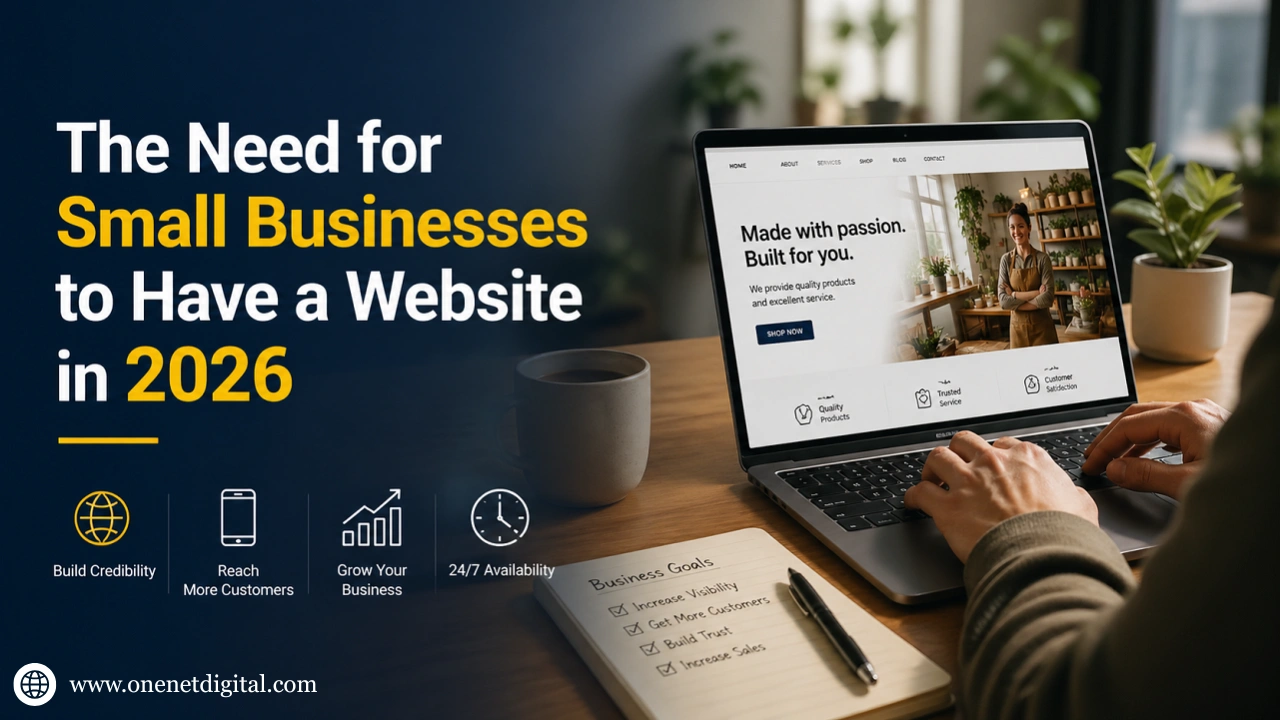
Having a professional website is a valuable resource for small businesses in 2026. It increases credibility, enhances visibility, aids in lead generation and helps customers learn more about your business.
You don’t have to build a complex website. All you need is a basic, attractive, mobile-friendly and useful website. As your business evolves, you can continue to optimize it with more content, search engine optimization, landing pages and other customer-centric features.
Customers expect businesses to have an online presence. Having a website will help you do that and increase the chances of your business attracting, engaging and converting customers.